Azerbaijan Moves to Produce Czech Self-Propelled Howitzers as CSG Expands Its Footprint in the Caucasus
Azerbaijan is preparing to take another step toward strengthening its domestic defense industry. Czech defense group Czechoslovak Group, known as CSG, plans to launch production of self-propelled howitzers in Azerbaijan in 2027, marking a significant expansion of its industrial presence in the country.
The project is expected to be carried out through a new joint venture with a local partner. According to CSG, the enterprise is planned to be established this year, while actual production should begin in 2027. The new facility will focus on the phased localization of self-propelled howitzer production and the transfer of Czech defense technologies to Azerbaijan.
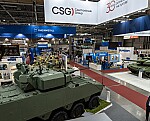
For Baku, this is more than a simple procurement deal. It signals a move from buying finished weapons abroad toward building local manufacturing capacity, gaining technical expertise, and reducing dependence on external suppliers.
CSG has not disclosed which specific howitzer types will be produced in Azerbaijan, citing confidentiality agreements. That leaves room for speculation, but the direction is clear: Azerbaijan is deepening its cooperation with one of Central Europe’s most active defense-industrial groups.
The Czech company already has a relevant portfolio. Through its companies, including Excalibur Army, CSG develops and offers several wheeled self-propelled artillery systems. These include the DANA family, as well as newer 155 mm systems such as DITA and MORANA.
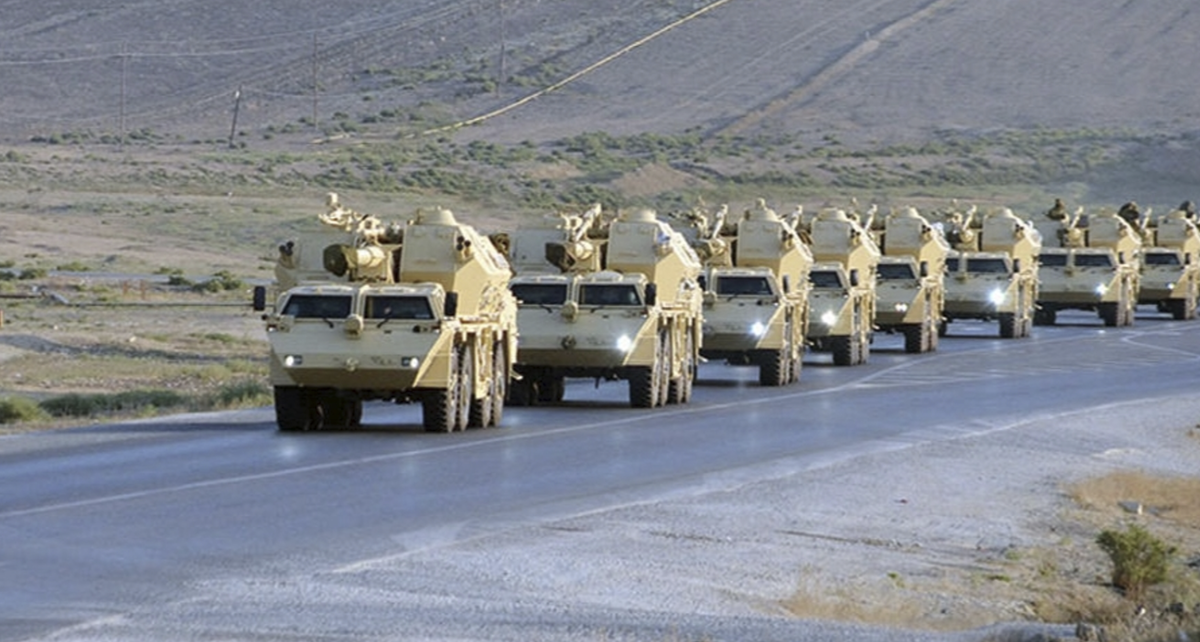
Azerbaijan is not new to Czech artillery. The Azerbaijani Army has already operated Czech-made 152 mm DANA self-propelled howitzers, which were publicly displayed during military exercises in 2017. That earlier experience likely helped build trust in Czech artillery platforms and may have laid the groundwork for deeper industrial cooperation.
The new project also follows CSG’s broader strategy in Azerbaijan. In April 2026, the group announced the establishment of its first joint venture in the country, VEXA DS. The planned howitzer production facility is described as a continuation of that long-term industrial expansion.
The timing is important. Across the world, artillery has regained central importance due to the war in Ukraine. Modern armies are paying renewed attention to range, mobility, automation, ammunition supply, and the ability to produce or maintain systems domestically. For countries watching the war closely, artillery is no longer just one branch of firepower — it is a strategic capability.
Wheeled self-propelled howitzers are particularly attractive because they combine firepower with mobility. Compared with tracked systems, wheeled platforms are often easier to maintain, faster on roads, and more suitable for rapid redeployment across large distances. In regions where infrastructure and operational flexibility matter, that can be a decisive advantage.
CSG’s modern artillery systems reflect this trend. The MORANA, developed by Excalibur Army and first unveiled in 2022, represents the next generation of Czech wheeled self-propelled artillery after the DITA and DANA systems. It is built on a modified Tatra 815-7 8×8 chassis and features an armored cabin designed to protect the crew from shell fragments and small-arms fire.
DITA, another system developed by Excalibur Army, follows the conceptual line of the Czechoslovak DANA vz. 77 but brings a much higher level of automation. Its design reduces crew workload and allows firing data to be processed through onboard systems, making operations faster and more efficient. DITA systems are already in service with the Ukrainian Armed Forces, including with the 41st Mechanized Brigade.
This combat relevance gives Czech artillery designs additional credibility. Systems that are being used or evaluated in the context of modern high-intensity war attract attention from countries seeking practical, battle-relevant capabilities rather than prestige projects.
For Azerbaijan, local production could bring several advantages. It may support faster maintenance, improve supply resilience, create industrial jobs, and give the country greater control over upgrades and future development. Technology transfer is often just as valuable as the weapon itself, especially for states aiming to grow their own defense-industrial base.
For CSG, the deal strengthens its position in a strategically important region. Azerbaijan has invested heavily in modernizing its armed forces and has shown interest in diversifying its military partnerships. By establishing production inside the country, CSG is not only selling equipment — it is embedding itself into Azerbaijan’s defense ecosystem.
The arrangement also fits a wider global pattern. Defense companies are increasingly moving beyond traditional export contracts and toward joint ventures, licensed production, and localization deals. Buyers want more than hardware; they want production rights, technology access, training, and long-term industrial participation. Suppliers that can offer this model gain a competitive edge.
Still, key details remain undisclosed. The exact howitzer model, production volume, financial terms, and localization depth have not been publicly revealed. It is therefore too early to say whether Azerbaijan will produce DANA-derived systems, newer 155 mm platforms, or a customized configuration tailored to its own military requirements.
What is already clear, however, is the strategic meaning of the project. Azerbaijan is moving to strengthen its artillery capabilities while developing its domestic defense sector. CSG, meanwhile, is expanding from supplier to industrial partner.
If the timeline holds, 2027 could mark the start of a new phase in Azerbaijani-Czech defense cooperation — one in which advanced artillery is not only imported, but built on Azerbaijani soil.