
Blinding the Bear: How Ukraine’s Elite Alpha Unit Is Shattering Russia’s Pantsir Shield
In the high-stakes game of aerial cat-and-mouse over Eastern Europe, one Russian system has long been touted as the ultimate "drone killer." The Pantsir, a truck-mounted surface-to-air missile and gun complex, was designed specifically to protect Russia’s most sensitive military assets from the exact kind of long-range drone strikes that have come to define modern warfare.
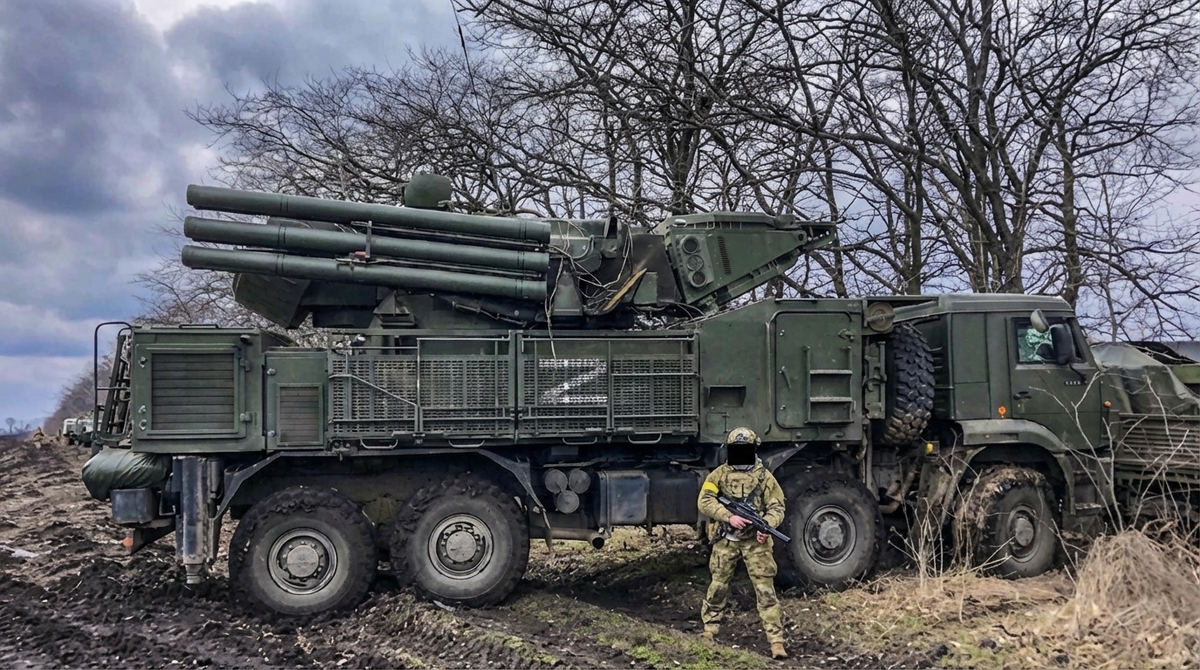
However, according to recent statements from the Security Service of Ukraine (SBU), the hunter has become the hunted. Throughout 2025, Ukraine’s elite Alpha Center for Special Operations has executed a systematic campaign that has reportedly eliminated roughly half of all Russian Pantsir systems destroyed this year.
The Strategic Math: Why the Pantsir Matters
The Pantsir (NATO reporting name SA-22 Greyhound) is not just another piece of hardware; it is the linchpin of Russia’s short-to-medium range defense. Combining rapid-fire 30mm cannons with interceptor missiles, it is the primary shield used to defend airbases, oil refineries, and command centers.

The SBU highlights several key factors that make these systems high-priority targets:
- High Financial Cost: Each unit is valued between $15 million and $20 million.
- Tactical Capability: It is Russia’s most effective tool for intercepting Ukraine’s "deep strike" drones.
- Total Economic Impact: The SBU estimates that the Alpha unit alone has neutralized approximately $4 billion worth of Russian air defense assets in 2025.
Piercing the "Iron Dome": Creating Air Corridors
The destruction of these systems is not merely about attrition; it is about strategic opening. By removing Pantsir batteries from the board, Ukrainian forces are effectively "punching holes" in the Russian radar blanket.
The SBU’s Alpha unit describes this as a coordinated effort to create air corridors. Once a local Pantsir is eliminated, the airspace becomes a "soft target," allowing Ukrainian long-range unmanned aerial systems (UAS) to fly through the gap and strike targets deep in the Russian rear—including ammunition warehouses, strategic airfields, and logistics hubs.
A War of Numbers: Oryx vs. Official Estimates
Quantifying the damage in a conflict of this scale is notoriously difficult, but the trend lines are clear:
- Visually Confirmed: The independent monitoring group Oryx has verified the loss of at least 38 Pantsir systems since the 2022 invasion began, based on photographic and video evidence.
- Broad Air Defense Losses: While the Pantsir is a specific focus, the Ukrainian General Staff reports that Russia has lost over 1,300 air defense systems of various types in total.
- The 2025 Surge: The SBU’s claim that a single special operations unit (Alpha) is responsible for 50% of the Pantsir kills this year suggests a highly refined, specialized tactic—likely involving a combination of FPV drones, sabotage, and precision artillery.
The Evolution of the Air War
By prioritizing the "shield-breakers," Ukraine is changing the fundamental physics of the conflict. A Russia without its Pantsir systems is a Russia vulnerable to the constant, buzzing threat of Ukrainian drones. For the Kremlin, replacing these complex systems is not as simple as ramping up a tank factory; the high-tech sensors and guidance systems required mean that every lost Pantsir is a gap in the defense that may not be filled for years.
As the Alpha unit continues its hunt, the goal remains clear: blind the enemy's sensors today to ensure the success of the long-range strikes of tomorrow.