
Boeing Takes Both American Sixth-Generation Fighters as the Navy Awards F/A-XX
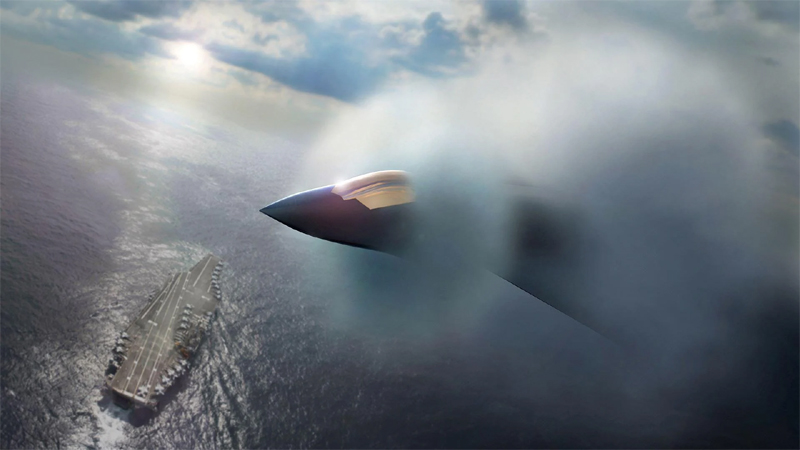
The United States Navy has chosen Boeing to design, develop, and produce its next carrier fighter. On 29 September 2026 the service awarded the company a full-scale development contract, valued at more than twenty billion dollars, for the aircraft known as F/A-XX. The deal covers multiple test airframes for ground work, airworthiness, mission systems, and weapons integration. It also marks a decisive industrial turn: a year after winning the Air Force’s F-47, Boeing is now prime contractor for both American crewed sixth-generation fighters. Northrop Grumman, the remaining rival after Lockheed Martin left the Navy contest, lost the downselect. The new jet is intended to replace the F/A-18E/F Super Hornet and, over time, the EA-18G Growler, while flying beside the F-35C and a coming fleet of Collaborative Combat Aircraft.
Fighter generations are marketing labels as much as engineering categories, but they still describe real shifts in how air combat is fought. Fifth-generation aircraft, defined in service by the F-22 and F-35, were built around low observability, internal weapons, sensor fusion, and secure networking. Shaping and materials shrink the radar cross-section. Computers combine radar, infrared, and electronic data into a single picture for the pilot. Weapons stay inside the airframe when stealth matters. Some fifth-generation designs can supercruise; all depend on data links that treat the jet as a node rather than a lone hunter. The Super Hornet is not in that class. It is a late fourth-generation strike fighter with reduced signature in some aspects, an AESA radar, and Block III networking upgrades, but it carries most of its punch on external pylons and was never designed to penetrate modern integrated air defenses the way an F-35C can.
Sixth generation is less a single technology than a change in role. The crewed fighter becomes the command node of a system of systems. Artificial intelligence is expected to sort threats, manage sensors, and reduce the pilot’s decision load. Adaptive-cycle engines are meant to switch between high thrust and high efficiency, stretching range without giving up combat power. Stealth is pushed toward all-aspect shaping, newer coatings, and more active electronic deception against radars that no longer look only in one band. Directed-energy weapons remain more aspiration than requirement, but thermal management and electrical generation are being designed as if high-power sensors and jammers will keep growing. The decisive conceptual step is manned-unmanned teaming: the pilot is expected to control or cue uncrewed wingmen that carry extra sensors, extra missiles, or take the most dangerous legs of a mission. Open mission systems architecture is supposed to let software and payloads change faster than a traditional fighter program ever allowed.
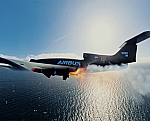
That generational gap is exactly why the Navy is leaving the Super Hornet behind even though the jet remains a reliable workhorse. The F/A-18E/F first flew in 1995 and entered fleet service in 1999. It is larger and longer-legged than the original Hornet, with two F414 engines, eleven weapon stations, and a payload of about 17,750 pounds. In a clean air-to-air configuration Naval Air Systems Command cites a combat range on the order of 1,275 nautical miles; in a realistic strike load the practical combat radius is closer to 390 to 500 nautical miles. Block III adds conformal tanks, a larger cockpit display, and better networking, and the MQ-25 Stingray tanker will stretch the air wing further still. None of that solves the core problem of the 2030s. Super Hornets are not stealth aircraft. Their external stores light up radar. Their service lives, built around a 9,000-hour airframe limit, run out in the early 2030s for the oldest jets.
In the western Pacific, where Chinese missiles and fighters force carriers farther from the fight, that combination of modest range and modest survivability is no longer enough. Navy officials have said increased range is a core attribute of F/A-XX, on the order of more than 125 percent of what the air wing flies today, with aerial refueling still available. The new aircraft is also supposed to be low-observable from the start, carry weapons internally when needed, host a next-generation sensor and electronic-warfare suite, and treat Collaborative Combat Aircraft as a design assumption rather than an add-on. In other words, the Super Hornet’s strengths—sortie rate, payload flexibility, electronic attack in the Growler, and decades of carrier habitability—are being traded for reach, signature, and the ability to fight as a team rather than as a pack of individual jets. The F-35C already supplies fifth-generation stealth on the deck; F/A-XX is meant to supply the longer spear and the command layer that the Super Hornet cannot.
Schedules remain the least settled part of the story. The requirement dates to 2008, with a formal information request in 2012 and years of study, prototypes, and budget fights. The Pentagon delayed a source selection while it argued over whether two sixth-generation programs would overtax industry, especially after Boeing won F-47 in March 2025. Congress pushed money back into F/A-XX and directed an accelerated path to initial operational capability. The September 2026 award finally opens engineering and manufacturing development. First flight has not been publicly dated with the same confidence the Air Force has attached to F-47, whose early flying is discussed in the late 2020s. Navy and industry language is consistent on a broader window: replacement of Super Hornets beginning in the 2030s, with initial operational capability generally described as mid-decade or later in that decade if development stays funded and carrier trials do not slip.
Full operational capability would follow only after weapons clearance, deck qualifications on Nimitz- and Ford-class ships, and enough production aircraft to fill air wings. Boeing is building a large secure plant in St. Louis and argues that parallel work on F-47 and F/A-XX was always the plan. Analysts still warn that people, suppliers, and digital manufacturing capacity will be the real test, because the same industrial base is also supporting other combat aircraft. Production of the Super Hornet itself is winding down; the Navy even awarded Boeing work tied to closing those lines. Until F/A-XX arrives in numbers, Block III Super Hornets, Growlers, F-35Cs, and tanking drones will have to hold the line.
What the Navy bought is not a named fighter with published speeds and radar ranges. It bought a development program whose classified details will stay hidden for years. The public case is simpler. Carrier air wings cannot keep relying on a 1990s airframe against 2030s defenses. Fifth-generation stealth already exists at sea in the F-35C. Sixth generation, as the Navy is defining it, is about flying farther, staying harder to see, and turning one cockpit into the brain of several aircraft. Boeing now has to prove it can build that jet on a carrier timetable without starving the Air Force program it already won. The Super Hornet earned its place. F/A-XX exists because that place is running out.