
Britain’s Troubled Ajax Programme Restarts Amid Lingering Doubts and Soldier Safety Concerns
The Ajax armoured vehicle programme stands as one of the most ambitious yet problematic undertakings in the recent history of the British Army. Conceived as a transformative replacement for the ageing Combat Vehicle Reconnaissance (Tracked) fleet that has served since the 1970s, Ajax promised to usher in a new era of digitalised, networked warfare capability for the Army’s armoured cavalry regiments. At its core, the programme aimed to deliver a family of tracked vehicles built around a common platform, providing enhanced reconnaissance, command and control, protected mobility, and engineering support. With advanced sensors, a powerful 40mm cannon, and sophisticated communications systems, Ajax was intended to give British forces a decisive edge in detecting, tracking, and engaging threats at extended ranges while operating in contested environments.
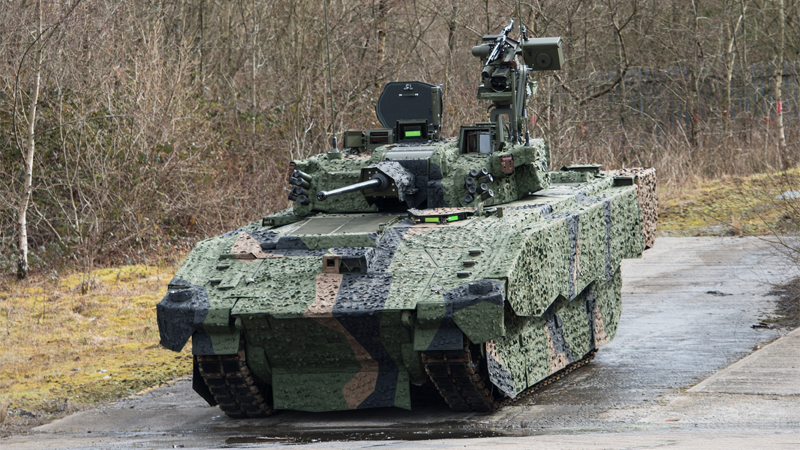
The origins of Ajax trace back to the Future Rapid Effect System initiative in the early 2000s, which sought to modernise the Army’s armoured capabilities following the cancellation of earlier collaborative projects. In 2010, General Dynamics UK secured the contract with a variant of the ASCOD 2 platform, beating out competition from BAE Systems. By 2014, the Ministry of Defence had placed a firm order for 589 vehicles across six variants: the turreted Ajax reconnaissance vehicle, Ares protected mobility support, Athena command posts, Argus engineer reconnaissance, and Atlas and Apollo recovery and repair models. The total cost settled around £5.5 billion initially, though figures have since climbed toward £6.3 billion with associated expenses. Production was progressively shifted to the UK, with final assembly in Merthyr Tydfil, Wales, supporting hundreds of domestic jobs and a broad supply chain.
The strategic aims were clear and compelling. Ajax was designed not merely as a replacement but as a leap forward. Its suite of ISTAR (intelligence, surveillance, target acquisition, and reconnaissance) equipment, including high-resolution sensors and data-sharing architecture, would enable real-time battlefield awareness and integration with other platforms. The 40mm CTA cannon offered superior firepower and ammunition capacity compared to legacy systems, with the ability to engage ground and low-level air targets. Protected against a range of threats, the vehicles were meant to support medium-weight forces capable of rapid deployment and high mobility, aligning with the Army’s evolving concepts of strike brigades and multi-domain operations. In an era of peer adversaries and hybrid threats, such a capability was seen as essential for maintaining relevance within NATO and deterring potential conflicts.
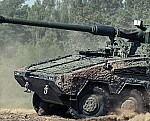
Yet from the outset, the programme encountered significant hurdles that would define its troubled trajectory. Original delivery schedules called for initial vehicles in 2017, with full operational capability following shortly after. Instead, years of delays accumulated due to a combination of design complexities, integration challenges, and performance shortfalls. By the early 2020s, trials revealed persistent issues with excessive noise and vibration inside the vehicles. Crews reported symptoms including nausea, headaches, joint pain, tinnitus, and even hearing loss after prolonged exposure. These problems halted testing multiple times, most notably in 2020-2021, leading to strict limits on crew time inside the vehicles and speeds during operations. Investigations pointed to sources ranging from tracks and suspension to internal systems, compounded by inconsistencies in hull manufacturing that made uniform fixes difficult.
The issues extended beyond technical glitches. Critics highlighted systemic failures in project management, contractual oversight, and risk assessment between the Ministry of Defence, Defence Equipment and Support, and the contractor. Reports from parliamentary committees described a “litany of failures,” with questions raised about whether the programme could ever deliver value for money or meet the Army’s needs. Costs ballooned, timelines slipped repeatedly, and confidence eroded among troops and observers alike. Some defence analysts compared Ajax unfavourably to other troubled procurements, questioning its relevance in a battlefield increasingly dominated by drones, loitering munitions, and lighter, more dispersed forces as seen in Ukraine. The heavy tracked platform, while protected, raised concerns about strategic mobility and vulnerability to modern anti-armour threats.
Despite these setbacks, progress continued in fits and starts. Design modifications addressed some vibration concerns, and limited trials resumed. Deliveries of production vehicles to the Army began in early 2025, eight years behind the original plan. In November 2025, the programme achieved a milestone with the declaration of Initial Operating Capability for the first units, positioning a number of vehicles for potential deployment on NATO’s eastern flank. This moment should have marked a turning point, validating years of investment and effort. However, reality proved harsher. During Exercise Titan Storm shortly after, around 30 soldiers reported illness linked to noise and vibration, including vomiting and other symptoms. The Army promptly paused training and operations with the vehicles to allow for a thorough safety investigation.
The recent restart, announced in late April 2026 by Defence Readiness Minister Luke Pollard, represents a carefully calibrated step forward rather than a full-throated endorsement. Following the Army Safety Investigation Team’s review, which found that noise and vibration levels were within legal exposure limits, the decision was made to resume acceptance of vehicles from General Dynamics. No single cause was identified; instead, symptoms appeared linked to a mix of technical factors (such as track tension and engine deck issues during the specific exercise), environmental conditions like cold exposure, air quality inside the vehicles, and human variables including training levels.
Trials are now proceeding “cautiously” under a phased approach, beginning with a limited number of vehicles in highly controlled circumstances and enhanced maintenance regimes. Strict new controls focus on improving the soldier experience, with targeted upgrades to air filtration, heating, and electrical power systems – all within existing budgets. Pollard acknowledged that the user experience “has not been good enough” and emphasised the need to rebuild confidence. General Dynamics welcomed the findings and recommitted to soldier safety as the top priority.
This restart comes at a pivotal moment for the British Army and the wider defence landscape. With full operating capability still targeted for the late 2020s, the programme must demonstrate reliability to justify continued investment. Supporters argue that Ajax’s advanced capabilities remain vital for a credible land force, providing protected mobility and reconnaissance that lighter alternatives cannot match in high-intensity scenarios. The jobs sustained in Wales and across the UK supply chain also factor into political calculations. Cancellation at this stage would incur massive sunk costs and leave capability gaps.
Nevertheless, challenges persist. Ongoing scrutiny from Parliament, media, and within the military underscores the high stakes. Further modifications may be required, and integration into broader force structures demands extensive training. The programme’s history serves as a cautionary tale about defence procurement: the perils of over-ambition, underestimating integration risks, and the human element in complex systems. As trials resume, the focus must remain on delivering a vehicle that soldiers trust and that performs when it matters most.
In the end, Ajax embodies both the aspirations and the frustrations of British Army modernisation. Its aims – to equip forces with cutting-edge, networked armoured capability – were sound, but execution exposed deep flaws in process and oversight. The cautious restart offers a pathway to redemption, but success will depend on sustained improvements, transparency, and adaptability to an evolving threat environment. For the troops who will crew these vehicles and the nation relying on them, the coming months of testing will be decisive. Only time will tell if Ajax can finally live up to its promise or remain a symbol of procurement pitfalls.