
British MoD Pauses Troubled Ajax Programme Amid Fears of Long-Term Crew Harm
The British Army has temporarily grounded its Ajax armoured vehicles after 30 soldiers showed worrying symptoms during a training exercise on Salisbury Plain in Wiltshire. The decision follows noise and vibration issues that made these soldiers ill and has resulted in a two-week pause to allow for a thorough investigation. Luke Pollard, Minister of Defence Readiness and Industry, said the measure was taken “out of an abundance of caution,” emphasizing the urgency and seriousness of the situation.
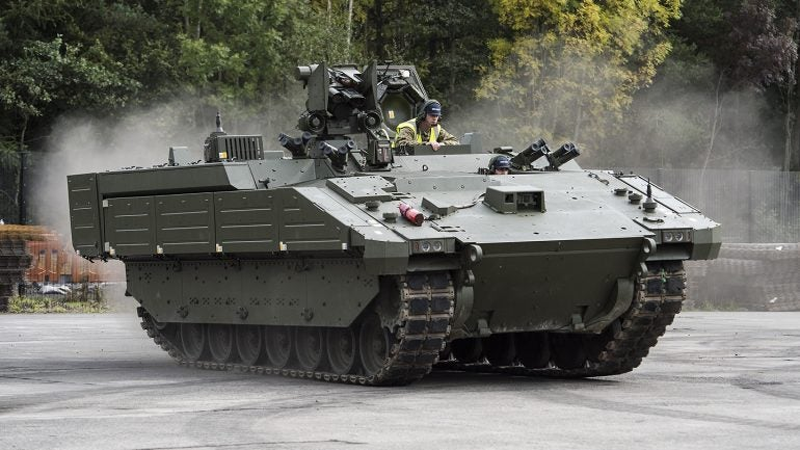
During an exercise involving the Ajax vehicle—specifically Exercise Iron Fist—around 30 soldiers experienced symptoms related to noise and vibration, such as vomiting, violent shaking, hearing difficulties, and balance problems after spending between 10 and 15 hours inside the vehicles. The army immediately halted the exercise and launched proactive testing of all affected personnel. The “vast majority” of soldiers were able to return to duty, but a small number require specialized medical care, including ongoing monitoring for potential long-term effects like hearing loss or neurological issues. This is not a new problem: during previous trials in 2020 and 2021, 11 soldiers had already been placed under long-term medical supervision, with internal reviews revealing that senior officials had known about risks for up to two years prior. These recurring incidents have reignited scrutiny over the programme's safety protocols and the Ministry of Defence's (MoD) oversight.
The Ajax programme, originally commissioned in 2010 as part of the Future Rapid Effect System (FRES) initiative to modernize the British Army's reconnaissance capabilities, has experienced severe delivery delays and technical setbacks. Stemming from the cancelled joint UK-US TRACER programme in the 1990s, FRES aimed to replace the ageing Combat Vehicle Reconnaissance (Tracked) (CVR(T)) fleet, which has served since 1971 and is increasingly obsolete in modern warfare. After years of competition, General Dynamics United Kingdom (a subsidiary of the American firm General Dynamics Land Systems) won the contract in March 2010, beating out rivals like BAE Systems' CV90 proposal. The deal, valued at £3.5 billion initially but now escalated to £7.25 billion according to recent MoD estimates, covers 589 vehicles across six variants: Ajax (the core reconnaissance model), Athena (command and control), Apollo (repair and recovery), Atlas (protected mobility for infantry), Ares (armoured personnel carrier), and Argus (ambulance). Production is centred at General Dynamics' facility in Merthyr Tydfil, Wales, supporting over 4,100 jobs and involving more than 230 UK suppliers, which underscores its role in bolstering domestic defence manufacturing.
The first delivery, scheduled for early 2017, was not made until January 2025— an eight-year delay that has drawn sharp criticism from parliamentary committees and the National Audit Office (NAO). Technical problems were identified as early as 2016, when the MoD's Defence Science and Technology Laboratory (DSTL) published research on excessive vibrations in prototype vehicles, though these were initially overshadowed by other issues like turret integration failures and poor build quality. Demonstrations in 2020 revealed vibrations and excessive noise levels exceeding safe thresholds, forcing tests to be halted after soldiers developed symptoms similar to those reported recently, including motion sickness and temporary hearing impairment. Test crews were required to wear noise-cancelling headphones and undergo post-operation health checks, while the vehicles struggled with basic manoeuvres, such as reversing over obstacles taller than 20 centimetres. Limited trials resumed in October 2022 following design modifications, but the programme's Initial Operating Capability (IOC) was only declared in November 2025, just weeks before the latest incident. Full Operating Capability (FOC), when the entire fleet is integrated into the Army's Deep Reconnaissance Strike Brigade and two Armoured Brigade Combat Teams, is now projected for 2030—still a year behind earlier revised timelines.
Designed as an advanced family of tracked armoured fighting vehicles based on the Austrian-Spanish ASCOD 2 platform, the Ajax is intended to serve as the "heart" of the British Army's future armoured cavalry forces. Each variant boasts superior mobility, with a top speed of 70 km/h (43 mph) on roads and the ability to ford water up to 1.5 metres deep, thanks to its 42-tonne chassis powered by a 800-horsepower MTU engine. The core Ajax model is armed with a 40mm Case Telescoped Ammunition System (CTAS) cannon for high-explosive and anti-armour rounds, a coaxial 7.62mm machine gun, and optional anti-tank missiles, all stabilized for firing on the move. What sets it apart is its digital backbone: fully networked with advanced sensors, electro-optical/infrared cameras, and real-time data-sharing systems for intelligence, surveillance, target acquisition, and reconnaissance (ISTAR). This allows crews of three (commander, gunner, driver) to gather and disseminate battlefield intelligence across units, even in all-weather conditions, enhancing situational awareness in contested environments. The armour provides protection against small arms, artillery fragments, and some improvised explosive devices, with potential upgrades for kamikaze drone threats—though electronic countermeasures remain unintegrated as of late 2025.
The possibility of deployment on the NATO eastern flank, particularly in response to Russia's ongoing conflict in Ukraine, underscores the strategic importance attached to this vehicle. With the CVR(T) nearing retirement and the Army's Warrior infantry fighting vehicles also being phased out, Ajax is seen as essential for maintaining credible deterrence against hybrid threats. However, the grounding raises alarms about readiness: if vibrations persist, deploying squadrons to high-threat areas like the Baltic states could be compromised.
The Ajax programme represents a significant investment, raising questions about prohibitive costs and value for money. The unit cost for the first 50 vehicles ready for deployment is approximately £11.5 million each, more than double initial projections due to inflation, redesigns, and halted production lines. Despite these expenses, doubts remain about its relevance in an era dominated by less expensive equipment, such as unmanned aerial vehicles (UAVs) and loitering munitions, which have proven pivotal in Ukraine for reconnaissance without risking human crews. The NAO's 2021 report lambasted the MoD for poor risk management, noting that early warnings on noise were ignored, leading to avoidable injuries and £1.9 billion in extra costs. Parliamentary scrutiny has intensified, with the Public Accounts Committee calling for independent audits and potential contract penalties on General Dynamics, which halted payments briefly in 2022 over unresolved faults.

Pollard's recent assurances that Ajax had “left its troubles behind” now appear premature, prompting him to launch a full review of procurement advice from senior MoD and Army officials, including British Army chief General Sir Patrick Sanders. Preliminary findings from the current investigation are expected imminently, with no "systemic issues" detected in over 42,000 km of prior trials, according to the MoD. Yet, sources within the Army suggest deeper flaws in the vehicle's acoustic dampening and suspension, possibly exacerbated by the underestimation of noise-cancelling headset efficacy during design. As the pause extends beyond two weeks if needed, it could delay squadron training and erode confidence in the programme's transformative promise.
Looking ahead, the Ajax saga highlights systemic challenges in UK defence acquisition: over-reliance on complex, bespoke systems amid budget constraints and evolving threats. While General Dynamics insists modifications since 2023—such as enhanced vibration isolators and improved cabin insulation—have mitigated risks, real-world exercises like Iron Fist expose gaps between lab tests and operational stress. For the soldiers affected, the human cost is stark; some face potential medical discharge despite ministerial claims of safety. As the UK commits £75 billion annually to defence under the 2025 Strategic Defence Review, Ajax's fate could influence future investments, perhaps tilting toward hybrid manned-unmanned fleets inspired by Ukrainian innovations. Ultimately, restoring trust will require transparency: full disclosure of trial data, crew feedback integration, and a clear path to FOC without further bloodshed. Only then can Ajax fulfil its role as a cornerstone of British armoured reconnaissance, safeguarding troops on tomorrow's battlefields.