Budget Impasse in Taipei Raises Alarms in Washington Over Taiwan’s Readiness Against Chinese Pressure
Taiwan is intensifying efforts to bolster its defense amid escalating military pressure from the People’s Republic of China (PRC). Beijing views Taiwan as an inalienable part of its territory and has repeatedly refused to renounce the use of force for “reunification.” In response, Taipei is pursuing aggressive military modernization, emphasizing asymmetric warfare to offset the PRC’s numerical superiority. However, these ambitions face severe domestic hurdles: the ruling Democratic Progressive Party (DPP), under President Lai Ching-te, lacks a legislative majority following the 2024 elections. Opposition parties – the Kuomintang (KMT), which traditionally favors cross-strait dialogue, and the Taiwan People’s Party (TPP) – control the Legislative Yuan and have repeatedly obstructed key defense initiatives.
At the heart of the impasse is a proposed special defense budget of NT$1.25 trillion (approximately US$39-40 billion), to be allocated over eight years from 2026 to 2033. This supplemental funding aims to accelerate procurement of advanced weaponry, enhance asymmetric capabilities (such as drones, precision missiles, and counter-drone systems), and support joint development programs with the United States. President Lai has framed it as essential for deterring potential aggression, with several U.S. officials and analysts warning of a possible PRC invasion window around 2027. The government also seeks to elevate overall defense spending to over 3% of GDP in 2026 (proposed at 3.32% including veteran affairs and Coast Guard costs), with a longer-term target of 5% by 2030 to align with NATO-like standards and demonstrate resolve.
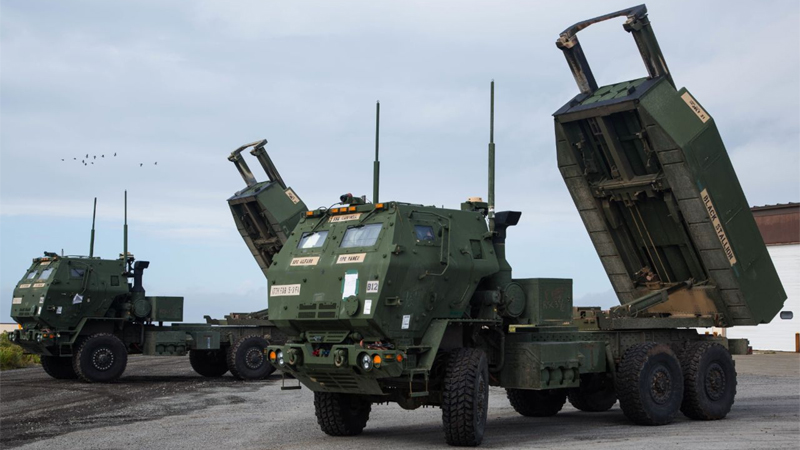
Political confrontations have turned the legislative process into a prolonged stalemate. Since late November 2025, when the Cabinet approved the proposal, opposition lawmakers have blocked its inclusion on the agenda or review more than ten times in committee and plenary sessions – an unprecedented gridlock for a defense measure of this scale. The KMT demands greater transparency, detailed procurement timelines, independent evaluations, and commitments to oversight to prevent “blanket authorizations.” The TPP has gone further, advancing a competing bill that slashes funding to around US$12-13 billion, focusing on conventional systems (e.g., M109A7 howitzers, HIMARS rockets, and munitions) while excluding major asymmetric priorities like the proposed “T-Dome” integrated air and missile defense network and large-scale drone acquisitions. President Lai has warned that adopting this reduced alternative would undermine Taiwan’s long-term military strategy and erode deterrence credibility.

These domestic divisions are exacerbated by external dependencies. The United States remains Taiwan’s primary arms supplier, with Washington approving significant packages to support modernization. In December 2025, the U.S. notified Congress of an $11.1 billion arms sale – the largest single package ever – including High Mobility Artillery Rocket Systems (HIMARS), M109A7 self-propelled howitzers, Javelin and TOW anti-tank missiles, Altius loitering munitions (suicide drones), and related support. These align with Taiwan’s focus on precision strikes, layered defenses, and unmanned systems. The envisioned “T-Dome,” a multi-layered air defense architecture inspired by Israel’s Iron Dome but tailored to threats from missiles, drones, and aircraft, symbolizes this shift toward responsive, indigenous-enhanced capabilities.
Yet delivery delays plague these efforts. The U.S. arms industry faces saturation from global demand (including support for Ukraine), leading to backlogs. A prominent example is the 66 F-16V Block 70 fighters ordered in 2019: production has progressed (with test flights starting in late 2025 and partial assembly underway), but full delivery – originally slated for completion by end-2026 – now appears likely to slip into 2027. Opposition parties leverage these delays to criticize the DPP’s strategy as overly reliant on unreliable U.S. supplies, arguing for greater strategic autonomy and fiscal prudence. This critique finds some resonance in public opinion, where debates persist over balancing external alliances with self-reliance amid economic pressures.
Meanwhile, the PRC intensifies its gray-zone coercion and overt military signaling. Chinese military aircraft incursions into Taiwan’s air defense identification zone occur almost daily, with a 23% increase in detections during 2025. Since 2022, Beijing has conducted multiple large-scale exercises simulating invasion or blockade scenarios. In 2025 alone, notable drills included Strait Thunder-2025A and the particularly assertive Justice Mission-2025 (December 29-30), which rehearsed encircling Taiwan, blockading ports, seizing air/sea superiority, and deterring external intervention through multi-domain operations involving ground, naval, air, and rocket forces.
This escalating pressure amplifies concerns over Taiwan’s budget deadlock. U.S. officials, including Senator Roger Wicker and others, have voiced frustration, warning that delays send dangerous signals to Beijing and undermine regional stability. Some describe the opposition’s tactics as “playing with fire” given the urgency of bolstering defenses before any potential 2027 contingency.

Within Taiwan, government sources express cautious optimism about eventual compromise, but experts – including researchers at National Taiwan University and think tanks – warn of risks from prolonged paralysis. The impasse transcends a routine budget vote: it tests Taiwan’s political cohesion, strategic credibility, and ability to deter aggression in an increasingly volatile Indo-Pacific. Failure to resolve it could erode deterrence, strain U.S.-Taiwan ties, and embolden PRC adventurism at a critical juncture.