Denmark Says No to Patriot: €7.8 Billion for a Fully European Air Defense System
Denmark’s announcement that it will turn exclusively to European air defense systems marks a major turning point for both the country and the continent’s defense industry. After lengthy consultations, Copenhagen has decided to equip itself solely with systems designed and manufactured in Europe, breaking with its long tradition of sourcing almost exclusively from the US. This choice is a symbolic and concrete victory for the European defense industry and a clear strategic move in the face of rapidly evolving geopolitical tensions.
On Friday, October 25, 2025, the Danish Ministry of Defense surprised everyone by unveiling the largest arms contract in the kingdom’s history: 58 billion Danish kroner (approximately €7.77 billion) for the acquisition of eight ground-to-air defense batteries covering the entire spectrum—short, medium, and long range. For the first time, Denmark is turning its back on American suppliers and favoring exclusively 100% European solutions. “This is a historic decision,” said Defense Minister Troels Lund Poulsen, emphasizing that this program represents “the largest military investment ever made by Denmark.”
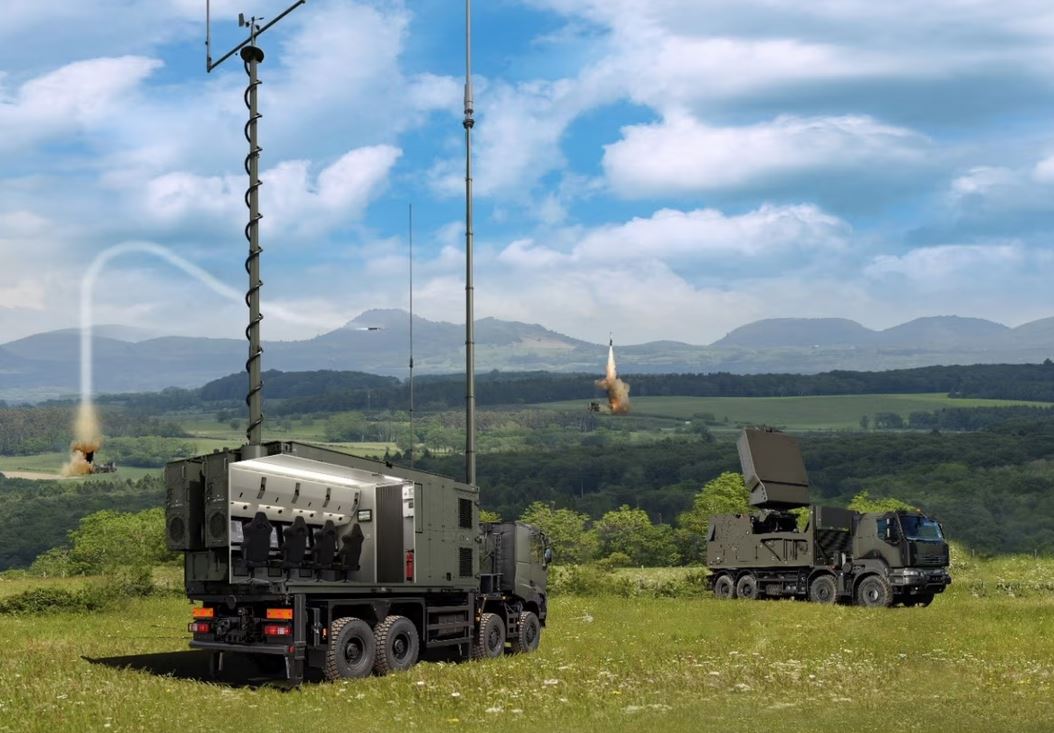
At the heart of this strategic choice is the SAMP/T (Sol-Air Moyenne Portée/Terrestre) system, better known in France as “Mamba.” Developed jointly by France and Italy through the Eurosam consortium (MBDA and Thales), this system was preferred to the famous American Patriot PAC-3 MSE, which was initially the favorite of the Danish military leadership. This is the very first export victory for SAMP/T within NATO Europe – an event hailed as a “real turning point” by manufacturers on the Old Continent.

The reasons for this reversal are operational, financial, and geopolitical. As Per Pugholm Olsen, a defense expert quoted by several Danish media outlets, explained, “European systems offer much shorter delivery times and lower overall costs than the Patriot, while offering equivalent or even superior performance in certain scenarios.” Whereas a complete Patriot battery would take several years to deliver due to global backlogs (notably due to orders from Ukraine, Israel, and the Middle East), European manufacturers promise the first operational units as early as 2028–2029.
The Danish package is particularly comprehensive and perfectly illustrates Europe’s new ambition for strategic autonomy. In addition to three SAMP/T batteries for long range (up to 150 km altitude and 120 km range), Denmark will acquire:
- German IRIS-T SLM systems (Diehl Defense) for medium range,
- British-Italian CAMM-ER (MBDA) for short-medium range,
- And probably Norwegian NASAMS (Kongsberg) as a supplement.
All these systems are manufactured in Europe, often in multinational cooperation, and share the same family of interoperable missiles (Aster 30 for the SAMP/T, IRIS-T for the German system, CAMM for the British system). This harmonization will enable Denmark to streamline its logistics and training and, in the long term, to pool certain parts with its Nordic and Baltic neighbors.
This choice comes at a particularly tense time in the region. Since 2022, the Baltic Sea and northern European airspace have been the scene of repeated incursions by Russian drones and aircraft. The sabotage of the Nord Stream gas pipelines, illegal overflights of the island of Bornholm, and Russian exercises simulating tactical nuclear strikes have had a profound impact on Danish public opinion and military leaders. Denmark, which controls access to the Baltic Sea via the Skagerrak and Kattegat straits, now considers itself to be on the front line.
Beyond the strictly military dimension, this decision carries a strong political charge. By deliberately choosing not to accept any American offers, Copenhagen is sending a clear message: Europe must learn to defend itself. This signal is all the more powerful given that Denmark remains one of Washington’s most loyal allies within NATO (it has far exceeded the target of 2% of GDP in defense spending since 2024). Several analysts see this as a form of “European reassurance” in case the United States, under a possible isolationist administration, reduces its commitment on the eastern flank.
The European industry is savoring this victory. At MBDA and Thales, there is already talk of the “contract of the century.” The SAMP/T, already successfully deployed by France (operationally proven in Iceland, Romania, and the Middle East) and Italy, is finally gaining legitimacy in the most competitive export market: Europe itself. This success paves the way for other bids, particularly in Poland, Finland, and the Baltic countries, which are looking to supplement their Patriot systems with a European layer that is less dependent on US authorizations.
The first SAMP/T multifunction radars are expected to arrive at Skrydstrup Air Base in Jutland as early as 2027. The Danish military, trained in part in France and Italy, is already preparing to integrate this new capability, which will radically transform the kingdom’s defense posture. As Troels Lund Poulsen summed up at the press conference: “We are no longer content to be a loyal ally. We are becoming a pillar of European defense.”
With a single contract, Denmark has just shaken decades of American dominance of the European air defense market. Europe, long accused of being unable to work together, is showing that it is capable of offering a credible, rapid, and sovereign alternative.