
Ford-Class Troubles Deepen: Ongoing Tech Failures Delay Second Supercarrier by Two Years
The American shipbuilding industry has encountered another significant setback with the delayed delivery of the USS John F. Kennedy (CVN-79), the second aircraft carrier in the Gerald R. Ford class. The U.S. Navy, long celebrated for its unparalleled global projection of power through its carrier fleet, currently operates 11 active nuclear-powered aircraft carriers. However, this number is set to temporarily drop to 10 in 2026 due to the planned decommissioning of the aging USS Nimitz (CVN-68) before the Kennedy joins the fleet. This situation underscores ongoing concerns about the domestic shipbuilding sector’s capacity to sustain and modernize the Navy’s core assets amid persistent delays in multiple programs.
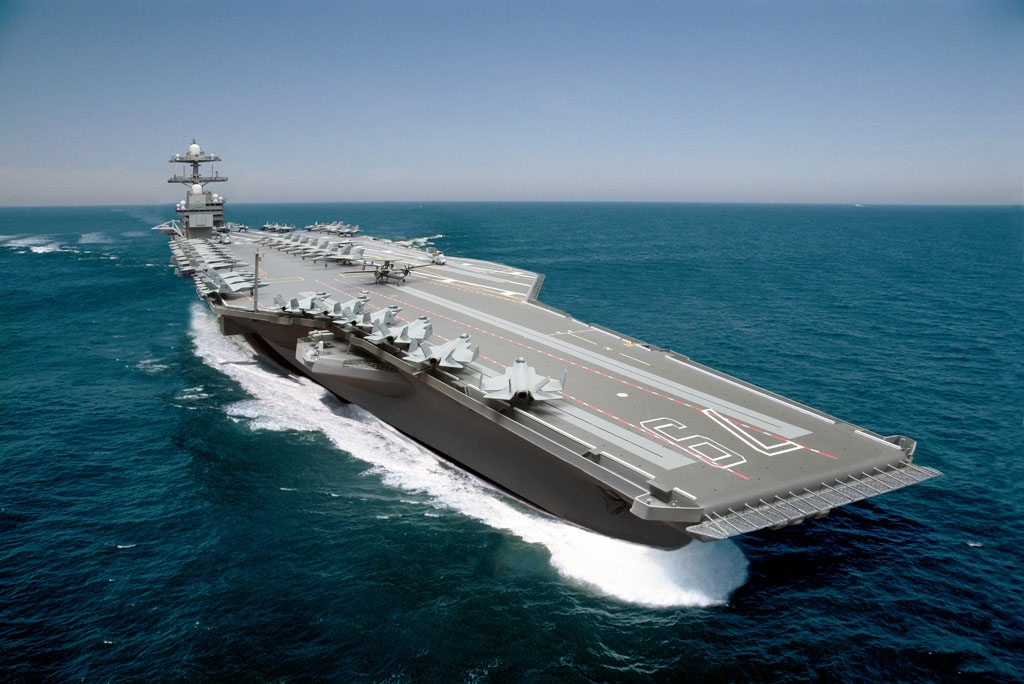
Construction of the USS John F. Kennedy began over a decade ago, with its keel laid in August 2015 at Huntington Ingalls Industries’ (HII) Newport News Shipbuilding facility in Virginia—the only U.S. shipyard capable of building nuclear-powered aircraft carriers. Originally targeted for delivery in the early 2020s, the schedule has been repeatedly extended. The most recent Navy budget documents for Fiscal Year 2026 indicate a delivery date of March 2027, a two-year slip from the previously anticipated July 2025 handover. A preliminary acceptance phase is being explored to accelerate the ship’s transition to operational status.
The primary causes of these delays stem from integration challenges with advanced technologies unique to the Ford class. Key issues include certification of the Advanced Arresting Gear (AAG)—a turbine-based system that replaces traditional hydraulic arresting wires for safer and more efficient aircraft recoveries—and ongoing work on the 11 Advanced Weapons Elevators (AWE), which use electromagnetic linear motors to rapidly move munitions from magazines to the flight deck. Additional complications have arisen from incorporating new sensors, radar systems like the Dual Band Radar (later modified to the Enterprise Air Surveillance Radar), and compatibility with the carrier variant of the F-35 Lightning II (F-35C) stealth fighter. These innovations, while promising enhanced sortie rates, reduced crew requirements, and lower lifecycle costs compared to the Nimitz class, have proven more complex to implement than anticipated.
The lead ship of the class, USS Gerald R. Ford (CVN-78), set a precedent for such difficulties. Delivered in 2017 after its keel was laid in 2009, the Ford endured years of post-delivery fixes, particularly with its Electromagnetic Aircraft Launch System (EMALS), AAG, and AWEs. The final AWE on the Ford was only certified in late 2021, and the ship achieved full operational capability much later than planned. Contractor General Atomics has since refined these systems, improving reliability, but many lessons from the Ford arrived too late to fully integrate into the Kennedy’s build process, as HII has acknowledged.
Despite these hurdles, progress continues. As of late 2025, the Kennedy is preparing for builder’s sea trials in early 2026, with the crew actively training and compartments nearing completion. Recent contract modifications worth over $142 million awarded to HII in November 2025 will fund capability upgrades and change orders, ensuring the ship incorporates the latest enhancements before handover. These include refinements to support F-35C operations and other warfare systems, aiming for a more combat-ready vessel upon delivery.
Looking ahead, the Navy anticipates smoother construction for subsequent Ford-class carriers. The USS Enterprise (CVN-80), currently about 50% complete, has seen its delivery pushed to around 2030 due to supply chain issues, while the USS Doris Miller (CVN-81) remains on track for the early 2030s. Lessons from both the Ford and Kennedy—such as improved digital modeling, workforce retention strategies, and supply chain management—are being aggressively applied. HII has reported gains in employee retention through wage increases and is leveraging dual-dock modifications at Newport News to build carriers more efficiently in parallel.
Broader challenges plague U.S. naval shipbuilding, including workforce shortages, material availability disruptions lingering from the COVID-19 era, and a fragile supplier base for specialized components. The Ford class represents a generational leap: larger displacement (approximately 100,000 tons), advanced nuclear propulsion for greater electrical power, and a design supporting 33% higher aircraft sortie rates. Yet, these delays highlight vulnerabilities in maintaining the statutory requirement of 11 carriers, especially as geopolitical tensions rise in regions like the Indo-Pacific, where carrier presence deters aggression from near-peer competitors.
The temporary reduction to 10 carriers in 2026—following the USS Nimitz’s retirement after 50 years of service—will strain deployment rotations and global commitments. Navy leaders emphasize the need for stable funding and industrial base investments to reverse these trends. Ultimately, the Kennedy’s eventual commissioning will bolster the fleet, providing a platform capable of dominating future maritime conflicts with unmatched airpower projection.