
French Forces to Lead Land and Air Components of NATO’s High-Readiness ARF
In a significant milestone for NATO’s evolving defense posture, France is set to take command of both the land and air components of the Allied Reaction Force (ARF) starting July 1, 2026. This dual leadership role, running through June 30, 2027, underscores France’s growing prominence within the Alliance and marks a historic first for the French Army in leading the ARF’s land component.
The Allied Reaction Force, established in 2024 as a successor to the NATO Response Force (NRF), represents a more robust, high-readiness multinational capability. Designed to deploy rapidly—within as little as 10 days—the ARF is a multi-domain force capable of addressing the full spectrum of threats, from deterrence and crisis management to high-intensity conflict. It operates under the Supreme Allied Commander Europe (SACEUR) and forms a core element of NATO’s new Force Model, enabling quicker responses to emerging security challenges both within and beyond Alliance territory.
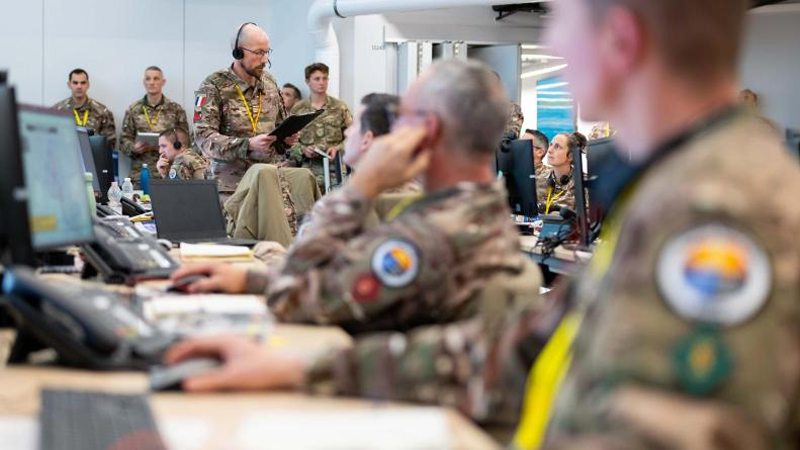
France’s assignment to this pivotal role was confirmed following intensive preparations, culminating in the successful certification of key French commands during Exercise Steadfast Dagger 2025. Held from November 24 to December 4, 2025, at NATO’s Joint Warfare Centre in Stavanger, Norway, this command post exercise involved around 1,200 military and civilian personnel from multiple NATO nations. It tested interoperability, planning, and execution across domains, incorporating modern challenges such as hybrid threats, cyber operations, space, and information warfare.
For the land component, command has been entrusted to the headquarters of the French Army’s 3rd Division. This division, comprising approximately 23,000 active soldiers and bolstered by up to 100,000 reservists in expanded scenarios, underwent a major transformation to align with NATO standards. Over the past year, its staff mastered NATO doctrines, command information systems, and conducted over 1,200 interoperability tests. The certification validated their ability to lead a multinational force, evaluated against more than 150 criteria in areas like planning, projection, sustainment, command, protection, and information operations.
In 2026, the augmented 3rd Division staff—drawing specialists from the French Army’s Operational Land Force, Air and Space Force, and joint services—will form the Land Component Command (LCC). It will be capable of deploying a division-level command post, the 6th Light Armored Brigade, and supporting organic elements. Coordination will extend to contributions from seven allied nations: Turkey, Spain, Poland, Greece, Lithuania, the United Kingdom, and North Macedonia. This multinational integration highlights the ARF’s emphasis on collective strength and shared burden.
Simultaneously, France will lead the air component through the Air Defense and Air Operations Command (CDAOA), operating from its permanent operational command center (CAPCODA) in Lyon. This setup allows for remote conduct of operations, proven effective during Steadfast Dagger. The air command will oversee multinational assets for transport, close air support, surveillance, and other critical functions, ensuring air superiority in diverse scenarios.
France will also bear primary responsibility for logistics and certain air-related tasks under the current ARF headquarters, led by NATO Rapid Deployable Corps-Italy (NRDC-Italy). This layered contribution positions France as a true framework nation, providing the backbone for rapid projection and sustained operations.

The dual command reflects NATO’s confidence in French capabilities amid a deteriorating European security environment. As noted in France’s National Strategic Review, the risk of major conflict looms within 3-4 years, necessitating enhanced readiness. Generals Julien Fourneret (Air) and Éric Ozanne (Army) emphasized during post-exercise briefings the importance of joint training to bridge cultural and doctrinal differences among allies, ensuring seamless multinational operations.
This engagement reinforces France’s commitment to collective defense while balancing national priorities. It demonstrates the Alliance’s adaptability post the shift from the older NRF, which had more limited scope, to the ARF’s global, high-intensity mandate. By leading these components, France not only bolsters NATO’s European pillar but also showcases its professional, interoperable forces on the international stage.
As tensions persist on Europe’s eastern flank and hybrid threats proliferate, France’s leadership in the ARF 2026 sends a clear signal of deterrence and unity. This role, earned through rigorous preparation and certification, positions Paris at the forefront of Allied readiness for the challenges ahead.