
From Ukraine Lessons to Territorial Protection: Sweden Launches Major Short-Range Air Defense Program
In response to the steadily deteriorating security environment across Europe—marked by Russia's ongoing aggression in Ukraine, hybrid threats, and the proliferation of advanced aerial weapons—Sweden is advancing a major enhancement of its ground-based air defense capabilities. On January 11, 2026, the Swedish government formally announced a substantial investment of approximately SEK 15 billion (roughly $1.6 billion or €1.5 billion) dedicated to developing and fielding a new territorial ground-based air defense system. This initiative aims to safeguard not only frontline military units but also civilian population centers, major urban areas, and critical national infrastructure against a spectrum of modern air threats.
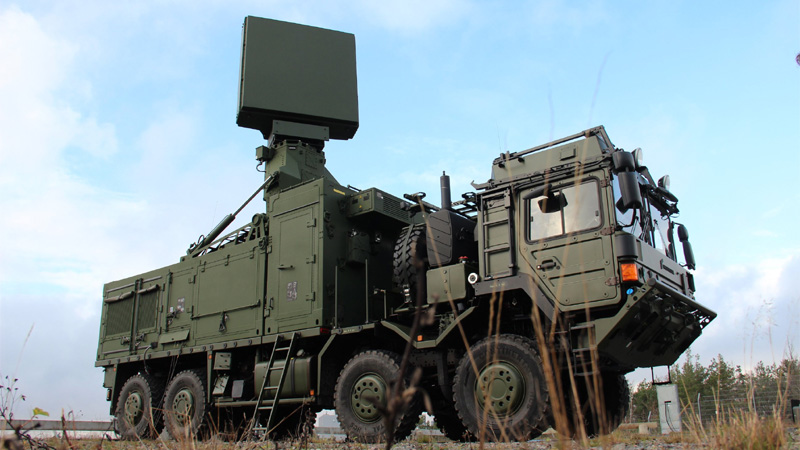
The decision reflects lessons drawn from recent conflicts, particularly Ukraine's experience, where low-cost armed drones (such as FPV and kamikaze types), cruise missiles, loitering munitions, and attack helicopters have proven highly effective even deep behind front lines. These threats are characterized by low radar cross-sections, saturation tactics involving multiple simultaneous vectors, and operations at low altitudes, making them challenging for traditional long-range systems alone. Sweden's existing air defense—built around systems like the BAMSE (Giraffe radar + RBS 23 missiles for medium range), RBS 70/90 man-portable/short-range missiles, and limited older assets—has gaps in layered, nationwide coverage against such diverse, proliferating dangers.
Prime Minister Ulf Kristersson and Defence Minister Pål Jonson have underscored that this program prioritizes protecting society as a whole, ensuring the continuity of essential military operations while shielding civilians and key societal functions from disruption. The explicit goal is to create a resilient, distributed network capable of countering multiple concurrent attacks across the country, reducing vulnerability to targeted strikes that could cripple energy supplies, transportation networks, or command structures.

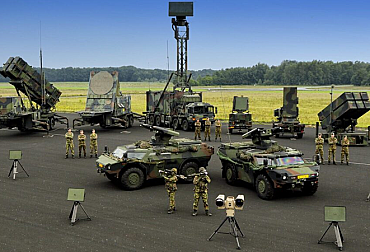
Unlike concentrated, fixed-site defenses of the past, the new approach emphasizes mobility, autonomy, and dispersion. The system will rely on deployable units—roughly company-sized (around 100–150 personnel each)—equipped with integrated sensors, radars, command-and-control elements, and effectors. These units can be rapidly repositioned based on intelligence, operational priorities, or the protection of designated sensitive areas, aligning with broader NATO and European trends toward flexible, resilient air defense architectures.
The program focuses primarily on short-range (typically up to 8–15 km) and very short-range capabilities to address the most immediate, low-flying threats. It will combine:
- Advanced radars and electro-optical/infrared sensors for early detection.
- Surface-to-air missiles (likely building on proven systems such as Saab's RBS 70 NG).
- Anti-aircraft artillery/guns.
- Counter-unmanned aerial systems (C-UAS) effectors, including electronic warfare/jamming and kinetic interceptors.
- Modular integration to allow future upgrades or addition of new technologies.
This open architecture and modularity are key design principles, enabling Sweden to avoid vendor lock-in, incorporate domestic or allied innovations over time, and adapt to evolving threats without full system overhauls. Saab, a leading Swedish defense firm, is heavily positioned to contribute, given its expertise in RBS 70 family missiles and Giraffe radars already in service.
Civilian protection forms the cornerstone of the strategy. Priority coverage will extend to major bridges, railway hubs, ports, power generation facilities (including nuclear and hydroelectric plants), data centers, and other vital infrastructure essential for economic stability and public services. This territorial focus marks a shift from purely military-centric air defense toward a holistic national resilience model.
The investment forms part of Sweden's broader defense buildup since joining NATO in 2024. Earlier efforts include acquisitions of Patriot long-range systems (in cooperation with Germany and others), additional RBS 70 NG units, and medium-range enhancements. The SEK 15 billion allocation will be spread over several years to manage fiscal impact and allow phased integration, training, and production ramp-up.
Implementation is already underway: The Swedish Armed Forces have been tasked with producing, training, and equipping multiple such units. Initial orders and development contracts are expected in early 2026, with deliveries and operational capability building progressively through the late 2020s. This timeline supports Sweden's goal of reaching NATO's 2%+ GDP defense spending target while addressing urgent capability shortfalls identified in recent threat assessments.
Overall, this initiative strengthens Sweden's deterrence posture in the Baltic region, enhances interoperability with NATO allies, and demonstrates a commitment to layered, society-wide defense in an era of complex aerial threats.