From Vision to Demonstrator: Europe’s Road to a New Main Battle Tank
The European initiative to design and develop a demonstrator for a future main battle tank represents a qualitative shift in thinking about the land capabilities of European armed forces. The project is conceived as a practical tool for verifying technologies and technical designs on a platform-wide scale, as well as a political framework for bringing together diverse armies. The emphasis on the demonstrator, i.e., a functional system at the level of a complete combat vehicle, gives this initiative extraordinary weight. This opens up opportunities for both main system integrators and a wide range of specialized subcontractors.
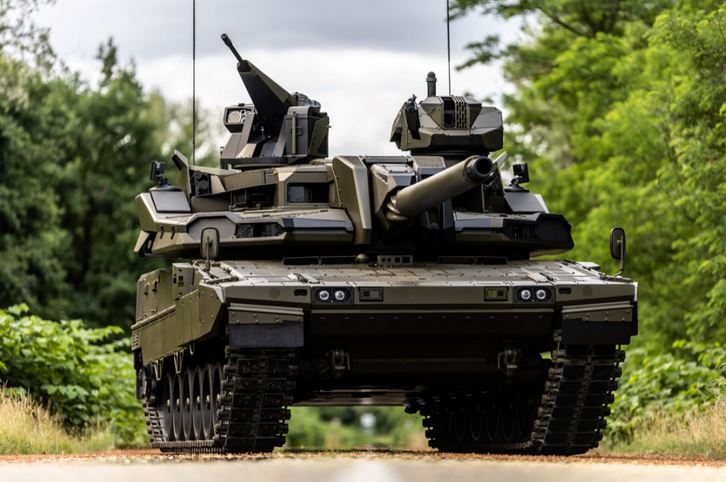
The announced call for proposals from the European Defense Fund EDF-2026-DA-GROUND-MBT contains a number of technical details. Its objectives include the development of a platform that will achieve a technical maturity of at least TRL 6 (often the minimum threshold for entry into an acquisition program) at the system level. The European Commission is thus making it clear that it wants to move the development of the future main battle tank (MBT) from the level of conceptual debate to the stage of verifiable capabilities. The budget of approximately €125 million and the decision to fund a single consolidated proposal create pressure for genuine integration and for the selection of solutions that have real potential to become the basis for future standardization.
The technical requirements defined in the European Defense Fund (EDF) program confirm the concept of the future European tank as a full-fledged combat platform for high-intensity conflict. The emphasis is on an optimal balance of mobility, protection, and firepower, with firepower explicitly identified as a priority parameter. The requirement for automatic loading, a high ammunition supply enabling long-term combat contact, and the ability to destroy the best-protected targets shows that Europe is counting on the risk of direct confrontation between heavy armored forces. The ability to engage moving targets with a high probability of first strike is also essential, placing extreme demands on sensors, stabilization, fire control, and data integration.
The requirements in the area of protection appear to be equally ambitious. The future European tank is to be protected against a wide range of threats, from 125 mm armor-piercing tank shells to modern third-generation anti-tank guided missiles, loitering munitions, and FPV drones. A combination of an active protection system capable of handling multiple threats simultaneously, modular passive and reactive armor, and means of camouflage and enemy targeting disruption is required. A completely new standard has been set with an emphasis on protection against electronic warfare, cyber attacks, and directed energy weapons, which will enable the tank to survive in the electromagnetically demanding environment of the modern battlefield.
Mobility and logistical sustainability have been defined in similar detail. The requirement for a minimum speed of 60 km/h on the road and 40 km/h off-road, a range of over 600 km in a combined profile, and the ability to perform short-term dynamic maneuvers from a stationary position indicate the need for high operational flexibility. The weight limit of 60 tons, combined with the requirement for further growth (up to 15%), creates pressure for innovative design solutions, materials, and subsystem integration. Equally important is the emphasis on reducing the logistical footprint, compatibility with European transport infrastructure, and consideration of environmental aspects throughout the platform's life cycle.
This technical ambition also reflects the political reality of European defense cooperation, particularly the tensions between France and Germany. The parallel funding of the MARTE and FMBTech projects under the previous EDF-2023-DA-GROUND-MBT call was a direct consequence of the inability of the two countries to agree on the leadership of the project. Germany's emphasis on industrial dominance and France's efforts to maintain national strategic autonomy led to a split in efforts, which the EDF had to legitimize with additional funds. The new call, which funds only one proposal, is thus a clear attempt to overcome this model and force key players to truly integrate.
It is in this context that the weakness of the parallel MGCS (Main Ground Combat System) project led by KNDS (a merger of the German company Krauss-Maffei Wegmann and the French arms manufacturer Nexter Systems) is becoming increasingly apparent. This effort to replace the French Leclerc and German Leopard tanks has been caught between political ideals and industrial disputes for years, without producing tangible technical results commensurate with the time and resources expended. While the EDF-MBT initiative is moving towards a demonstrator with clearly defined parameters, the MGCS remains a framework whose practical applicability is constantly being postponed. The European MBT initiative is thus effectively creating an alternative center of development that could bypass the MGCS or, in extreme cases, reduce it to a sub-stream of a broader European effort.
Another key domain is the electronic architecture of the vehicle and cyber resilience. The requirement for compatibility with NGVA (NATO Generic Vehicle Architecture) standards, very low latency when sharing external data, and the ability to operate in an environment of intense electronic warfare creates space for specialized suppliers of computing units, communication nodes, middleware, and security solutions. This is where the tank's ability to function as part of a networked battlefield is determined.