
Germany’s Military Service Reform: Toward a New Model in Response to Geopolitical Challenges
The German Bundestag is currently engaged in intense debates on the future of military service, against the backdrop of the “Zeitenwende” (turning point) announced by Chancellor Olaf Scholz shortly after Russia’s full-scale invasion of Ukraine in February 2022. The ambitious goal is clear: transform the Bundeswehr from its current strength of approximately 183,000 active soldiers into a significantly larger and more capable force in order to meet NATO commitments and deter potential threats, especially from the East. To achieve this, Defence Minister Boris Pistorius (SPD) is preparing a fundamental reform of the recruitment system that will come into force, at the earliest, in 2026.
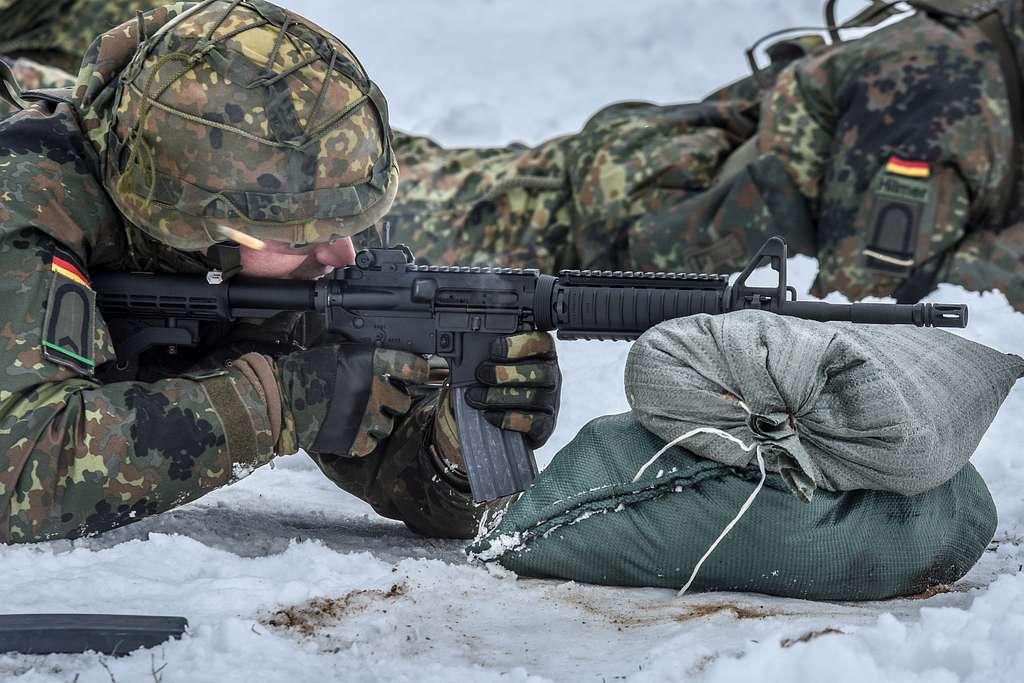
The old compulsory military service (Wehrpflicht) was suspended in 2011 under the CDU-led government of Angela Merkel and then-Defence Minister Karl-Theodor zu Guttenberg. Since then, the Bundeswehr has operated as a fully professional volunteer army. The sharp decline in applications, combined with the new security situation, has now forced politicians to rethink the model. The new system is officially presented as “a new service for society” (Gesellschaftsdienst) rather than a return to classic conscription, but it contains elements that have sparked heated controversy.
From 2026 onwards, every German citizen who turns 18 in that year will automatically receive a letter from the Federal Office for Personnel Management of the Bundeswehr (BAPersBw) containing a compulsory digital questionnaire (for men) or a voluntary one (for women). According to current planning, this will affect around 400,000 young men and 360,000 young women per year cohort. The questionnaire is designed to record personal data, state of health, education, professional wishes, and above all willingness to serve in the Bundeswehr or in other areas of societal service (e.g. civil protection, disaster relief, or social institutions).
Once the questionnaires have been evaluated, the most promising candidates will be invited to a muster (Musterung): medical examination, physical fitness test, psychological assessment, and a personal interview. Only those who are classified as “geeignet und motiviert” (fit and motivated) can ultimately be called up. Here lies the most controversial element: if there are more suitable and willing candidates than the Bundeswehr can or wants to accept in a given year, a lottery will decide who actually has to serve. This “Kontingentierte Wehrpflicht mit Losverfahren” (quota-based conscription with lottery) is intended to ensure fairness and prevent social selection (i.e. only the less privileged serving).
The length of basic military service is expected to be six months, with the possibility of voluntary extension up to a total of 23 months (17 months additional voluntary service). Those who are not selected for the Bundeswehr or who are declared unfit can fulfil a shorter societal service (probably 6–12 months) in hospitals, care facilities, fire brigades or THW (Federal Agency for Technical Relief).
Financial and social incentives have been significantly improved to increase attractiveness:
- Net monthly pay of approximately €2,300 during service (far higher than the previous €1,200–1,500 for voluntary servicemen)
- Full coverage of driving licence costs (Class B and often CE for truck licences)
- Priority in applications for public-sector jobs (police, customs, fire brigade) after completion of service
- Credit towards pension and study places at universities
The long-term targets are ambitious: by 2031 the Bundeswehr aims to have 203,000 active soldiers (the figure agreed with NATO), and by 2035 a total strength (active + reserve) of 460,000 men and women. To reach the intermediate target, the Ministry of Defence expects to recruit an additional 15,000–20,000 young people each year through the new system on top of the current voluntary recruits.
Political positions remain deeply divided. The governing “traffic-light” coalition (SPD–Greens–FDP coalition insists that the service must remain fundamentally voluntary and attractive. SPD General Secretary Matthias Miersch emphasised: “No one should be forced into the Bundeswehr against their will.” The opposition CDU/CSU, on the other hand, is calling for an immediate and full return to general conscription for men (and possibly also a voluntary option for women), as it existed until 2011. CDU defence expert Johann Wadephul and CSU regional leader Markus Söder consider Pistorius’ model too timid and fear that a lottery would destroy motivation in the long term. The Greens and parts of the FDP, meanwhile, are pushing for a stronger “societal year” that is not primarily military.
Public opinion is equally split. According to a representative INSA survey from October 2025, 54 % of all Germans are in favour of reintroducing compulsory military service, but among 18- to 29-year-olds the approval rate drops to just 33 %. Many young people fear disadvantages in education or career starts and criticise the fact that women are still only voluntarily affected (although Pistorius has announced that compulsory registration for women will be examined in a second step from 2027/28).
Experts also warn of practical challenges: the Bundeswehr currently lacks sufficient barracks space, training capacities and, above all, instructors for tens of thousands of additional recruits per year. The costs of the reform are estimated at €3–5 billion annually once it is fully rolled out.
In summary, Germany is not (yet) returning to classic conscription, but is introducing a hybrid model that combines compulsory registration, strong incentives and, if necessary, a lottery. Whether this “German Sonderweg” will actually succeed in making the Bundeswehr significantly larger, more attractive and socially accepted remains one of the most decisive domestic political questions of the coming years.