How Militarily Strong Is Europe Compared to Russia?
Strengthening defense capabilities has become the number one security issue in Europe. Faced with Russia's aggressive policy, which, in addition to the war in Ukraine, is also manifested in Russian threats to other European countries, Europe must change its policy and, in fact, its entire approach to security issues. This is further exacerbated by the fact that Donald Trump's current US administration is pursuing a policy of partial disengagement from cooperation with Europe. The US remains a member of NATO, but it is clear that it is increasingly turning its attention to Asia. Europe must therefore rely primarily on itself.
For many years, Europe neglected its defense capabilities, with European countries pursuing a policy of low military spending. This was naturally reflected in their armies, which had to drastically reduce their numbers due to a lack of funds. The current policy of strengthening defense therefore often takes the form of restoring former forces and capabilities.
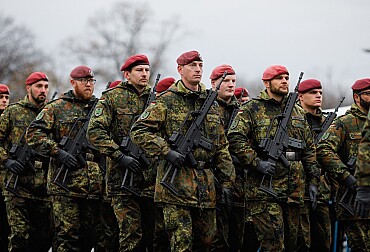
One of the most common steps taken by European countries and their armies has therefore been to increase their numbers. This is partly being done by recruiting more professional soldiers – which is also the approach taken by the Czech Republic. However, it is clear that this method can only achieve a partial increase in numbers.
The reinstatement of compulsory military service has therefore become a major topic of discussion for European states and their armies. Germany, for example, as the largest European state, is considering this step. The Baltic states introduced compulsory military service several years ago. Similar discussions are also taking place in other countries, including the Czech Republic. Nevertheless, it is questionable whether this is the right way forward.
The question of headcounts
One problem is that we often evaluate armies solely on the basis of the number of soldiers they have. However, this approach is outdated. Of course, the war in Ukraine, in which the Russian and Ukrainian armies, numbering hundreds of thousands of soldiers, are clashing, shows us that the size of an army is still an important factor. Nevertheless, it is clear that the situation today is completely different from, say, World War I. Today, modern weapon systems, their sophistication, software equipment, etc. are much more decisive.
This is further enhanced by the advent of fundamentally new types of military technology, such as drones, loitering munitions, and ground robots. It is these systems that can, to a certain extent (though not entirely), replace soldiers, with one such system potentially outweighing a larger number of soldiers. It is also important to realize the circumstances under which the Ukrainian army is facing the Russian army. Ukraine is facing Russia alone. European countries are providing extensive assistance to Ukraine, supplying it with weapons, etc., but no European country is openly involved in Ukraine. However, Europe, or rather NATO countries, are in a completely different situation. There is a mutual assistance agreement between NATO countries – the well-known Articles 4 and 5 of the North Atlantic Treaty. If one NATO country is attacked, the other countries will come to its aid. European countries, NATO member states, would thus face a Russian attack together.
Picture: If one NATO country were attacked, the other countries would come to its aid. European countries that are NATO members would thus face a Russian attack together. | Shutterstock
European armies
Europe represents a significant force. We are sometimes confused by the fact that individual European armies are somewhat weaker, or have fewer soldiers. However, together these armies represent an impressive military potential. Given the current situation, it is necessary to focus on purely European countries, thus excluding the currently somewhat unreliable USA and the equally debatable Turkey, which has been pursuing its own military policy for many years (data on individual armies are rounded for simplicity).
Germany is the most populous country in Europe and has the strongest economy. However, its military potential lags significantly behind. Nevertheless, today's German army has more than 183,000 soldiers. In percentage terms, relative to the population, this is not much, but it is still an impressive force. Germany is also strengthening its army with new weapon systems.
France has a smaller population but a stronger army, currently numbering around 204,000 soldiers. This makes it the largest army in Europe. The French army is somewhat under-armed, but it is still an effective armed force. France's importance is further enhanced by the fact that it possesses nuclear weapons as a key element of European strategic deterrence, which, thanks to the threat of retaliatory strikes, can deter Russia from using nuclear weapons.
Even after leaving the EU, the United Kingdom remains part of European security structures and is a traditional member of NATO. The British army is numerically weaker, with only about 141,000 soldiers. However, it is a very high-quality army with a high level of combat readiness. In addition, the United Kingdom has recently been strengthening its armed forces through extensive acquisitions. Importantly, the United Kingdom also has nuclear weapons. As a result, the United Kingdom contributes more to European defense than might appear at first glance.
Italy is one of Europe's large and populous countries. Its army is similar in size to those of other European powers, currently numbering 165,000 soldiers. Italy can also rely on extensive paramilitary forces.
In recent years, Poland has risen to become one of Europe's military powers thanks to the systematic development of its armed forces and high military spending. Currently, the Polish army has approximately 164,000 soldiers, with Polish leaders talking about an army that should have 300,000 or even 400,000 soldiers. It is interesting to note, however, that this is a purely professional army, albeit one that also relies on voluntary reserves.
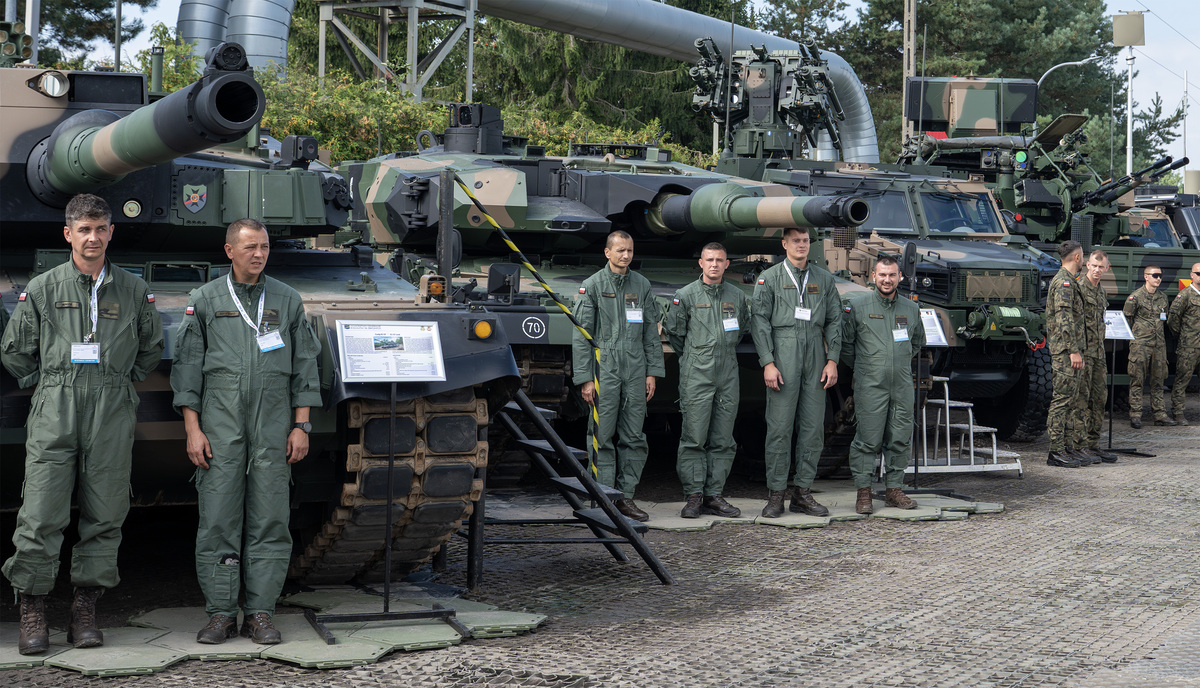
Spain is roughly comparable to Poland in terms of population, but its army is significantly weaker. Currently, Spain has only 133,000 soldiers, yet it is still a significant fighting force.
Greece is one of Europe's major military powers. Although it has a smaller population, it maintains a large army, partly due to its complex relations with Turkey. The current Greek army has 140,000 soldiers, making it one of the strongest in Europe. The Greek army also has an extensive arsenal of weapons at its disposal.
The Netherlands is a typical example of a country that has criminally neglected its armed forces. As a result, the Dutch army has gradually declined to its current size of approximately 34,000 soldiers. A major disadvantage of the Dutch army is its under-equipment. Nevertheless, it is a highly professional army with a high level of training.
Belgium has also traditionally been one of the more militarily active countries in Western Europe, with low military spending. Even so, the Belgian army, numbering approximately 23,500, is an integral part of NATO.
Portugal has a numerically weaker army, with only about 27,000 soldiers. However, the Portuguese army has a relatively high combat level, thanks in part to its experience in various international missions.
Norway, given its smaller population, also has a smaller army, with about 25,000 soldiers. However, Norway's advantage is its considerable economic strength, which allows it to develop its armed forces. The Norwegian army should therefore be strengthened in terms of numbers.
As a new NATO member state, Sweden has only a small army of approximately 15,000 soldiers, but on the other hand, the Swedish army can rely on relatively large reserves. Another advantage for Sweden is its advanced arms industry, which contributes significantly to European defense.
Finland is another new NATO member state. Due to its geographical proximity to Russia, but also because of its historical experience, Finland perceives the threat from Russia very intensely and is therefore systematically building up its armed forces. The Finnish army is numerically weaker, with only about 24,000 soldiers in peacetime, but it can rely on both numerous reserves and paramilitary units, so it can easily and quickly increase its numbers.
Denmark also has a small army of 15,000 soldiers. However, Denmark has a high-quality system of paramilitary forces, thanks to which it can increase its peacetime strength more than fourfold.
Lithuania, Latvia, and Estonia perceive the threat posed by Russia most strongly. The Baltic states have smaller populations and weaker economies. On the other hand, these countries have significantly increased their military spending and strengthened their armies. Today, the Lithuanian army has approximately 23,000 soldiers, Latvia has 8,700 soldiers, and Estonia has approximately 7,200 soldiers.
Thanks to V. Orbán, Hungary is currently pursuing a largely pro-Russian policy. Nevertheless, Hungary remains an active member of NATO. In addition, Hungary has been strengthening its armed forces for a long time, and today the Hungarian army has more than 32,000 soldiers.
The Czech Republic currently has an army of only about 26,000 soldiers. However, the Czech Armed Forces want to significantly increase the number of their professional soldiers, thanks in part to higher defense spending. The Czech Armed Forces are reinforced by active reserves.
Slovakia has a smaller army of about 13,000 soldiers. On the other hand, Slovakia has significantly modernized the equipment of its armed forces in recent years.
Romania, on the other hand, is better equipped thanks to its larger population. Romania's disadvantage is its weaker economy, but on the other hand, it is significantly increasing its defense budgets and, as a result, the size of its army. The Romanian army now has almost 70,000 soldiers and represents a significant fighting force in the region.
For many years, Bulgaria has pursued a policy of low defense spending, largely contrary to its historical tradition. Even so, the country has an army of 37,000 soldiers, and with increasing defense spending, its numbers will continue to grow.
Croatia has placed considerable emphasis on defense for many years. The Croatian army has only about 17,000 soldiers, but Croatia is increasing its military spending, which should be reflected in higher army numbers.
Slovenia currently has approximately 7,000 soldiers. However, the Slovenian army has invested heavily in modern equipment in recent years, making it a force to be reckoned with.
Albania maintains only a small army of approximately 8,000 soldiers. However, the level of Albanian soldiers is currently good, and Albania plans to increase the number of its armed forces.
North Macedonia has a small but relatively high-quality army of 8,000 soldiers. The North Macedonian army is also switching to Western equipment.
Montenegro and Luxembourg are very small countries and therefore have only symbolic armed forces (Montenegro 2,700 soldiers, Luxembourg 1,000 soldiers). However, these countries are also an important part of European security policy, with wealthy Luxembourg contributing significantly to NATO financially and Montenegro benefiting from its strategic location.
If we add up all these European countries and their armies, we see that even without the US and Turkey, there are almost 1,600,000 soldiers. To this must be added reserves, but also various paramilitary forces, which are very numerous in some countries (Italy). All in all, this represents a significant military force, even in global terms.
Let's try to compare this military force of Europe with the Russian army. The Russian army currently has about 1,300,000 soldiers. In addition to the army, Russia also has a paramilitary National Guard, numbering about 300,000 soldiers.
However, Russia's human potential is largely exhausted. This is due to Russia's unfavorable demographics, but also to combat losses in Ukraine. Relatively large-scale emigration also has a negative impact. Russia can still mobilize further, but it cannot significantly increase the size of its army.
In terms of the number of soldiers, Europe and Russia are roughly comparable. Europe is not lagging behind Russia in this respect, which is very important. Although some reinforcement of European armies is necessary, it does not need to be that significant.
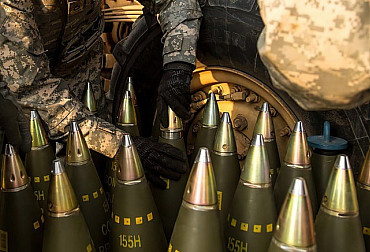
So what does Europe need? Above all, Europe needs to arm itself and increase the number of its weapon systems. European armies are largely under-armed. Western European countries in particular have only small numbers of individual types of weapons. Central and Eastern European countries, on the other hand, still have outdated equipment in many cases, dating back to the Warsaw Pact era.
European armies therefore need more tanks, self-propelled guns, and IFVs. But they also need more strike drones, etc., preferably of European origin. It is precisely these modern weapon systems that could create a deterrent potential that would discourage Russia from any military attack on Europe. In the event of a conflict, they would then be able to counterbalance Russia's greater agility and its policy of ignoring its own losses. The old saying, "if you want peace, prepare for war," thus remains valid today.