MEXCA IFV: A Confident Modern Take on a Soviet Classic
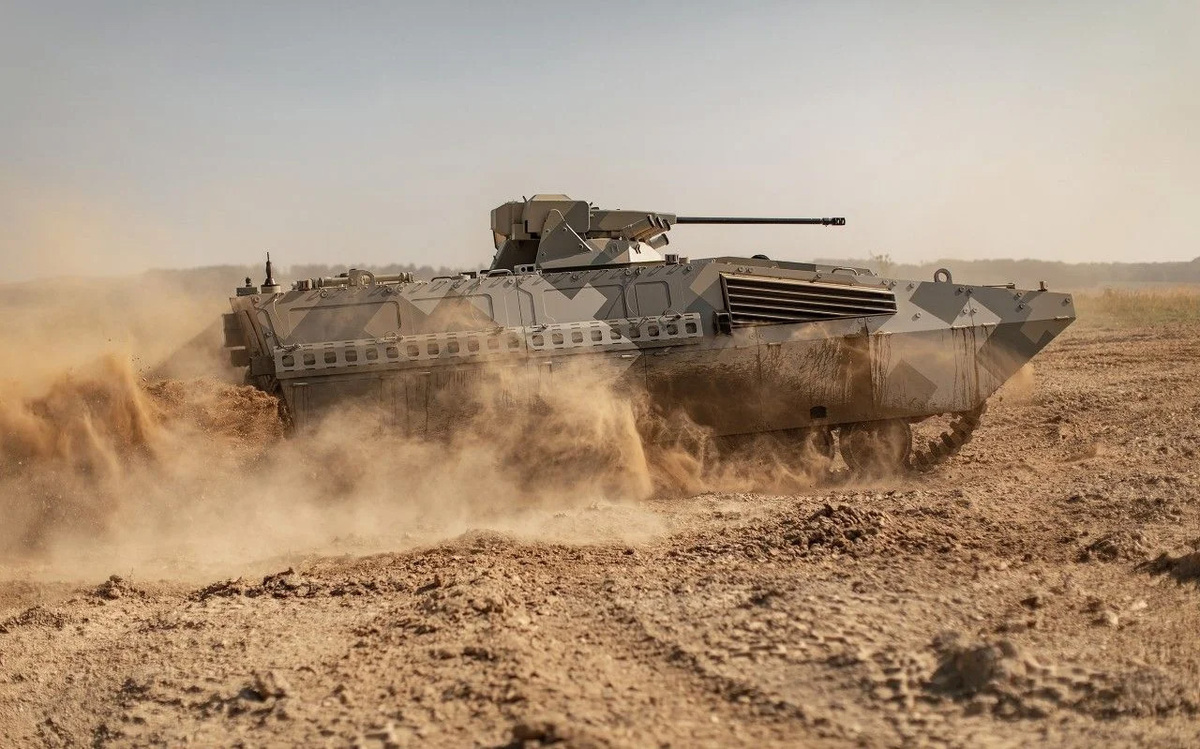
Soviet-designed infantry fighting vehicles are among the most widely used armored vehicles in the world today. Czech Armored tracked infantry fighting vehicle MEXCA shows that their modernization does not have to be a compromise, but rather a rational and confident response to the realities of today's battlefield, with an emphasis on crew protection, ergonomics, and modular weaponry.
The war in Ukraine has brought technology that until recently belonged to the category of "Cold War legacy" back into the spotlight. Soviet-era infantry fighting vehicles, particularly the BVP-1 and BVP-2, have once again proven to be a key element of mechanized units. Not because they correspond to the latest trends, but because there are thousands of them, and many armies simply cannot afford to replace them with completely new platforms.
It is precisely in this space between operational reality and budgetary possibilities that projects such as the Czech MEXCA infantry fighting vehicle make sense. This is not a revolution or an attempt to compete with the most modern Western IFVs, but a well-thought-out and confident upgrade of a proven Soviet classic for 21st-century conditions.
The BVP-1 and BVP-2 platforms were designed at a time when the emphasis was on rapid maneuverability, low silhouette, and the ability to be deployed en masse in large-scale conventional conflicts. The vehicles were light, relatively fast, and easy to maintain, which explains their widespread use across Europe, Asia, and Africa.
However, the weakness of this concept was the protection of the crew and troops, which corresponded more to the ideas of the 1960s and 1970s than to the reality of the modern battlefield. Minimal ballistic protection, virtually zero mine resistance, limited interior space, and complicated troop deployment through double doors have proven to be a major problem in current conflicts. Modernization is therefore not a question of comfort, but of survival.
This is where MEXCA, a tracked infantry fighting vehicle developed by Czech company Excalibur Army, comes into play as a more modern, powerful, and safer alternative that remains compatible with the BVP-1 and BVP-2 platforms. The basic philosophy of the project is clear: to use what works in the original design and systematically eliminate its greatest weaknesses. MEXCA is not presented as a completely new generation of combat vehicle, but as an evolutionary step that reflects the changing nature of combat, the emphasis on crew protection, and the need for a modular solution.
One of the most significant improvements is in the area of protection. MEXCA offers increased ballistic protection, corresponding to the STANAG 4569 Level 3 standard, with the possibility of further enhancement according to customer requirements. This represents a fundamental difference from the original Soviet IFVs, whose armor primarily protected against shrapnel and light weapons.
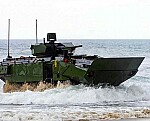
Equally important is the mine protection at level 2a/1 STANAG 4569, which reflects experience from asymmetric conflicts, where mines and improvised explosive devices are among the most common threats. The increased protection is naturally reflected in the vehicle's weight, which is approximately 18.8 tons, but this is a conscious and acceptable compromise in favor of the survival of the crew and passengers.
Despite the increase in weight, the MEXCA retains solid mobility. It is powered by a 300 kW Caterpillar C9.3 diesel engine, coupled with an automatic transmission that reduces the driver's workload and improves the vehicle's maneuverability in difficult conditions. The maximum speed on the road is 65 kilometers per hour, and approximately 45 kilometers per hour off-road.
The range is around 400 kilometers, which meets the needs of mechanized units in normal operations. The vehicle is capable of climbing slopes with a gradient of up to 35 degrees, a side slope of 30 degrees, vertical obstacles 0.7 meters high, and ditches 2.5 meters wide. Its ability to ford depths of up to 1.3 meters without preparation confirms that the MEXCA remains a fully-fledged tracked vehicle capable of operating in diverse terrain.
The interior and ergonomics have also undergone a major transformation. Compared to the original BVP, the MEXCA offers a larger and better-organized interior, which allows for the transport of a six-member troop in modern equipment, while also increasing the comfort and safety of the three-member crew. The installation of ballistic seats, modern controls, and new control systems for the driver, commander, and gunner brings the vehicle closer to current standards.
A key feature is the rear landing ramp, which eliminates one of the biggest weaknesses of the original Soviet design and allows for faster and safer evacuation of the vehicle under fire. From the perspective of mechanized infantry tactics, this is a change that has a direct impact on the survival of the unit in combat situations.
MEXCA is designed as an open platform with an emphasis on modularity. The vehicle can be fitted with various types of unmanned and manned turrets, including the TURRA 30 turret, the Israeli Samson Mk II, or the remotely controlled DVK 30 turret. The standard armament consists of a stabilized 30mm automatic cannon, such as the 2A42 or CZ-30, supplemented by a coaxial 7.62mm machine gun.
The open architecture allows for the integration of modern communication, sensor, and command and control systems, as well as the additional installation of weapon or protection elements, according to the specific user's needs. MEXCA is therefore not a single, fixed product, but rather a flexible solution that can be adapted to various operational scenarios.
Platform continuity is also an important aspect. Sharing logistics elements, service procedures, and some spare parts with the original BVP-1 and BVP-2 reduces operating costs and facilitates the introduction of the vehicle into service. It is this feature that makes MEXCU particularly attractive to armies that have larger stocks of Soviet equipment but are also facing growing security threats and pressure to modernize.
From the perspective of the Czech defense industry, MEXCA is a typical example of a pragmatic approach. Instead of trying to compete with the most expensive Western combat vehicles, Excalibur Army offers a solution based on real market needs and operational experience in recent years. Modernization is not seen here as an emergency compromise, but as a rational response to the fact that not every army needs – or can afford – a completely new platform.
MEXCA thus shows that even "Soviet classics" can have their place on the modern battlefield if they are properly understood and adapted. This is not about nostalgia or an effort to extend the life of technology at any cost. It is a confident upgrade that respects the limits of the original design while getting the most out of it. In this sense, MEXCA is not a symbol of compromise, but proof that modernization can be an expression of technical and industrial rationality.