

Mystery in Wardak: Strategic UAV Crash Raises Questions About Regional Surveillance
The first day of 2026 brought a significant development to the skies over Afghanistan. On January 1, wreckage of a large, unidentified strategic Unmanned Aerial Vehicle (UAV) was discovered in the Wardak province, near the administrative center of Maidan Shahr.
While the exact identity of the aircraft remains officially unconfirmed, initial reports and visual evidence from outlets like Afghanistan International and Clash Report suggest the downed craft is a U.S. MQ-9 Reaper—one of the most sophisticated reconnaissance and strike platforms in the world.
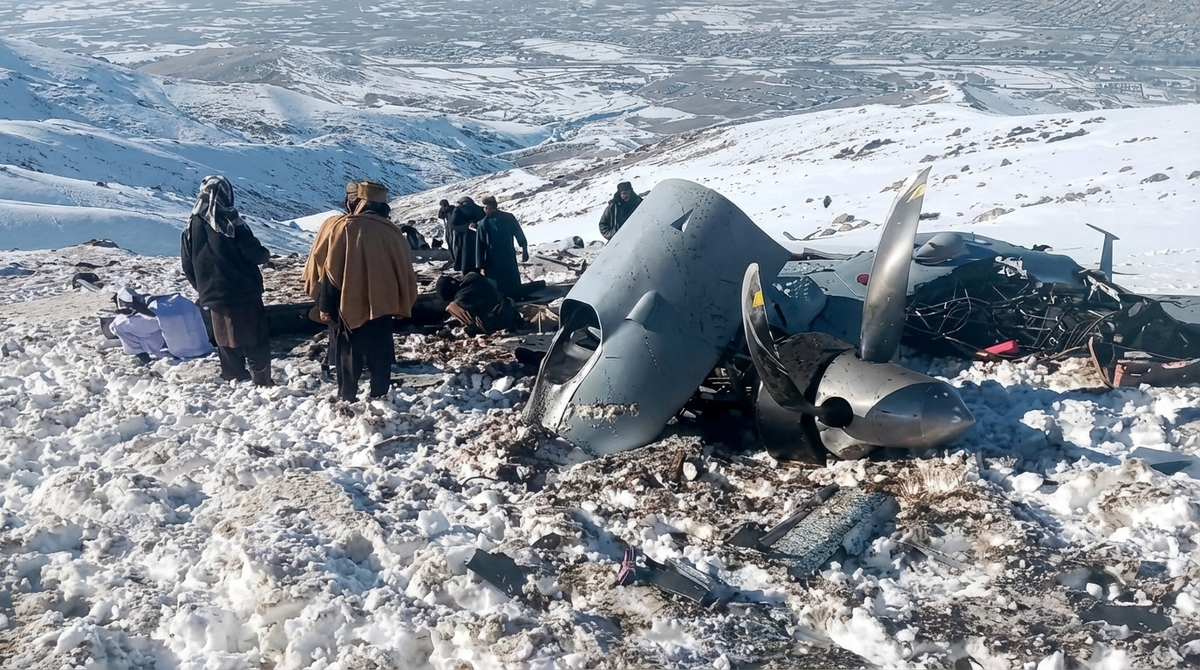
The Silent Reaper: A Profile of Power
The MQ-9 Reaper, developed by General Atomics Aeronautical Systems, is the "big brother" of the original MQ-1 Predator. It is not a typical small-scale drone; it is a massive, medium-altitude, long-endurance (MALE) aircraft designed for high-stakes missions.
Key Capabilities of the MQ-9:
- Service Ceiling: 13,000 meters (42,650 feet), keeping it out of reach of basic anti-aircraft systems.
- Endurance: Capable of staying airborne for 24 hours, providing persistent "eyes in the sky."
- Lethality: It features six weapon hardpoints. The internal stations can carry up to 680 kg each, while the mid-wing and outer hardpoints allow for a versatile mix of Hellfire missiles and precision-guided bombs.
A Cloud of Uncertainty
What makes the Wardak crash particularly intriguing is the lack of official confirmation. Typically, when a high-value asset like a Reaper is lost, U.S. military commands issue a statement regarding the incident. As of now, official pages remain silent.
This silence isn't entirely unprecedented. In the past, technical malfunctions have led to "controlled" losses.

- November 2025: A Reaper from the 431st Expeditionary Reconnaissance Squadron lost communication near the Korean Peninsula. To prevent a crash in a populated area, it was deliberately destroyed over the sea.
- 2021: A similar "unspecified loss" occurred in Africa, highlighting that even the most advanced systems are susceptible to technical failure.
Why the Discovery in Wardak Matters
The presence of a strategic UAV in Afghan airspace—and its subsequent crash—raises critical questions about current over-the-horizon surveillance operations. The MQ-9 is operated by a "who's who" of global powers, including the UK, France, India, and Japan, making any loss a point of interest for international intelligence communities.
If the wreckage is indeed a Reaper, the recovery of its sensitive sensors and communication hardware becomes a high-priority concern. Whether the crash was caused by a technical glitch, a pilot error from a remote station, or external interference, the incident serves as a stark reminder of the high-tech shadow still cast over the region.