
North Korea Is Quietly Building a Much Larger Strike Force
North Korean leader Kim Jong Un has ordered a major expansion of the country’s missile production capacity, directing the defense industry to increase output of ballistic and cruise missiles by 2.5 times over the next five years. The move signals a deeper push to strengthen elite military units while sustaining North Korea’s broader effort to expand and modernize its missile arsenal.
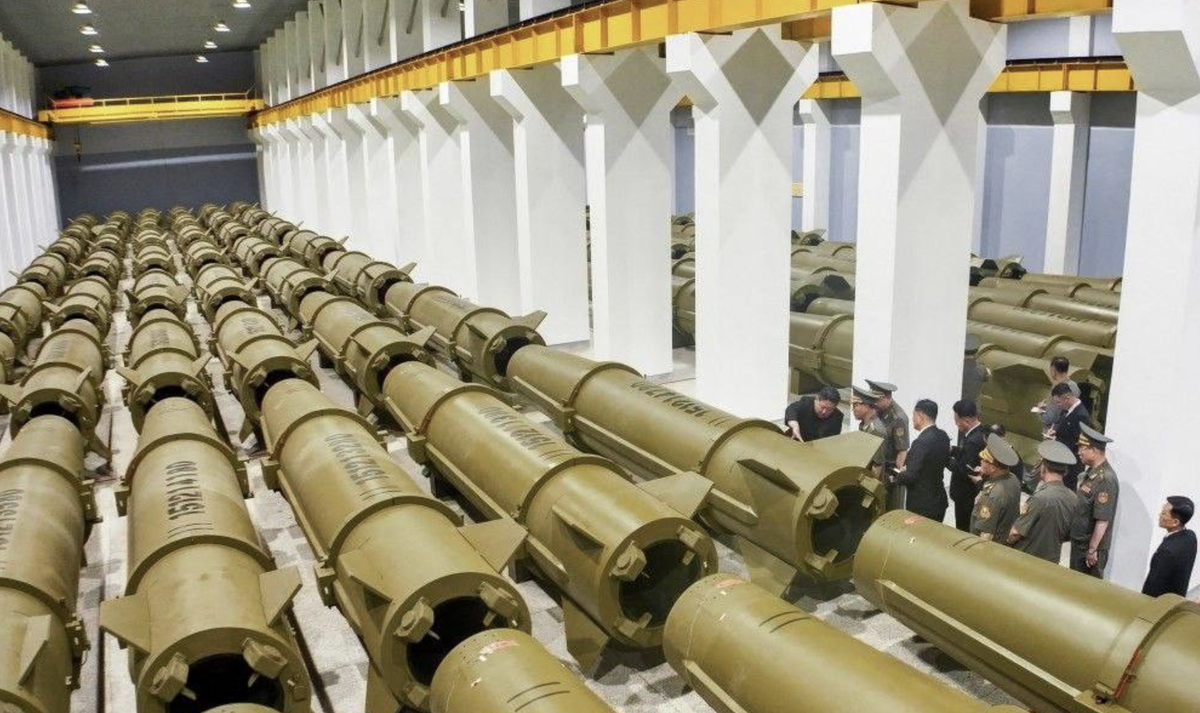
The order was issued during Kim’s visit to a facility overseen by the Missile Directorate, where he called for steady annual growth in production capacity until the five-year target is reached. In remarks carried by state media, Kim said the increase is necessary to ensure a sufficient missile supply as the operational structure and combat organization of North Korea’s armed forces continue to evolve.
The scale of the order is notable not only because of the increase itself, but because it points to a planned, long-term expansion rather than a short-term surge. Instead of demanding an immediate jump, the five-year framework suggests Pyongyang is trying to build a larger and more sustainable industrial base for missile production. That likely includes factory upgrades, workforce expansion, and changes in logistics and component supply chains.
Independent verification of North Korea’s actual production pace remains difficult. Even so, outside analysts see signs that the country is under pressure to produce more weapons. One reason is its reported supply of KN-23 ballistic missiles to Russia, which may be placing additional strain on domestic stockpiles. If North Korea is exporting missiles while also trying to equip its own forces with a broader range of systems, the need to expand output becomes more understandable.
The production order also fits with North Korea’s active development of new missile platforms. Among the most important systems is the Hwasal-2 cruise missile, viewed as a central part of the country’s growing strike capability. Pyongyang has also developed related variants, including the Pulhwasal-3-31, designed for launch from naval platforms such as surface vessels and submarines. These developments suggest North Korea is not simply building more missiles, but trying to field them across a wider range of launch platforms and military roles.
That matters because missile diversification makes North Korea’s arsenal more flexible and potentially more difficult to counter. Land-based ballistic systems, sea-launched cruise missiles, and platform-specific variants all expand the range of operational options available to the military. A larger production base would help support that transition from a narrower missile inventory toward a more layered and adaptable force structure.
Kim’s latest order also appears consistent with a broader pattern in North Korea’s defense planning. In January 2026, he instructed the defense sector to increase production of Bulsae-4 anti-tank guided missiles by the same 2.5-fold margin. During a visit to a factory on January 3, 2026, Kim reviewed the production process for modern anti-tank weapons and said that existing output levels were not enough. He also pointed to shortcomings in manufacturing modernization and ordered a reassessment of ammunition industry development plans for 2026.
In that case as well, the message was not limited to volume. Kim specifically tied higher output to the needs of military units under the Ministry of National Defense and the General Staff, indicating that production planning is being aligned more closely with force requirements. Reports that Russia has used Bulsae-4 systems in the war against Ukraine add another layer of significance, suggesting North Korean arms production may be serving both domestic military goals and external supply demands.
Taken together, the missile and anti-tank missile orders suggest North Korea is trying to solve two problems at once: how to modernize its weapons industry and how to generate enough output to support a more heavily armed and more operationally complex military. The repeated use of the same 2.5-fold benchmark may indicate a broader planning formula inside North Korea’s defense sector, one aimed at scaling production across several key weapon categories.
For regional security, the implications are clear. A North Korea with a larger missile production base is not just a country with more weapons; it is a country with greater resilience, a wider range of deployment options, and more room to absorb the demands of testing, stockpiling, and possible exports. Even if the real pace of manufacturing remains hard to verify, the direction of travel is unmistakable.
Kim Jong Un is not merely asking for more missiles. He is pushing for a defense industry capable of producing them at a much larger scale — and sustaining that scale for years.