Norway’s Defence Chief Warns: Russia May Launch Limited Incursion to Shield Arctic Nuclear Arsenal
The recent warning from General Eirik Kristoffersen, Norway’s Chief of Defence, has intensified discussions on Arctic security and the fragile state of Norway-Russia relations. In an exclusive interview with The Guardian published on February 10, 2026, Kristoffersen stated that Oslo cannot rule out the possibility of a Russian military incursion – not for outright conquest akin to the invasion of Ukraine, but to safeguard Moscow’s vital nuclear assets on the Kola Peninsula, located just tens of kilometers from the Norwegian border.
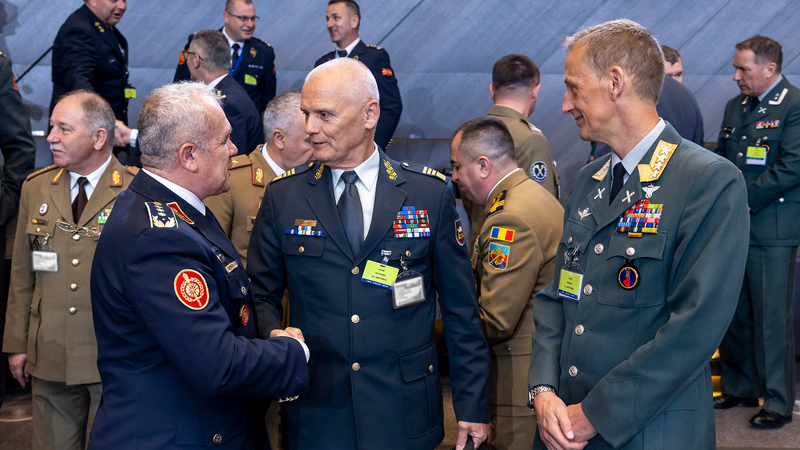
Kristoffersen emphasized: “We don’t exclude a land grab from Russia as part of their plan to protect their own nuclear capabilities, which is the only thing they have left that actually threatens the United States.” He highlighted that Russia’s second-strike nuclear forces, including ballistic missile submarines (SSBNs) based at bases like Gadzhiyevo and Yagelnaya, land-based intercontinental ballistic missiles, and nuclear-capable aircraft from Severomorsk, are concentrated in this strategically sensitive Arctic region. In a broader NATO-Russia conflict, Moscow might seek to create a buffer zone or seize limited Norwegian territory to prevent NATO forces from threatening these assets, thereby ensuring the survivability of its nuclear deterrent.
This assessment reflects Norway’s evolving strategic posture as a NATO frontline state sharing a 196-kilometer land border with Russia in the Arctic. While Russia has not shown intentions of full annexation similar to its actions in Ukraine, the proximity of these high-value nuclear facilities makes the High North a potential flashpoint.
Historical Context and Evolution of Norway-Russia Relations
Norway-Russia relations in the Arctic have long been characterized by a policy of “low tension, high reward,” dating back to the Cold War. Norway, a founding NATO member since 1949, deliberately limited its military presence in the north to avoid provoking the Soviet Union, while maintaining pragmatic cooperation on fisheries, environmental issues, and border management. The 1970s and 1980s saw joint commissions on fisheries in the Barents Sea, and post-Cold War cooperation expanded through the Barents Euro-Arctic Council (established 1993) and the Arctic Council (1996), where Russia and Norway collaborated on scientific research, search and rescue, and pollution prevention.
The full-scale Russian invasion of Ukraine in February 2022 marked a profound rupture. Norway aligned firmly with Western sanctions, expelled Russian diplomats suspected of intelligence activities, closed most ports to Russian vessels, and ramped up military cooperation with NATO allies. Bilateral high-level dialogue froze, and cooperation in multilateral forums like the Arctic Council stalled after Russia assumed its rotating chairmanship in 2021–2023. Norway’s chairmanship from 2023 onward allowed limited resumption of some projects, but overall ties deteriorated sharply.
Relations remain strained amid heightened military activity. Norwegian intelligence services (PST and NIS) reported in February 2026 that Russian espionage and potential sabotage targeting Norway’s support for Ukraine, military sites, and Arctic infrastructure are expected to increase. The Kola Peninsula, home to Russia’s Northern Fleet and roughly two-thirds of its second-strike nuclear capability, has seen intensified Russian military modernization, including new submarine facilities and hypersonic missile deployments.
Major Security Incidents and Hybrid Threats
The Arctic border has witnessed several notable security incidents and hybrid threats since 2020, underscoring the risks:
- Increased Russian military assertiveness: Russian submarine patrols in the Barents Sea and North Atlantic have grown, with NATO responses including joint P-8 Poseidon anti-submarine warfare flights by the US, UK, and Norway. In 2025–2026, incidents involved tracking Russian Yasen-class submarines near NATO carrier groups.
- Cyber and infrastructure sabotage suspicions: In August 2025, Norwegian authorities attributed a cyberattack on a hydropower dam – briefly disrupting operations – to Russia-linked hackers, highlighting vulnerabilities in critical energy infrastructure.
- Espionage and influence operations: Norway expelled Russian intelligence officers operating under diplomatic cover multiple times post-2022. In 2026, PST (Norwegian Police Security Service) warned of intensified recruitment efforts, including among Ukrainian refugees in Norway, and surveillance of military exercises and allied activities in the High North.
- Maritime and aerial provocations: Russian aircraft and vessels have conducted operations near Norwegian waters and Svalbard, testing responses. Norway’s restrictions on Russian ships have limited Moscow’s maneuverability but heightened tensions.
These incidents, often hybrid in nature (combining espionage, cyberattacks, and gray-zone activities), reflect Russia’s strategy to undermine NATO cohesion without direct military conflict.
Norway’s Response and Allied Reinforcement
In response to these threats, Norway has significantly bolstered its defenses. Military spending has increased, with focus on the northern flank. Allied support has surged: the United Kingdom announced in recent years plans to double its troop presence in Norway to 2,000 under NATO’s Arctic Sentry mission over the coming years, enhancing deterrence through rotational deployments and joint exercises.
Norway has also distributed civil preparedness letters to citizens, including discussions of property requisition in wartime – a measure evoking the most serious security concerns since World War II. Oslo is pushing for enhanced NATO coordination, including potential military hotlines with Russia to prevent miscalculations, and has inaugurated new training facilities for amphibious and Arctic operations with allies like the US, UK, and Netherlands. These steps aim to deter limited incursions while maintaining credible conventional and nuclear deterrence through NATO.
Broader Implications for European and Transatlantic Security
General Kristoffersen’s warning underscores how Russia’s nuclear posture shapes escalation risks in the Arctic. The Kola Peninsula’s assets are central to Moscow’s strategic calculus, making any NATO-Russia conflict potentially nuclear from the outset. This scenario reinforces the urgency of strengthening NATO’s northern flank, integrating Finland and Sweden fully into alliance structures, and balancing deterrence with crisis management mechanisms.
While a full-scale invasion remains improbable due to NATO’s Article 5 commitments and geographical challenges, the specter of a limited operation to protect nuclear forces highlights the need for vigilance. Norway’s preparations signal a shift from post-Cold War restraint to active defense in an era of renewed great-power competition.