
Oslo Sends Clear Message to Moscow: Six New U-Boats and Long-Range Strike Missiles
In response to persistently heightened tensions in the High North, the Norwegian government has launched one of the most ambitious reinforcements of its maritime defence capabilities in decades. The measures, announced in late 2025, are explicitly framed as a direct reaction to intensified Russian military activity in the North Atlantic, the Barents Sea, the Norwegian Sea, and the Arctic region more broadly. With a 197.8-kilometre land border with Russia in the Far North and an extensive maritime boundary in strategically vital waters, Norway finds itself on the front line of NATO’s northern flank. Any escalation in this region has immediate implications for Alliance security as a whole.
A Historic Expansion of the Submarine Force
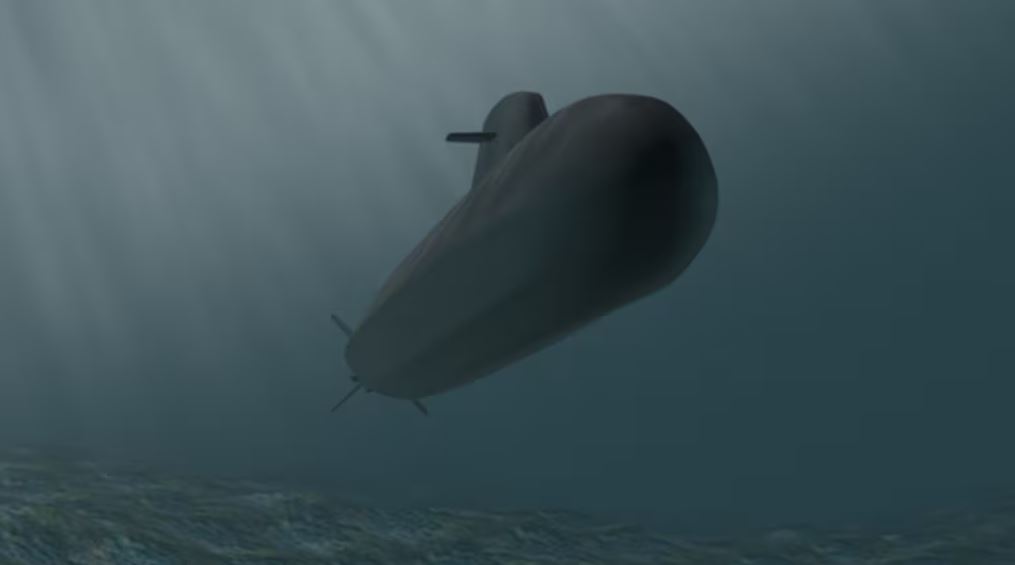
The centrepiece of the new programme is a significant expansion of Norway’s submarine fleet. In 2021, Oslo signed a contract with Germany’s Thyssenkrupp Marine Systems (tkMS) for four Type 212CD (Common Design) submarines in a deal worth approximately NOK 45 billion. On 7 November 2025, the Norwegian government formally approved the acquisition of two additional boats of the same class, bringing the future fleet to six vessels. This will be the largest submarine force Norway has operated since the Cold War.
Defence Minister Tore O. Sandvik described the submarines as “absolutely essential” for national defence and deterrence. The Type 212CD is widely regarded as one of the most advanced non-nuclear submarines in the world, featuring air-independent propulsion (AIP) based on hydrogen fuel cells, extreme stealth characteristics, and a modular design that allows future upgrades. The first boat from the original 2021 order is scheduled for delivery in 2029, with the subsequent five boats following at roughly annual intervals through approximately 2035. When the programme is complete, Norway will replace its six ageing Ula-class submarines (commissioned 1989–1992) on a one-for-one basis while simultaneously increasing overall capability.
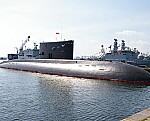
The new submarines will be based at Haakonsvern in Bergen and at the new Arctic naval facility at Ramsund in Troms, closer to the Russian border.
The Defence Minister underlined Norway’s unique role within NATO: “We are the Alliance’s eyes and ears in the North. That demands a far greater capacity to maintain presence, monitor activity, and—if necessary—deter potential aggressors in our adjacent seas.” Intelligence reports cited by the government indicate a sharp rise in Russian submarine patrols, surface task groups, long-range aviation sorties, and exercises simulating attacks on Norwegian territory. The expanded submarine force is intended to restore a credible underwater deterrence and surveillance capability that can operate effectively in the challenging shallow and icy waters of the Barents Sea.
Long-Range Precision Strike Comes to the Norwegian Armed Forces
Parallel to the submarine decision, Norway has taken the historic step of acquiring a genuine long-range precision-strike capability. In a contract valued at approximately €1.7 billion, Oslo will purchase Naval Strike Missiles (NSM) and/or Joint Strike Missiles (JSM) in a new land-based and potentially ship-launched configuration with extended range. Kongsberg Defence & Aerospace, the Norwegian manufacturer, has developed a boosted version capable of reaching targets more than 500 kilometres away with sub-metre accuracy.
Until now, Norway has deliberately limited its offensive reach in order to underline its defensive posture. The new weapons fundamentally change that calculus. According to the Ministry of Defence, the missiles will be integrated on the Navy’s future frigates, on the new submarines (via vertical launch systems currently under study), and in mobile coastal and land-based batteries. Senior officers have stressed that the system will allow Norway to hold at risk high-value Russian assets on the Kola Peninsula—such as airfields, command centres, and Bastion coastal-defence sites—in the event of a crisis or conflict.
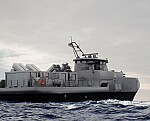
Defence Minister Sandvik was explicit: “These weapons will enable us to strike selected targets with great precision at considerable distance. Combined with our submarines and F-35 fleet, this gives Norway a layered, credible deterrent that significantly raises the threshold for any potential aggressor.”
Broader Context and Strategic Rationale
The announcements must be viewed against a backdrop of multiple worrying trends:
- Russia has modernised and expanded its Northern Fleet to levels not seen since the Cold War, including new Borei-class SSBNs, Yasen-class SSGNs, and hypersonic missile-equipped surface ships.
- Incidents of GPS jamming and electronic warfare originating from the Kola Peninsula have increased dramatically, affecting both civilian and military activities in northern Norway and Finland.
- The militarisation of the Arctic is accelerating, with new Russian bases, icebreakers, and air-defence systems appearing regularly.
- The accession of Finland and Sweden to NATO has shifted the regional balance but also lengthened the Alliance borders with Russia, placing even greater responsibility on Norwegian territory and waters.
Norway’s response is deliberately calibrated to strengthen deterrence without provoking an arms race. By choosing German submarines (identical to those ordered by Germany itself) and domestically developed missiles, Oslo also deepens industrial and technological cooperation with key allies.
Budget-wise, the submarine and missile programmes are financed through a combination of the ordinary defence budget, the increased allocations agreed in the 2024–2036 Long-Term Defence Plan, and a special supplementary package approved by the Storting in autumn 2025. Total additional investment for these two flagship projects alone exceeds NOK 65 billion (€5.5 billion) over the coming 15 years.
In the words of Prime Minister Jonas Gahr Støre: “Norway will remain a predictable, responsible ally that defends its sovereignty and contributes to collective NATO security. But predictability also means being crystal clear that any threat to Norwegian territory or Allied reinforcement routes will meet resolute and capable forces.”
With six state-of-the-art submarines entering service over the next decade and a new long-range precision-strike capability, Norway is sending an unmistakable signal: the High North may be remote, but it will no longer be undefended.