
Rearming Without Stealth: Why Spain Rejected the F-35B and What Comes Next for Its Carrier Fleet
Spain’s naval aviation stands at a crossroads as the country navigates ambitious rearmament goals amid tight budgets, European strategic priorities, and the aging of its iconic AV-8B Harrier II fleet. The Spanish Navy, long one of the few European forces capable of operating fixed-wing combat aircraft from a ship, faces uncertainty about the future of its carrier-based air power. The decision to forgo the Lockheed Martin F-35B has thrust the rearmament of the naval air arm into the spotlight, raising questions about capability gaps, industrial sovereignty, and Spain’s place in NATO’s evolving maritime posture.
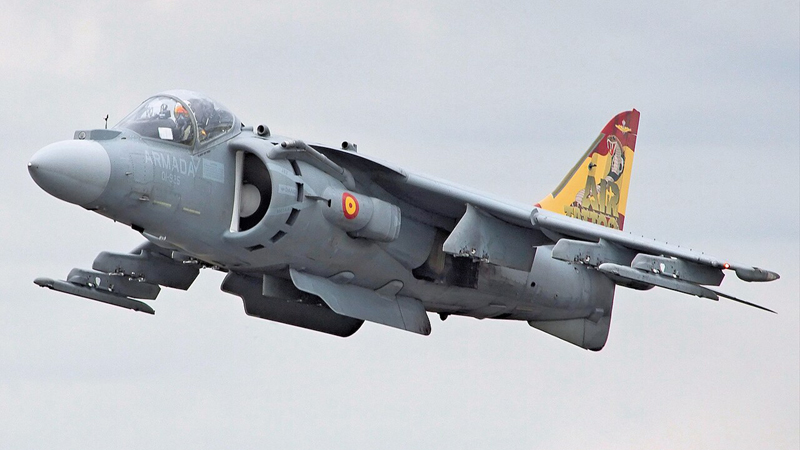
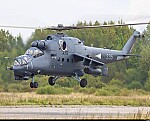
The centerpiece of Spain’s current naval aviation is the amphibious assault ship Juan Carlos I, a versatile Landing Helicopter Dock (LHD) equipped with a ski-jump ramp designed specifically for short takeoff and vertical landing (STOVL) operations. Since entering service in 2010, it has hosted the Navy’s 9th Squadron, flying the AV-8B Harrier II Plus, affectionately known in Spanish service as the “Matador”. These subsonic, single-engine jets provide close air support, reconnaissance, and limited air defense during amphibious operations. However, the Harriers are fourth-generation aircraft with origins in the 1970s design philosophy. Maintenance challenges are mounting, and with the U.S. Marine Corps and Italian Navy transitioning away from the type, spare parts availability is becoming precarious. Originally slated for retirement around 2028–2030, the fleet’s service life has been extended, potentially to 2032, through cannibalization of airframes and procurement of surplus parts from allies.
In recent years, the F-35B emerged as the logical successor. As the only modern production STOVL fighter, it would have seamlessly integrated with the Juan Carlos I’s existing configuration, delivering fifth-generation capabilities including stealth, advanced sensor fusion, networked warfare, and superior multirole performance. Spanish officials, including the Chief of Defence Staff, publicly acknowledged that the Lightning II represented “the future of Spanish naval aviation.” Plans once envisioned acquiring a mixed fleet of F-35A for the Air and Space Force and F-35B for the Navy, with significant funding earmarked in 2023 budgets. Yet in August 2025, the government under Prime Minister Pedro Sánchez indefinitely suspended talks with the United States, citing incompatibility with a major new defense investment package that directs the vast majority of spending – around 85-87 percent – toward European industry. Defense Minister Margarita Robles stated that purchasing the F-35 “is not a priority for the navy at the present time.”
Several intertwined reasons explain this pivot. Budgetary realities top the list: Spain has committed to reaching NATO’s 2 percent of GDP defense spending target but resists higher ambitions pushed by the United States. Allocating billions to American aircraft would undermine the goal of channeling funds into domestic and European suppliers. Politically, the decision aligns with a broader emphasis on European strategic autonomy, bolstering collaborative programs like the Future Combat Air System (FCAS/SCAF), a sixth-generation fighter initiative involving Spain, France, and Germany. Industrial offsets also play a role; acquiring the F-35 would bring limited workshare for Spanish firms compared to Eurofighter or FCAS participation. Geopolitical tensions, including public disagreements with U.S. leadership over NATO spending levels, further colored the choice. The result is a deliberate bet on European solutions, even if it creates short-term operational risks.
With the F-35B off the table, Spain’s naval air arm must explore alternatives, none of which offer a perfect match. The most immediate path involves further extending the Harrier fleet. Advantages include zero upfront acquisition costs and continuity of existing infrastructure and pilot training. The jets remain effective for low-intensity missions and amphibious support. Disadvantages, however, are stark when compared to the F-35B: the Harrier lacks stealth, has limited range and payload in hot conditions, inferior sensors and data fusion, and higher vulnerability in contested environments. Maintenance costs are rising, and as the global operator base shrinks, logistics could become unsustainable, leaving Spain as potentially the last user of the type.
A more radical option under study is transitioning the Juan Carlos I or building a new carrier to conventional CATOBAR (catapult-assisted takeoff but arrested recovery) configuration. Navantia, Spain’s state-owned shipbuilder, has been tasked with feasibility studies for a larger vessel – potentially around 40,000-42,000 tons, comparable to France’s Charles de Gaulle – with catapults and arresting gear. This would open the door to non-STOVL fighters. One candidate is the French Dassault Rafale M, the naval variant already proven at sea. Advantages over the F-35B include lower unit cost (roughly half), excellent multirole versatility, delta-wing agility for dogfighting, and strong French-Spanish industrial ties that could yield technology transfers and maintenance work in Spain. It offers advanced electronics, long-range strike capability with Meteor and SCALP missiles, and carrier compatibility without ski-jump limitations. Disadvantages include the absence of true stealth (though it incorporates low-observable features and can carry external pods), higher radar cross-section in certain aspects compared to the F-35B, and the need for significant investment in carrier modifications or a new ship. Pilot transition would require new training pipelines, and integration timelines could stretch into the late 2030s, exacerbating the gap after Harrier retirement.
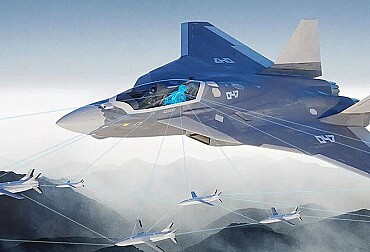
Longer-term hopes rest on the FCAS program, which aims to deliver a sixth-generation system – including a next-generation fighter, loyal wingman drones, and advanced combat cloud – by the mid-to-late 2030s or 2040. Spain participates as a key partner, ensuring industrial involvement. A future navalized version could theoretically equip a new carrier, offering hypersonic speeds, AI-driven autonomy, directed-energy weapons, and seamless integration with unmanned systems. Advantages relative to the F-35B would include superior technology edge, European sovereignty, and potential cost-sharing among partners. Disadvantages are numerous: development delays have already plagued the program due to Franco-German industrial rivalries, with service entry timelines slipping; no STOVL variant is currently planned, requiring carrier changes; and early prototypes remain years away, leaving a decade-long capability vacuum. Spanish pilots may not know what they will fly in 2030, as the article inspiring this analysis highlighted.
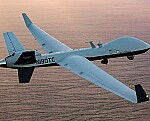
Emerging concepts like carrier-based unmanned combat aerial vehicles (UCAVs) or loyal wingmen could supplement or partially replace manned fighters. These offer lower risk to pilots, persistent surveillance, and attritable strike options at reduced cost per flight hour. However, current technology limits their ability to fully replicate the flexible, high-intensity close air support provided by Harriers or F-35Bs, especially in dynamic amphibious scenarios with contested electromagnetic environments. Integration challenges with existing command systems add complexity.
The broader rearmament context for Spain’s naval air force includes parallel investments in submarines (S-80 class), frigates (F-110), and support ships, reflecting a balanced but stretched modernization effort. The decision to prioritize European platforms strengthens ties within the EU and FCAS consortium but risks diminishing Spain’s expeditionary edge. Losing fixed-wing carrier capability would relegate Juan Carlos I primarily to helicopter and amphibious transport roles, reducing its value in high-end NATO operations in the Mediterranean, Atlantic, or beyond. Critics argue this creates a strategic vulnerability at a time of renewed great-power competition.
In weighing advantages and disadvantages, the F-35B stands out for its plug-and-play compatibility with current Spanish assets, unmatched stealth and survivability, and proven combat data links that enhance fleet-wide effectiveness. Its disadvantages – high flyaway cost (around $100-110 million per unit, plus sustainment), dependence on U.S. logistics, and potential export restrictions – proved decisive against Spain’s autonomy goals. European alternatives like the Rafale M provide more affordable, sovereignty-aligned options but require infrastructure upheaval and accept performance trade-offs in stealth and sensor dominance. FCAS promises leap-ahead technology but carries execution risk and delayed delivery.
As Spain charts its course, the coming years will test whether European collaboration can deliver timely capabilities or if interim measures, including Harrier extensions and drone experimentation, will suffice. The uncertainty facing naval pilots underscores the high stakes: maintaining a credible carrier-based deterrent requires not just aircraft choices but sustained political will and funding. The rearmament of Spain’s naval air force thus embodies larger debates about transatlantic versus European defense paths in an era of constrained resources and rising threats. With no immediate resolution in sight, the Navy’s 9th Squadron may soldier on with vintage Harriers longer than anticipated, while planners weigh costly carrier transformations against ambitious sixth-generation dreams. The outcome will shape Spain’s maritime power projection well into the 2040s.