Rheinmetall’s Warning: Always Use Two to Three Suppliers from Different Countries – or Risk Exposure
The European defense industry is currently on the cusp of a fundamental transformation, in which success will depend on the ability to secure a stable supply of raw materials and components. Supply chains, spanning Europe, Asia, and other regions, determine the actual performance of factories and are becoming a key factor in industrial development. These dynamics are reshaping defense planning, which is increasingly focused on resilience and the availability of inputs.
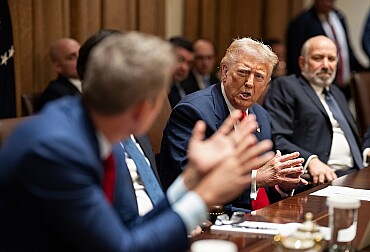
According to Rheinmetall CEO Armin Papperger, ensuring a functional supply chain is one of the biggest challenges facing the defense industry. He believes that a detailed analysis of supply chains is necessary to address this challenge. “We conduct a global analysis of supply chains every week,” Papperger explained during a panel discussion at the Hannover Fair in April. Rheinmetall also collaborates with federal ministries and is very transparent regarding the status of its own inventories. According to him, there is a clear solution: a company needs to have at least two to three countries from which it can source the same commodity. However, this approach increases costs because it requires more administration and logistics.
For this reason, Rheinmetall is not pursuing a “China-free” supply chain policy. Nevertheless, it is preparing for scenarios in which, for example, cotton fibers for gunpowder production might cease to flow from Chinese suppliers. In such a case, it will be necessary to seek alternative sources, such as in Argentina or Australia. Another measure to secure production is increasing inventory. “We have critical goods worth approximately eight billion euros in stock,” emphasized Armin Papperger. This step strains cash flow, yet it is essential to ensure production continuity. Moreover, the inventories of large corporations keep smaller firms afloat, as these smaller firms lack the financial resources to build up their own material reserves.

The main problem remains the financing of stocked materials. In Rheinmetall’s case, this is handled through advance payments from customers. “Without advance payments, the industry couldn’t manage. It’s impossible because if you have to invest billions and keep materials in stock, even large companies will go bankrupt without advance payments from customers,” the head of the German company explained the risk. Currently, however, he says there are synergies between industry and the government. The cooperation is working well, and “the ministry’s advance payment policy is more than fair.”
These words capture the broader reality of the European defense industry after 2022. In response to Russia’s invasion of Ukraine and the changing security landscape, European nations have begun increasing their defense budgets at a pace unseen since the end of the Cold War. Germany has approved a special defense fund of 500 billion euros (Sondervermögen), the European Commission has launched the ReArm Europe initiative with the aim of mobilizing more than €840 billion by 2030, and NATO member states are moving toward the target of 5% of GDP annually for defense by 2035 (3.5% for conventional defense spending, 1.5% for defense-related infrastructure). Financial resources therefore exist on a scale that seemed unimaginable just a few years ago.
Nevertheless, it is becoming clear that investments alone do not ensure a rapid increase in production capacity. Let’s look, for example, at Denmark, where a decision was made in 2023 to resume ammunition production in Elling. The first batch of 5.56 mm and 7.62 mm ammunition, 120 mm mortar rounds, and 155 mm artillery shells will not roll off the production line until 2027. The delay of more than two years resulted from a combination of regulatory processes, procurement procedures, and structural weaknesses in the supply chain. The political decision was thus only the first step, while the actual implementation ran into industrial realities.
European nations and industry are therefore increasingly opting for a strategy of vertical integration and expanding production capacities to strengthen control over key raw materials. Last April, for example, Rheinmetall – one of NATO’s main ammunition suppliers – acquired the Hagedorn-NC GmbH pulp mill in Osnabrück, Germany. It subsequently began transforming its civilian production, which employed approximately 90 workers, into the production of military materials. This move aims to eliminate risks in the supply chain and reduce dependence on supplies from countries outside the European Union, including China.

The Czech company Colt CZ Group has taken a similar approach, completing the acquisition in January of this year of Synthesia Nitrocellulose a.s. in Pardubice – one of the world’s leading manufacturers of energy-grade nitrocellulose – for approximately 22 billion crowns. By acquiring an initial 51% stake through a combination of cash and shares, Colt CZ Group is moving toward vertical integration of medium- and large-caliber ammunition production.
The fundamental problem, however, lies at the raw materials level. Modern weapon systems utilize a wide range of materials, the supply of which is concentrated outside Europe. NATO has identified twelve raw materials essential for the production of advanced systems. These include, for example, gallium, tungsten, titanium, and rare earth elements. For some of these, Europe’s dependence on imports approaches 100%. China controls approximately 86% of tungsten production and more than 90% of gallium processing. For heavy rare earth elements, it covers virtually all of Europe’s consumption.
These materials form the foundation of modern technologies. Tanks use germanium, tantalum, or neodymium in optical and targeting systems. Naval platforms contain cobalt, lithium, or samarium in propulsion and electronic systems. The F-35 aircraft uses kilograms of rare earth elements in sensors, radars, and propulsion units. Guided missiles rely on gallium, silicon, or boron in their guidance and propulsion systems. Each of these elements represents a potential point of failure in the supply chain. Even European nitrocellulose production depends on cotton fibers, approximately 70% of which come from China.
Experience in recent years has shown that geopolitical factors can quickly disrupt supply chains. The COVID-19 pandemic disrupted logistics flows, conflicts in the Red Sea have restricted maritime transport, and China’s export restrictions on gallium, germanium, and graphite are increasing pressure on European manufacturers. Russia remains a major supplier of titanium to the aerospace industry, while discussions about export restrictions are creating further uncertainty.
The response from European countries and institutions is focused on several areas. The first is the diversification of sources. The European Union aims to ensure that by 2030, no single supplier accounts for more than 65% of any strategic raw material. The second step involves building up stockpiles, which aligns with Rheinmetall’s approach, which includes reserves worth eight billion euros. The third pillar is the development of domestic mining and processing, although this process faces challenges from environmental regulations and high costs. The fourth direction is recycling and technological substitution, such as efforts to replace cotton fibers with wood pulp.
The European defense industry is now entering a phase where its performance is measured less by the number of orders and more by its ability to ensure the flow of materials from the mine to the final product. Europe’s rearmament therefore depends on factors that lie outside the traditional security debate. Relations with Australia, Kazakhstan, or African states are gaining strategic significance comparable to alliance policy. The outcome of this process will determine whether European armies acquire the required capabilities in a timely manner and in sufficient quantities. Supply chains are now becoming a key defense infrastructure, upon which the pace and scope of military modernization depend.