Romania and the U.S. Just Ran a Tank Drill Like It’s 2014 - In the FPV Drone Era
If you watched the footage without context, you’d think you were seeing a classic armored training vignette: big guns, tracked steel, coordinated maneuvers, day-and-night live firing, and the kind of unit-level tactics that armies have refined for decades.
But look closer at what isn’t on those tanks.
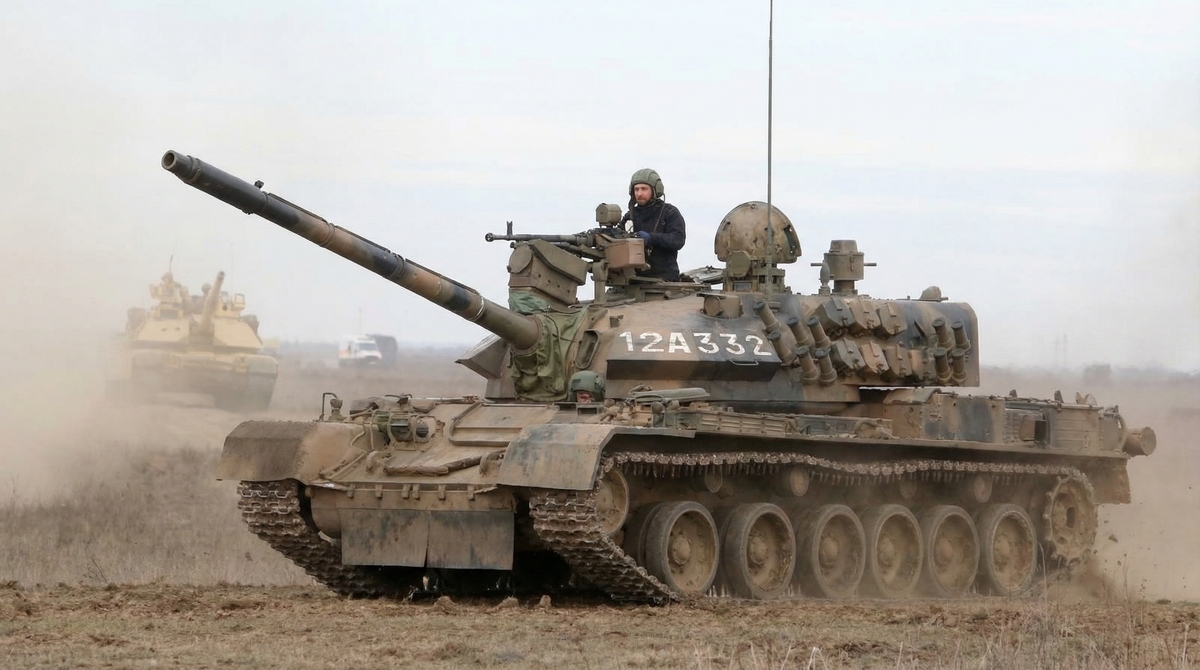
No visible passive anti-drone protection. No obvious cages, screens, or add-on measures that have become a basic survival reflex in an era where cheap FPV drones can hunt armor like a video game—except with real explosions.
And that’s what makes Romania’s latest joint training with U.S. tankers feel less like a preview of the future… and more like a reminder of how fast the battlefield has changed.
The Exercise: Real Tanks, Real Fire, Real Goals
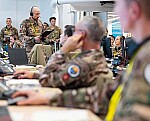
Romania’s Ministry of Defense said Romanian and American military personnel trained together at the Smârdan training ground from January 29 to February 4.
The training focused on:
- Tactical exercises at unit level
- Troop command practice
- Combat firing, day and night
- Boosting training level and operational compatibility between Romanian and U.S. forces
Romania was represented by the 284th Tank Battalion “Cuza Voda.”
The hardware on the field:
- 4× TR-85M1 Bizonul (Romania)
- 5× M1A2 SEPv2 Abrams (United States)
The mission profile was straightforward and very “textbook armor”:
- Delay the enemy
- Deliver a counterattack
Romanian Lieutenant Colonel Mihai Benescu said the goals were achieved, with minor weather-related issues due to low temperatures—issues the repair brigade reportedly identified and fixed quickly.
And importantly: both sides plan to run similar exercises periodically.
The Real Subtext: Romania Is Getting Abrams — and This Was a Preview
This wasn’t just about interoperability. It was also about exposure.
Romania has ordered 54 Abrams tanks in the M1A2 SEP v3 version, with the first deliveries expected this year. So getting Romanian crews closer to the Abrams ecosystem—how it moves, shoots, communicates, and integrates—matters.
And after the exercise, a “significant difference” was observed in favor of the Abrams compared to tanks currently in Romanian service.
That’s the part most people will clip and repost: Abrams outclasses Bizonul.
But the more uncomfortable takeaway is what the exercise seems to have left out.
The Missing Layer: Drone Reality (And Why It Matters More Than Horsepower)
In modern war, the tank isn’t just fighting other tanks, infantry, or artillery observers.
It’s being watched—constantly—by small, cheap, fast drones.
And FPV drones don’t need to “win” a fair fight. They just need a line of sight, a few seconds, and a vulnerable spot. That’s why passive anti-drone measures have become a baseline expectation in many combat zones: not because they’re perfect, but because “naked armor” is increasingly a liability.
Yet based on available photos and videos from these drills, none of the vehicles appeared to be equipped with anti-drone protection—the kind of practical, bolt-on survivability layer that’s now part of the battlefield’s daily math.
So here’s the clickbait truth hiding in plain sight:
A tank can be the best in its class and still be training for the wrong war if it’s practicing without the threats that actually dominate the sky.
So Was the Training “Useless”? Not Exactly — But It’s Incomplete
Let’s be fair: unit-level tactics, command practice, and live-fire proficiency still matter. Crews still need to master movement, gunnery, coordination, and recovery under harsh conditions. Interoperability between allies is not optional.
But the critique lands because it’s simple:
If the training environment doesn’t reflect the threat environment, the confidence it builds can be misleading.
In 2026, “operational compatibility” isn’t only about radios, formations, and counterattacks. It’s also about whether your crews instinctively operate under drone observation, whether your vehicles are configured for drone-heavy battlefields, and whether your tactics assume the enemy has a $500 flying munition ready to dive onto your engine deck.
The Big Question Romania’s Abrams Era Will Have to Answer
Romania is stepping into a new armored chapter with the planned arrival of M1A2 SEP v3 tanks. That’s a major modernization signal—and a serious capability jump.
But capability isn’t just what you buy.
It’s what you train for.
And right now, the most viral detail from Smârdan isn’t the live firing, the counterattack scenario, or even the Abrams vs. Bizonul comparison.
It’s the quiet, glaring absence of drone protection in an FPV era.