
Russia Turns to Rare MiG-35 Fighters to Counter Ukrainian Drone Raids
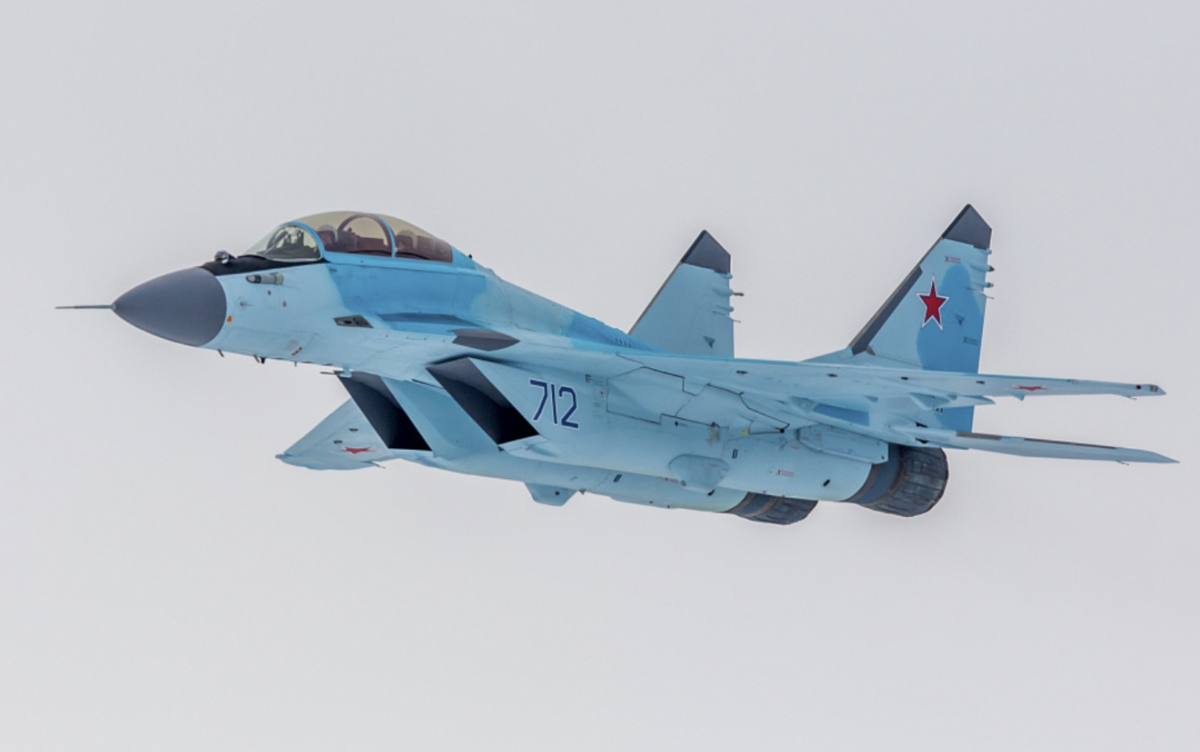
Russia has reportedly begun using rare MiG-35 fighter jets as part of its air defense effort against Ukrainian long-range drone attacks, highlighting both the growing pressure of Ukraine’s drone campaign and Moscow’s need to use even limited experimental aircraft for rear-area protection.
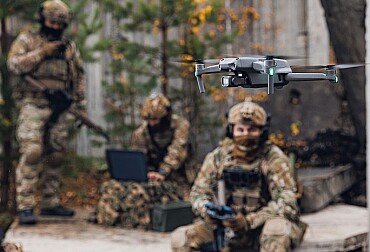
According to the Ukrainian aviation-linked Telegram channel Soniashnyk, Russian MiG-29s and MiG-35s have been involved for some time in responding to large-scale Ukrainian air raids deep inside Russian-controlled territory. The aircraft are reportedly being used to intercept drones as part of Russia’s broader layered air defense system.

The appearance of the MiG-35 in this role is notable because the aircraft remains one of the rarest fighters in Russian service. Although Russia presented the MiG-35 publicly in 2017 and signed a delivery contract the following year, the program never developed into large-scale serial production. As of October 2026, open-source information indicates that only four MiG-35S fighters and two MiG-35UB training aircraft are undergoing trial operation with the Russian Aerospace Forces.
That makes the use of the aircraft in operational air defense duties significant. Rather than being a widely fielded combat platform, the MiG-35 remains closer to a limited-production, trial-service fighter. Its deployment against drones suggests that Russia is drawing on available aviation assets to strengthen protection against Ukrainian strikes that increasingly target facilities far from the front line.
The MiG-35 is a further development of the MiG-29K/KUB and MiG-29M/M2 family. It was designed as a modernized multirole fighter with improved avionics, upgraded engines, and enhanced target-detection capabilities. The aircraft is powered by RD-33MK engines, which reportedly have a service life of up to 4,000 hours.
One of the fighter’s most important features is its active electronically scanned array radar. According to published specifications, the radar can track up to 30 aerial targets at ranges of up to 160 kilometers and engage the six most dangerous targets. These capabilities are relevant in counter-drone missions, where aircraft may need to detect small, low-signature aerial targets amid a complex air picture.
The MiG-35’s air-to-air weapons include several missile types. These include the R-73 short-range missile, the R-77 medium-range radar-guided missile, and the R-27 family of medium- and extended-range missiles. Compatibility with specific R-27 variants depends on the aircraft’s configuration.
Using fighter aircraft against drones is not unusual in the current war, but it does reveal the operational burden created by persistent UAV attacks. Drones can be relatively inexpensive compared with the aircraft and missiles used to destroy them, forcing defenders into difficult cost and resource calculations. For Russia, deploying fighters such as the MiG-29 and MiG-35 may help cover large areas and respond quickly to incoming drones, especially when ground-based air defense systems are stretched.
At the same time, the use of rare MiG-35s raises questions about sustainability. With only a handful of aircraft believed to be in service, their impact on the overall air defense picture is likely limited. They may be useful for specific missions, testing, or reinforcing vulnerable regions, but they cannot replace a broader network of radars, surface-to-air missile systems, electronic warfare assets, and mobile interception teams.
Ukraine has also used fighter aircraft in a counter-drone role. Ukrainian MiG-29s armed with R-60 missiles have been used to shoot down Russian drones, including at very low altitude. This reflects a wider trend in the war: both sides are adapting legacy aircraft and older missile stocks for drone interception as UAV warfare expands in scale.
The reported Russian use of the MiG-35 therefore points to a larger shift in the air war. Long-range drones are no longer just tactical battlefield tools. They have become strategic pressure instruments, forcing air defense systems to operate across vast areas and compelling militaries to use whatever assets are available.
For Russia, the MiG-35 was once promoted as a modern export-oriented fighter and a successor within the MiG-29 lineage. Its current use against Ukrainian drones shows a different reality: a limited and rare aircraft being pulled into a defensive mission shaped by the demands of modern drone warfare.
The decision may provide Russia with additional interception capacity, but it also underlines the strain caused by repeated UAV attacks. As Ukraine continues to develop and deploy long-range drones, Russia’s need to defend rear areas, industrial sites, military facilities, and infrastructure will likely keep growing. In that environment, even experimental or limited-service aircraft may find themselves pressed into regular operational use.