
Russian Rocket Launchers Are Pulling Back — Here’s Why
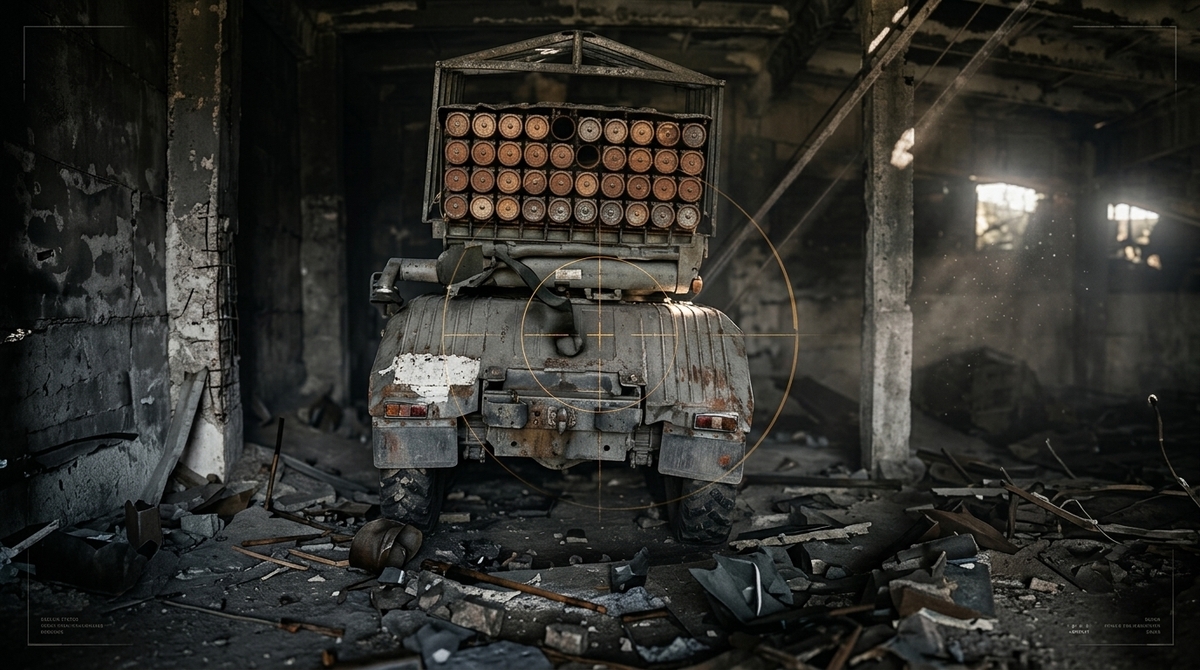
Russian BM-21 Grad rocket launchers are becoming a rarer sight near the front, and the reason is increasingly clear: Ukrainian drones have changed the battlefield. What was once a reliable tool for rapid, area-wide bombardment is now far more vulnerable to detection and destruction, forcing Russian commanders to adapt.
Under constant pressure from Ukrainian unmanned units, Russian forces have pushed much of their heavy artillery deeper into the rear. In many sectors, self-propelled guns such as the 152 mm Msta-S have become the main source of artillery support for frontline troops. Their longer range allows them to operate at safer distances while still striking targets near the line of contact.
A Ukrainian serviceman from the 115th Brigade, known by the callsign Hektor, described this shift in practical terms. He said Russian self-propelled artillery is now commonly positioned 25 to 30 kilometers behind the front. That distance is not accidental. It reflects a battlefield reality in which artillery operating too close to the line risks being found and engaged by Ukrainian drone teams.
This helps explain the fading presence of the BM-21 Grad in some frontline sectors. Unlike longer-range systems, Grad launchers are more exposed when brought forward for firing missions. Hektor noted that they are now rarely used in his area because Ukrainian drone battalions actively hunt them. The threat is persistent enough that Russian forces appear unwilling to risk these systems as often as before.
The longer-range Tornado multiple launch rocket system still appears from time to time, but not frequently enough to define the pattern of fire. Instead, Msta-S howitzers seem to carry much of the burden. Their sustained use suggests that range, mobility, and survivability now matter more than sheer volume of rocket fire when operating under constant aerial surveillance.
The artillery shift also reveals something broader about how Russian forces are fighting. According to Hektor, assaults still often rely on small infantry groups made up largely of recently mobilized troops. These soldiers may arrive with basic preparation, but many lack real combat experience. In practice, their immediate goal is often survival first, mission second, as they try simply to make it to the line of contact.

Russian units also continue to exploit weather as a tactical tool. Heavy fog can reduce visibility for aerial reconnaissance and create brief opportunities to move infantry with a lower chance of early detection. In an environment saturated with drones, even temporary concealment can make a difference.
Night, however, no longer offers the same cover it once did. Thermal imaging has sharply reduced the value of darkness as protection. Hektor explained that enemy troops are often easier to spot at night than during the day, limiting the effectiveness of nocturnal assaults and blunting one of the traditional advantages of infantry movement after sunset.
Taken together, these battlefield trends show why Grad systems are disappearing from regular frontline use. This is not simply a matter of changing preference or equipment rotation. It is the result of a deeper tactical adjustment driven by Ukrainian drone dominance. Artillery that cannot survive close to the front must move back. Systems with longer reach stay relevant. Those that require more exposure appear less often.
In that sense, the Grad’s reduced presence says as much about the evolution of modern warfare as it does about one specific weapon. Drones are not just spotting targets anymore. They are reshaping where artillery can operate, how infantry moves, and which weapons remain practical near the front.