
SIPRI: The World Is Arming at a Historic Pace, Berlin and Warsaw Buy Big
In 2025, the world spent $2.887 trillion on military equipment. This marks the eleventh consecutive year of growth in global military spending and represents an amount that exceeds the total GDP of most of the world’s economies. Behind this astronomical sum lies a convergence of three phenomena: the European arms shock triggered by Russia’s invasion of Ukraine, structural rearmament in Asia, and a gradual realignment of the balance of power in which U.S. military dominance is losing its unchallenged position.
The five largest players – the United States, China, Russia, Germany, and India – spent a total of $1.686 trillion on defense in 2025, accounting for 58% of the global total. The fifteen largest countries spent a combined total of $2.304 trillion, accounting for 80% of global spending. The remaining dozens of countries share a mere $583 billion. This concentration of military power in the hands of a relatively small group of countries determines the geopolitical parameters of the present and the coming decades.
However, the U.S. share of global military spending has been steadily declining since 2020 and fell by 4.3 percentage points between 2024 and 2025. In 2025, the U.S. spent 2.8 times as much on its military as China, whereas in 2024 it was 3.2 times as much. Meanwhile, China maintains a stable 12% share of global spending and is systematically closing the gap with the leading U.S. superpower. This shift represents a gradual change in the strategic architecture that has shaped the world order since the end of the Cold War.
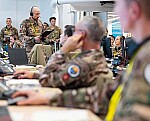
In 2025, Russia spent $190 billion on defense. The year-over-year increase of 5.9% compared to previous years slowed, yet the military burden reached 7.5% of GDP. The share of military spending in total government spending even rose to 20%, which the Swedish think tank SIPRI describes as a historic high for Russia. The war in Ukraine has turned into a war of attrition, and Moscow is responding with significant changes to its procurement priorities. There is a massive deployment of unmanned aerial vehicles and the procurement of cheaper weapon systems to replace losses of expensive equipment, such as fighter jets and armored vehicles. Sanctions and the Kremlin’s international isolation are tying its hands economically, yet it has managed to increase spending every year since 2022.
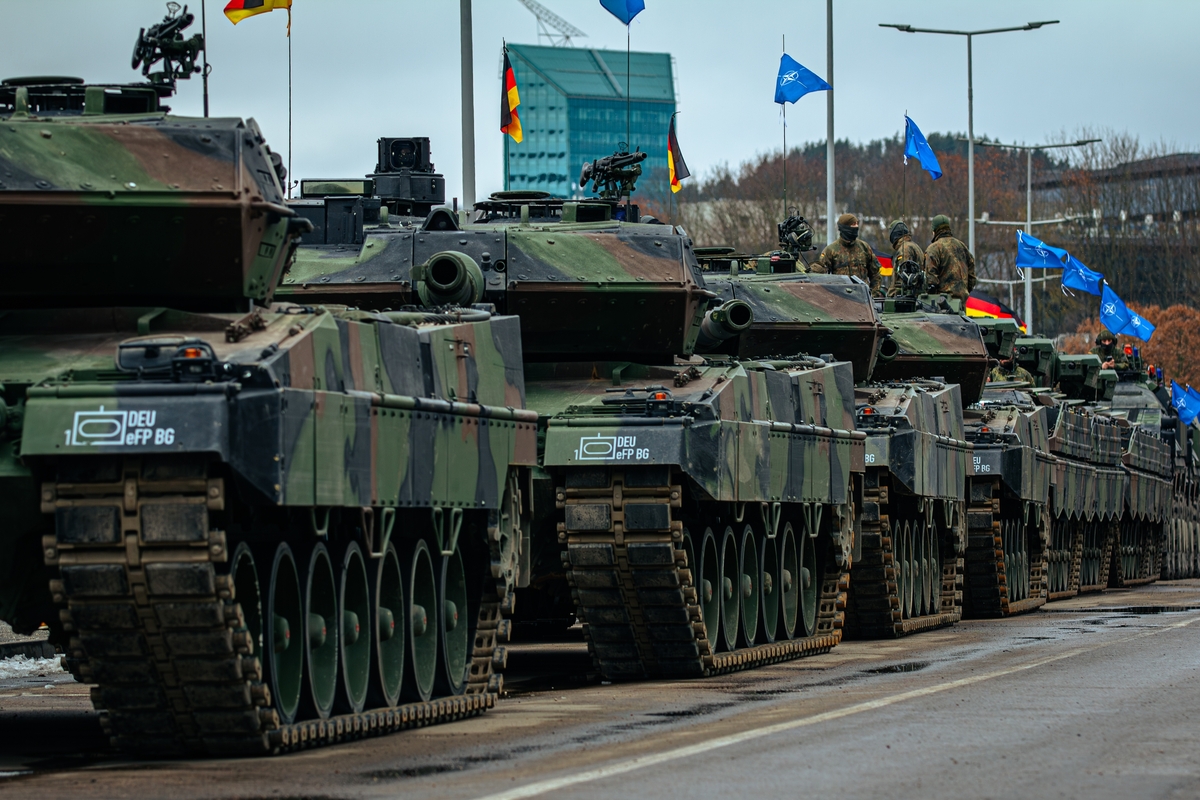
In 2025, Germany underwent the most pronounced structural shift of all major European economies. Military spending reached $114 billion; the 24% year-over-year increase marked the third consecutive year of double-digit growth, and the share of GDP exceeded 2% for the first time since 1990, reaching 2.3%. Berlin has committed to increasing this share to 3.5% of GDP by 2029. To finance this commitment, the German government has made a fundamental adjustment to its fiscal rules: military spending exceeding 1% of GDP is now exempt from the debt brake, which generally limits the budget deficit to 0.35% of GDP. Germany is thus entering an unprecedented era of debt-financed armament, with this change representing Berlin’s largest political and budgetary shift since the introduction of the debt brake in 2009.
Total defense spending in Europe reached $864 billion, with a 14% increase marking a historic high recorded by SIPRI. Over the decade from 2016 to 2025, European spending doubled, specifically rising by 102%. This figure is driven primarily by security uncertainty related to Russian aggression and questions about the reliability of U.S. security guarantees for European NATO members. Neighboring Poland spent as much as 4.5% of its GDP on defense, becoming the country with the highest military burden in the entire alliance, with Latvia following at 3.6% of GDP. Of the 29 European NATO members, a total of 22 countries exceeded the 2% GDP threshold.
The North Atlantic Alliance as a whole adopted a new target last June. Defense spending will increase to 5% of GDP by 2035, up from the previous 2% target valid until 2024. At least 3.5% is to cover basic military spending, with the remaining 1.5% covering so-called defense and security-related expenditures, including the protection of critical infrastructure, civil preparedness, or strengthening the defense industry. However, the Alliance has not yet provided a clear definition of this second category, which leaves room for creative accounting. Italy, for example, explored the possibility of including the construction of a bridge to Sicily in its defense spending. Methodological differences between SIPRI and NATO also remain significant: for Canada, NATO estimated spending last year to be $5 billion higher than SIPRI, and the Alliance provided no explanation for this discrepancy to the Swedish think tank.
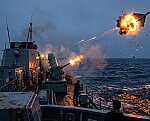
In 2025, Ukraine and its Ministry of Defense managed a budget of $84.1 billion, with expenditures amounting to 40% of GDP and 63% of total government spending. These figures have kept Kyiv in first place in the global rankings for these categories for the fourth consecutive year. The state budget was revised twice during the year and increased by $17.7 billion due to rising costs for ammunition, weapons production, and military personnel. Since 2016, Ukrainian military spending has increased by 1,501%. Although the U.S. did not provide any new commitments for direct military aid in 2025, Ukraine received $52.2 billion from its partners to support the state budget – 11% more than in 2024 and the highest amount since the start of the war.
Berlin intends to increase spending to 3.5% of GDP by 2029, and the German defense industry lacks the capacity to meet the entire domestic demand, creating opportunities for subcontracting agreements with certified Central European partners. A prerequisite for capitalizing on this opportunity remains the ability to meet NATO’s strict STANAG standardization requirements, navigate export licensing processes, and ensure industrial security.
The year 2025 confirmed that global rearmament is leading to lasting structural change. Eleven years of uninterrupted growth, historic highs in Europe, the realignment of U.S. dominance, and new alliance targets reaching 5% of GDP are shaping the global security architecture for the entire coming decade. The question for every state is no longer whether to spend more, but rather how to finance these commitments and what exactly to purchase with them.