Stryker DVH A1: Evolved Medium-Weight Vehicle Gains New Teeth and Resilience on the Modern Battlefield
The U.S. Army continues to refine its fleet of medium-weight forces with the introduction and fielding of additional Stryker Double V-Hull A1 vehicles. This latest evolution of the long-serving 8x8 platform builds directly on hard-won combat experience from Iraq and Afghanistan while incorporating upgrades that address mobility, electrical capacity, and lethality shortfalls identified in earlier variants. Far from asimple refresh, the DVH A1 represents a comprehensive modernization that keeps the Stryker family relevant against evolving threats ranging from sophisticated roadside bombs and drones to peer-level armored opponents.
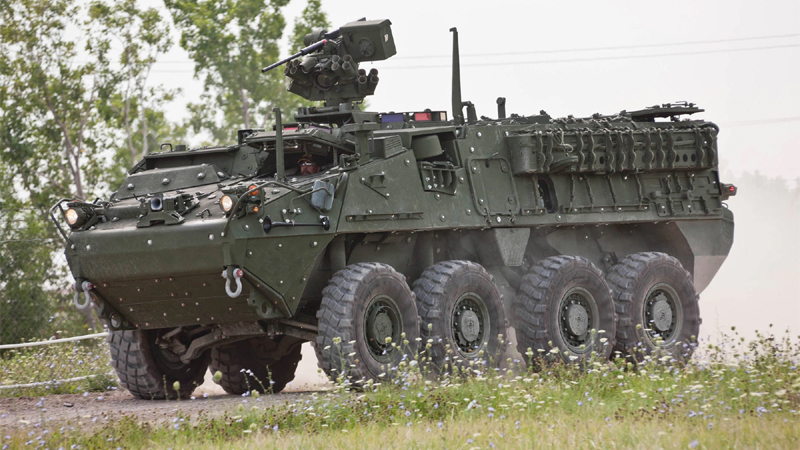
At its core, the Double V-Hull design remains the standout survivability feature. Unlike the original flat-bottomed Strykers, which proved vulnerable to underbelly blasts from improvised explosive devices, the DVH incorporates a pronounced V-shaped undercarriage that channels explosive forces outward and away from the crew compartment. This geometry, combined with enhanced spall liners, blast-attenuating seats, and upgraded armor packages, has dramatically improved crew survivability in mine and IED environments. The A1 variant refines this baseline with further structural reinforcements and integration of add-on armor solutions, achieving protection levels that can defeat 14.5mm armor-piercing rounds all around when fully equipped with ceramic tiles. It also offers better resistance to emerging drone-dropped munitions and kinetic threats through modular upgrades.
What truly distinguishes the A1 from prior Double V-Hull models is the powertrain and systems overhaul. Earlier DVH vehicles retained the 350-horsepower Caterpillar C7 engine, which struggled under the added weight of enhanced armor and mission equipment. The A1 upgrades to a more potent 450-horsepower Caterpillar C9 engine paired with an improved drivetrain, suspension, and wider tires. This restores and even enhances mobility, allowing the vehicle to tackle steep grades with reduced strain and maintain higher operational tempos. Gross vehicle weight rating rises to approximately 63,000 pounds, providing greater payload capacity for ammunition, fuel, or specialized gear. An air-cooled 910-amp alternator replaces the older 570-amp unit, delivering the electrical headroom needed for advanced sensors, networked communications, future active protection systems, and digital backbone architectures that support data sharing across the brigade.
These automotive improvements translate directly into tactical advantages. Stryker brigades emphasize rapid strategic deployability via C-130 aircraft and high operational mobility once on the ground. The A1 configuration ensures that added protection does not come at the expense of speed or agility. Road speeds remain around 60–65 mph, with excellent cross-country performance thanks to the independent wheel suspension and selectable 8x8 drive. Crews report noticeably better handling and reduced fatigue on long movements, critical for the distributed operations envisioned in large-scale combat against near-peer adversaries.
Firepower options have also expanded significantly. While baseline infantry carrier variants rely on remote weapon stations mounting .50 caliber machine guns, 40mm grenade launchers, or Javelin missiles, selected A1 vehicles integrate the 30mm XM813 autocannon in an unmanned turret, often referred to in Dragoon or Medium Caliber Weapon System configurations. This provides precision lethality out to greater ranges, with airburst munitions effective against drones, light armor, and entrenched infantry. Some units pair this with anti-tank guided missiles for organic overwatch capability. Support variants include mortar carriers with 120mm systems, engineer vehicles with mine plows, medical evacuation platforms, and command posts enhanced by robust digital networks.
Compared to earlier Stryker models, the differences are substantial yet evolutionary. Flat-hull versions offered lighter weight and somewhat better baseline mobility but at the cost of survivability in asymmetric conflicts. The initial DVH addressed the blast threat but introduced weight penalties that taxed the original engine and suspension, occasionally limiting agility. The A1 resolves these trade-offs through targeted engineering, essentially future-proofing the platform for another decade or more of service while maintaining high parts commonality across the fleet. This approach minimizes logistical burdens compared to introducing an entirely new vehicle family.
When placed alongside other NATO 8x8 platforms, the Stryker DVH A1 holds its own as a balanced, mature system optimized for rapid expeditionary operations rather than pure heavy protection or modularity extremes. Germany’s Boxer, for instance, excels in its drive-and-mission module concept, allowing quick swaps between roles without major reconfiguration. At combat weights up to 38–41 tons in latest configurations, the Boxer offers superior baseline protection and payload in some variants, often mounting 30mm cannons or even larger systems in specialized modules. Its larger physical footprint provides more internal volume for troops or equipment, and it has demonstrated excellent growth potential for active protection and sensor suites. However, this comes at higher cost and reduced strategic airlift flexibility compared to the more compact Stryker. The Boxer’s emphasis on modularity suits European forces focused on sustained high-intensity operations on the continent, whereas the Stryker prioritizes deployability for global response.
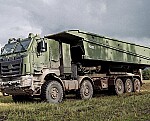
Finland’s Patria AMV and its XP variant represent another high-end competitor, widely exported and praised for exceptional mobility and protection scalability. With independent hydropneumatic suspension, the AMV achieves outstanding off-road performance and can handle payloads up to 13–15 tons at combat weights around 30 tons. Ballistic protection reaches STANAG levels against 30mm APFSDS in frontal arcs, with strong mine and IED resistance. Many operators equip it with potent turrets offering 30mm or larger cannons. The AMV’s design emphasizes ruggedness in extreme terrains, including Arctic conditions, and offers amphibious options. In direct comparison, the Stryker A1 trades some raw payload and protection ceiling for proven C-130 compatibility, lower acquisition and sustainment costs in large fleets, and deep integration within US Army digital architectures.
France’s VBCI offers a different philosophy, with a focus on infantry fighting vehicle capabilities and integration with tracked heavy forces like the Leclerc. Heavier than early Strykers at around 32 tons, it features a 25mm or 30mm turret, strong all-around protection, and good mobility, though its wheeled design was chosen partly for lower maintenance than tracks. The VBCI emphasizes crew comfort and networked operations within French doctrine. Against the Stryker A1, it may edge out in certain protection metrics or turret lethality baselines, but the American vehicle benefits from broader variant diversity, ongoing US investment in upgrades, and superior strategic mobility for power projection.
Other NATO contemporaries, such as various Piranha V derivatives or national adaptations, share DNA with the Stryker through the Mowag lineage, creating natural parallels in drivetrain and hull concepts. Across the board, the Stryker DVH A1 stands out for its maturity, cost-effectiveness in volume, and the US Army’s commitment to continuous improvement. While platforms like the Boxer or AMV XP might claim advantages in specific metrics – raw protection density or modularity – the Stryker family delivers a proven, versatile package that equips entire brigades with common training, maintenance, and command systems.
In an era of contested logistics and multi-domain operations, the Stryker DVH A1 strengthens the US Army’s ability to project medium-weight forces quickly while surviving and winning initial engagements. Its upgrades ensure the platform remains a cornerstone of Stryker Brigade Combat Teams, bridging light and heavy formations with speed, protection, and growing lethality. As additional vehicles roll out to units like the 56th Stryker Brigade and others, they embody lessons learned transformed into capabilities that will define American wheeled armored maneuver for years ahead. The vehicle does not seek to outclass every peer in every category but excels at delivering reliable, scalable performance where it matters most – on the move, under fire, and ready for whatever mission the joint force demands.