The 160 - Company Backdoor: How Western Tech Reaches Russian Military Plants
Journalists have identified 160 Russian companies that purchase Western components and equipment ultimately used by the Russian defense industry, arguing that sanctioning these intermediaries in one coordinated move could seriously disrupt weapons production. The finding comes from an investigation by The Insider, built on a data-driven approach: comparing domestic procurement records with 2024 customs data.
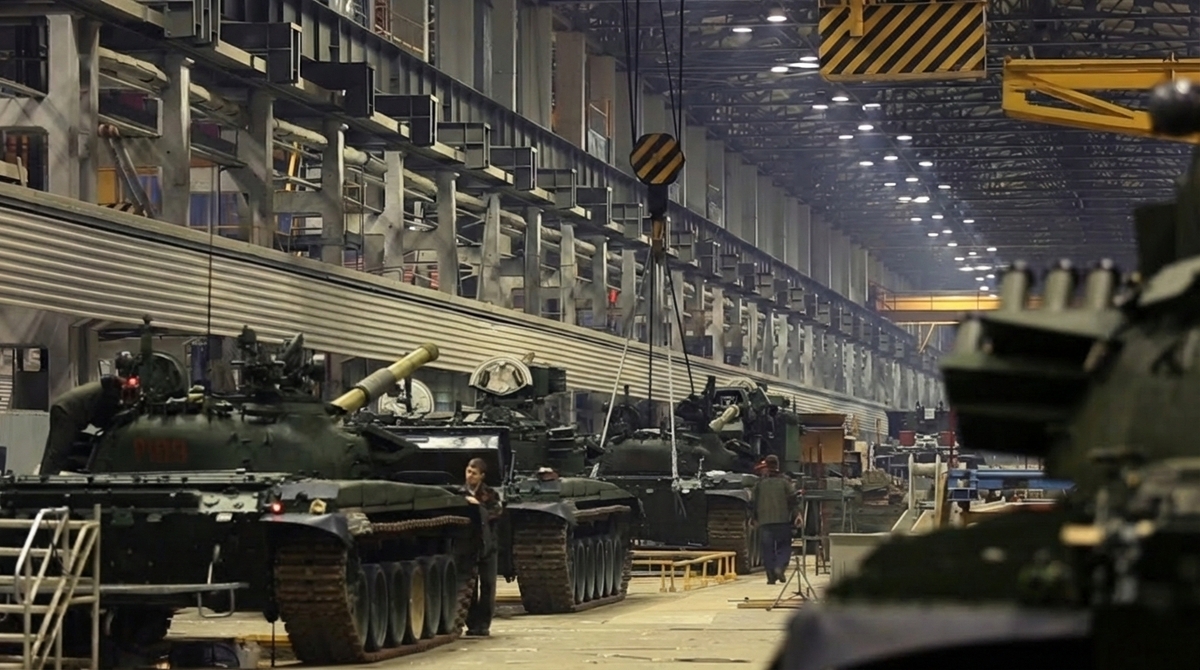
The key insight is not just that sanctioned goods are still entering Russia—it’s how they enter. Russian defense enterprises rarely import directly. Instead, they rely on a sprawling ecosystem of private intermediaries, mostly small and medium-sized businesses, that bring in everything from raw materials and machine tools to spare parts and specialized electronics.
Once goods cross the border, the trail often goes cold. Historically, many Western components were only confirmed inside Russian weapons by examining the wreckage of missiles and drones in Ukraine. The investigation describes a shift: domestic market analysis methods now make it possible to trace imports from a named importer to specific military plants, turning what used to be battlefield forensics into a supply-chain map.
The scale: 10,000 importers, 2,000 defense contractors, $22 billion in sanctioned goods
Customs data indicates that in 2024, around 10,000 Russian companies imported sanctioned goods worth more than $22 billion. Within that universe, more than 2,000 companies were contractors for leading defense enterprises. Direct deliveries to military plants are estimated at over 80 billion rubles (about $1 billion).
Those numbers matter for two reasons:
- They show the network is broad, not limited to a handful of “usual suspects.”
- They suggest that the defense sector’s access to restricted technology is not accidental—it’s operationalized through a repeatable commercial model.
Why these parts matter: “no equivalents” and “used in almost all modern weapons”
The investigation stresses that many sanctioned components are difficult or impossible to replace with domestic equivalents, making them disproportionately important. In modern weapons manufacturing, a missing sensor, controller, or precision tool can halt entire production lines—not because the item is expensive, but because it’s non-substitutable.
Several examples illustrate how specific brand-name components show up in defense-linked supply chains:

- Kontrakt-Holding imported Japanese equipment from SMC Corporation for the microchip manufacturer Micron.
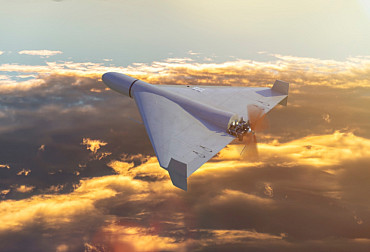
- For navigation in Shahed/Geran kamikaze drones, programmable integrated circuits (FPGA) from Xilinx are required. These were supplied by Uniservice, which works with the sanctioned drone manufacturer STC.
- Imports of sensors from the British company Renishaw for UDK Saturn, an engine producer, were also recorded.
Taken together, these cases suggest that restricted components are not limited to niche systems—they are described as being used in almost all modern Russian weapons.
Four types of importers—and why the “resellers” are the biggest gap
The investigation groups importers serving the military industry into four categories, each with different sanctioning and enforcement challenges:
-
State-owned factories importing directly
Examples include Concern Radioelectronic Technologies and Kazan Helicopter Plant. Direct purchases have become raredue to sanctions pressure and bureaucracy. -
Industrial giants (steel, aluminum, petroleum products)
These firms are essential to the defense sector, but many remain outside sanctions to avoid destabilizing global raw material markets. -
Private contractors producing specific components and assemblies
These companies can be agile in sourcing inputs, but they often have large workforces and significant assets, making rapid legal restructuring harder if sanctions hit. -
Reseller companies specializing in wholesale electronics or metalworking equipment (the largest group)
Notable examples include Unimatic, Rosmark-Stal, and Inkor. The investigation notes that many medium and small businesses in this category—despite their defense-industry role—are not on sanctions lists, making them a practical bottleneck to target.
This last group is central because resellers can act like “universal adapters” for the entire system: they can source, repackage, and redirect goods across many end users, creating plausible deniability and fragmentation that complicates enforcement.
Matching import turnover to military contracts: a telltale pattern
One of the investigation’s sharper techniques is highlighting companies whose import turnover closely mirrors military contract volumes, suggesting a tight coupling between what they buy abroad and what they supply domestically.
An example given is Bi Pitron, which supplies cables and develops optical converters for the army via shell structures in Indonesia. The investigation notes that limited public-facing activity can be a signal: companies that appear quiet in the open market may be operating primarily as defense intermediaries.
Machine tools and electronics still flow—especially from Japan and other key producers
Despite sanctions, equipment from major global brands continues to enter Russia, with the Japanese company Tsugamihighlighted as a major presence. The investigation identifies key producing countries for machine tools and electronics used by the Russian defense sector as Japan, Taiwan, South Korea, and Switzerland.
Importantly, the 160 identified companies are described as only part of the overall network sustaining Russian weapons production—suggesting a system designed to be redundant, distributed, and difficult to shut down with piecemeal measures.
What this implies: Disruption is possible, but only if it’s coordinated
The investigation’s core argument is strategic: if policymakers sanction only a few visible entities, the network routes around the damage. But if sanctions target the intermediary layer at scale, especially the reseller ecosystem, the effect could be immediate—interrupting access to components that are both critical and hard to substitute.
In other words, the story is not merely that restricted parts are getting through. It’s that Russia’s defense imports have been reorganized into a marketplace of intermediaries—and that marketplace can be mapped, measured, and potentially disrupted.