
The End of an Era: The U.S. Air Force’s Dragon Lady Prepares for Retirement
For more than seven decades, the Lockheed U-2 Dragon Lady has embodied the pinnacle of American aerial reconnaissance, a spindly, high-flying sentinel that has peered into the world’s most secretive corners from the edge of space. Designed in the frantic early days of the Cold War, this single-engine marvel has outlasted countless predictions of obsolescence, delivering irreplaceable intelligence through crises from the Cuban Missile Crisis to recent operations in the Middle East. Yet, as the U.S. Air Force outlines its fiscal 2027 budget plans, the service intends to retire its remaining fleet of roughly two dozen U-2S aircraft by the end of that fiscal year. This decision, if approved by Congress – which has repeatedly intervened to preserve the type – marks the likely close of one of aviation’s most remarkable chapters.
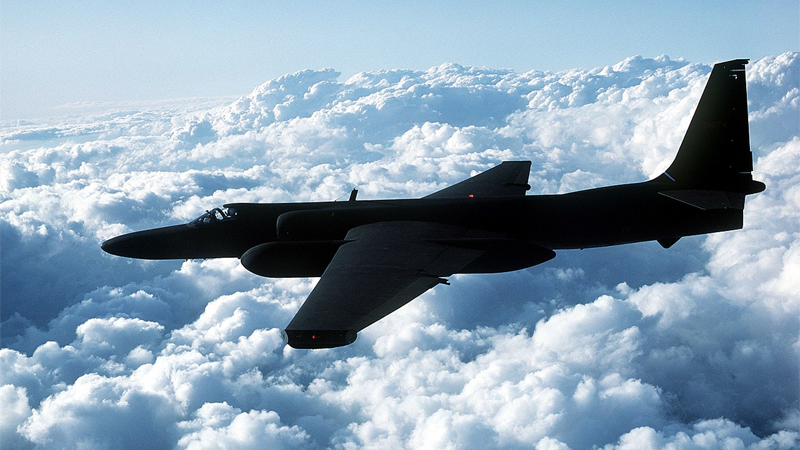
The U-2’s story begins in the shadow of Pearl Harbor and the emerging Soviet threat. In the early 1950s, U.S. leaders desperately needed eyes over denied territory. Existing bombers and reconnaissance aircraft were too vulnerable to improving Soviet air defenses. Clarence “Kelly” Johnson and his Skunk Works team at Lockheed responded with a radical design: essentially a powered glider optimized for extreme altitude. The aircraft featured extraordinarily long, high-aspect-ratio wings spanning over 100 feet, a lightweight airframe, and a single Pratt & Whitney J57 turbojet (later upgraded). It could cruise above 70,000 feet – far beyond the reach of contemporary fighters and most surface-to-air missiles of the era – while carrying sophisticated cameras.
First flight came on August 1, 1955. Operational missions under CIA auspices began soon after, with pilots in full pressure suits navigating the thin air where the margin between stall and overspeed could be as narrow as ten knots. Early overflights of the Soviet Union yielded groundbreaking imagery of military installations, missile sites, and industrial centers, fundamentally altering Western understanding of Soviet capabilities and helping avert a surprise nuclear attack. The program’s risks became tragically clear in 1960 when Francis Gary Powers was shot down over Sverdlovsk, an incident that escalated Cold War tensions. Another U-2 was lost during the 1962 Cuban Missile Crisis, with pilot Rudolf Anderson perishing. Despite these costs, the Dragon Lady proved its worth time and again.
Subsequent variants expanded the aircraft’s prowess. The larger U-2R and TR-1 models, introduced in the late 1960s and 1980s, offered greater payload and range. All surviving airframes were eventually upgraded to U-2S standard with more efficient General Electric F118 engines, modern avionics, and open-architecture systems that allow rapid sensor swaps. Today’s Dragon Lady can stay aloft for over 12 hours, covering more than 7,000 miles without refueling, though aerial tanking extends its endurance dramatically. Its service ceiling exceeds 70,000 feet, enabling it to survey vast swaths of territory while remaining difficult to intercept.
What truly sets the U-2 apart is its unparalleled sensor flexibility and human-in-the-loop advantage. It carries a modular payload of up to 5,000 pounds, including the SYERS electro-optical/infrared system for real-time high-resolution imaging, the ASARS-2 advanced synthetic aperture radar for all-weather ground mapping and moving target indication, and sophisticated signals intelligence (SIGINT) suites capable of intercepting communications and electronic emissions at long ranges. Unlike satellites, which follow predictable orbits and can be blinded or jammed, or unmanned drones with more limited payload and loiter flexibility in contested airspace, the U-2 offers on-the-spot adaptability. A pilot or sensor operator can redirect collection priorities mid-mission, interpret ambiguous data in real time, and even serve as a high-altitude communications relay. Recent upgrades to its AN/ALQ-221 defensive system further enhance survivability against modern radar threats.
This versatility has kept the U-2 relevant long after many expected its retirement. It has supported every major U.S. conflict since Vietnam, providing critical intelligence in Operations Desert Storm, Enduring Freedom, and Iraqi Freedom. In more recent years, it has flown persistent surveillance over hotspots in the Middle East, including contributions to operations against Iranian targets. Its unique Optical Bar Camera once offered unmatched wet-film resolution that unmanned systems struggled to replicate, though digital sensors have narrowed that gap. Even at an average age exceeding 40 years, the fleet maintains high availability thanks to dedicated sustainment efforts, though diminishing manufacturing sources for legacy parts pose growing challenges.
The Air Force’s push to retire the U-2 stems from several strategic and practical realities. Operating costs remain high due to the specialized pressure suits, unique JP-7-derived fuel (or equivalents), and the demanding pilot training pipeline – U-2 aviators are among the most experienced in the service. Adversary air defenses, particularly integrated systems fielded by near-peer competitors like China and Russia, have grown more capable, pushing even high-altitude platforms closer to risk. The service envisions a future ISR enterprise built around a mix of space-based assets, unmanned systems, and stealthier penetrating platforms, freeing up resources for next-generation fighters, bombers, and collaborative combat aircraft. Plans to divest the entire remaining fleet of about 23 U-2s align with broader fleet modernization, including significant investments in F-35s, F-15EXs, and B-21 Raiders.
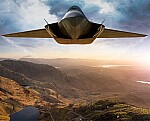
No single replacement fully assumes the Dragon Lady’s mantle. The Northrop Grumman RQ-4 Global Hawk, once touted as a primary unmanned successor, offers impressive endurance and altitude but lacks the U-2’s payload flexibility, real-time human oversight, and ability to operate effectively in highly contested environments; it too faces retirement around 2027. Instead, the Air Force points to a “family of systems” approach. This includes a growing constellation of satellites for persistent overhead coverage, smaller tactical UAVs for lower-altitude work, and – most intriguingly – classified stealthy platforms believed to include the long-rumored RQ-180, a high-flying, low-observable drone designed for penetrating ISR in denied airspace.
Lockheed Martin’s Skunk Works has also explored concepts like the TR-X, blending U-2 and Global Hawk attributes into an advanced unmanned system. Hypersonic platforms and attritable collaborative aircraft could add layers of capability. Ultimately, the transition reflects a shift from exquisite, manned platforms to distributed, resilient networks where data from multiple sources fuses into actionable intelligence. Yet critics argue that nothing yet matches the U-2’s proven ability to deliver flexible, high-fidelity collection exactly when and where commanders need it most. Congressional pushback has already limited retirements in prior years, with lawmakers citing the aircraft’s unique contributions and the absence of a ready successor.
As the Dragon Lady approaches its potential sunset, its legacy endures in the technologies it helped pioneer and the pilots who mastered its unforgiving flight regime. Recent record-setting flights by two-seat TU-2S trainers, conducted near the 70th anniversary of its first flight, served as both celebration and quiet demonstration of enduring relevance. The aircraft’s modular design even allowed it to serve as a rapid testbed for new sensors destined for future platforms. NASA’s ER-2 variants continue high-altitude research, underscoring the basic airframe’s soundness.
The retirement debate encapsulates broader tensions in U.S. defense planning: balancing the reliability of proven systems against the imperative to invest in tomorrow’s technologies amid fiscal pressures and evolving threats. Whether the final U-2s touch down for the last time in 2027 or earn yet another reprieve, the Dragon Lady’s silhouette against the stratosphere will remain an enduring symbol of ingenuity, daring, and the relentless quest for strategic advantage from above. Its departure will close a chapter, but the intelligence mission it perfected will evolve into new, perhaps unseen, forms – ensuring that America’s eyes in the sky remain sharp in an increasingly complex world.