The FCAS Project: A Credibility Test Europe Failed
The decision on the continuation of the FCAS project, the European Future Combat Air System, remains postponed indefinitely. This is not a technical hiccup or a short-term delay in the schedule, but rather a manifestation of deeper structural problems in European defense cooperation. FCAS was supposed to replace the Eurofighter and Rafale and at the same time serve as proof of Europe's ability to jointly develop the most technologically advanced military system of the present day. For President Emmanuel Macron, it was even a "test of European credibility," whether Europe could turn political ambitions into concrete capabilities. Instead, the project has become a measure of political will, industrial confidence, and willingness to share sovereignty in areas where real geopolitical power is decided.
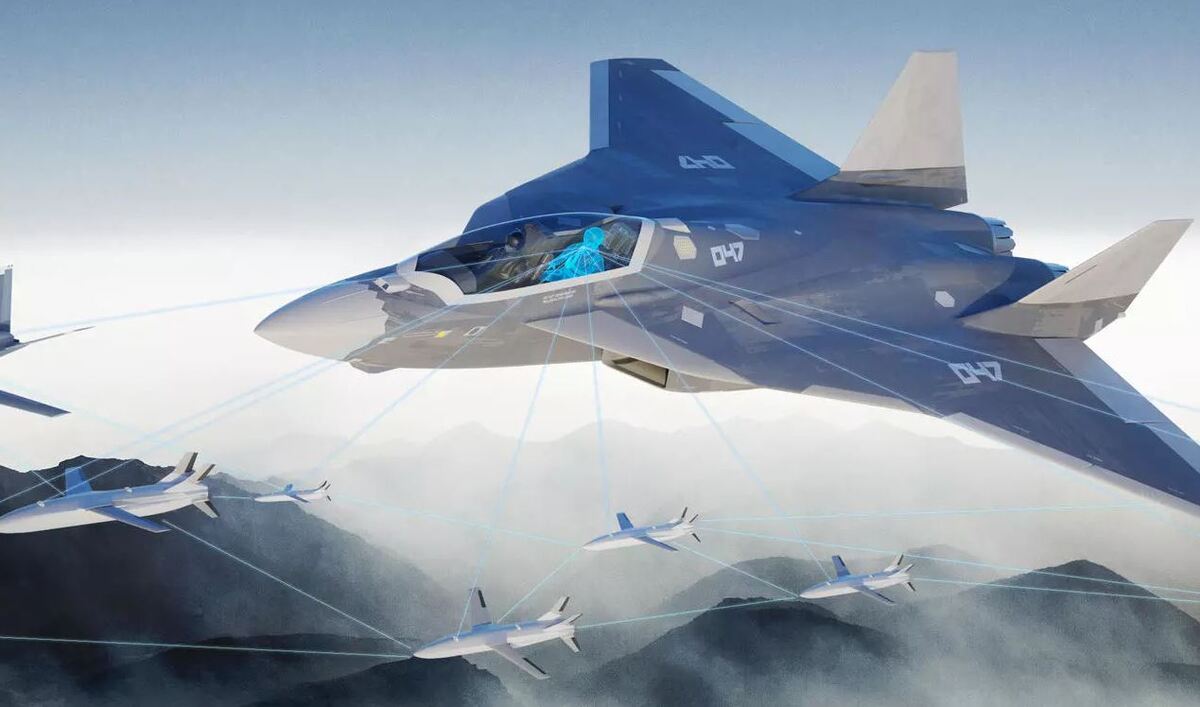
The repeated postponement of the decision on the fate of FCAS did not happen by chance. At the end of last year, the German government officially confirmed that "contrary to the original plans, no final decision on the continuation of the project will be made by the end of the year." This effectively confirmed the continuing vacuum regarding the future of FCAS. The official explanation referred to a busy political agenda and a broader foreign and security agenda. In reality, the project fell very low on the political priority list because Berlin and Paris were unable to resolve their differences. Dassault Aviation insists on strengthening its role as the main integrator of the new fighter jet and demands a greater share of the work and decision-making powers. Airbus, backed by German industry and growing German geopolitical ambitions, rejects this demand.
The Franco-German disagreement has been going on for several years and has its roots in the moment when Germany questioned the principle of the so-called "best athlete" (i.e., everyone does what they are objectively best at, regardless of which country they come from or what share of the project they are financing). At the end of her chancellorship, Angela Merkel openly stated: "This is a French-led project, but German participants must be satisfied and gain control over an appropriate part of the project." At the same time, she emphasized the need to precisely define issues of intellectual property, division of labor, and leadership. It is precisely on this point that FCAS has reached an impasse. France sees the project as a tool for strategic autonomy and a continuation of its own combat aviation tradition. Germany sees it primarily as an industrial program that must bring know-how to German territory and lead to the expansion of domestic production capacities.
The result is paralysis with implications that go beyond Franco-German cooperation. As soon as it became clear that the decision on FCAS was being postponed without any clear continuation, Berlin began to openly discuss alternatives. Political and industrial circles began working on a "plan B." According to available information, Germany is considering joining the British-Italian-Japanese GCAP (Global Combat Air Program), known as Tempest, or establishing closer cooperation with Sweden.
The Swedish option is gradually taking shape. Saab openly declares its readiness to enter into deeper cooperation in the event of a definitive collapse or long-term freeze of FCAS. Saab CEO Micael Johansson says bluntly: "Saab has the necessary capabilities. We are ready to develop a joint fighter aircraft with Germany if there is a clear political commitment from both governments." At the same time, he sets out a fundamental condition that reflects the experience of past European projects: "We must retain the ability to build fighter aircraft independently and not hand over half of our competencies to another company. Cooperation must not lead to complete dependence."
These words go straight to the heart of the FCAS issue. It is not just about technology, but also about control over it. Micael Johansson rejects the interpretation that this is technological protectionism. "It's not about protecting technology, it's about transparency," he explains. "The division of responsibilities must be based on the strengths of Saab and Airbus Defence. Each company will contribute what it excels at. If both sides have access to this know-how, they will retain their full capabilities."
The Saab CEO also offers a realistic timeframe that implicitly competes with FCAS. "The development of a fully-fledged combat aircraft takes about ten years, with operational deployment coming at the end of the 2030s," he says. At the same time, he points to a more pragmatic approach: "The first step in cooperation should be unmanned systems. We are talking about a horizon of four to five years here." He considers these capabilities to be key to the future complementarity of the Gripen and Eurofighter, and at the same time confirms ongoing negotiations with Airbus Defence on the development of drones.
This approach contrasts sharply with the original concept of FCAS as a complex "system of systems," whose breadth has gradually become its main weakness. Sweden is opting for a gradual and technically manageable approach. The Swedish Defense Materiel Administration has already commissioned Saab to conduct a study of a future combat aircraft. "This study will give rise to a program. Either we will continue on our own with a number of partners under Swedish leadership, or we will join forces with another country. The decision will be made by 2028, or 2030 at the latest," adds Johansson.
This transparency and specificity of timing seems almost provocative against the backdrop of the hesitation surrounding FCAS. At the same time, it holds up a mirror to smaller countries. If the European powers cannot agree on a single flagship project, there will be room for new coalitions of the willing to define the future architecture of European combat aviation outside the existing Berlin-Paris axis.
Plan B, which is being discussed more and more openly in Berlin today, is therefore not exclusively a German problem. It is a signal to the whole of Europe that fragmentation may continue to grow. Germany's shift towards Tempest or the Swedish-German project will effectively mean the end of the ambition for a single European/EU fighter aircraft (if we disregard Italy's participation in Tempest). Paris will develop its own solution based on French technology and know-how anyway. At the same time, however, this will open up space for new forms of cooperation that may be more accessible to medium-sized states than the originally intended Franco-German model.
Johansson's broader reflection on European defense remains significant. "Europe must be more sovereign," he says, referring to the US security strategy, according to which Europe should take greater responsibility for its own pillar of NATO. "We cannot claim to be taking responsibility and at the same time buy everything from the US. Such an approach is contradictory."
The postponement of FCAS is becoming a moment of truth. It reveals the limits of the current model of European defense cooperation and forces states to think about alternative paths. FCAS was supposed to serve as a "credibility test" for European defense, but its paralysis has so far served more as a test of Europe's ability to make decisions. If the project remains frozen in the long term, it will be necessary to look for other solutions. Plan B, which Germany and Sweden are now discussing more openly than France about the future of FCAS, may ultimately give European combat aviation a clearer shape than the original grand visions.