
The US Sees Greenland as Essential for National Security – and Europe Says It Could End NATO
Amid unprecedented diplomatic and strategic pressure, Denmark has announced that it will significantly increase its military presence in Greenland following repeated statements by the United States about potential control over this autonomous Danish territory. This decision, effective immediately as of January 14, 2026, came just hours before—and continues amid—a crucial series of meetings involving Danish, Greenlandic, and American leaders, including high-level talks at the White House with Vice President JD Vance and Secretary of State Marco Rubio, aimed at easing tensions surrounding Greenland’s geopolitical fate.
In response to escalating rhetoric from US President Donald Trump, who has reiterated his interest in Greenland under the banner of national security—insisting that "anything less" than US control is “unacceptable”—the Danish government has decided to strengthen military capabilities around the Arctic island. This includes deploying additional aircraft, naval vessels, and soldiers in and around Greenland, in close cooperation with NATO allies such as France, Germany, Sweden, and Norway. French military contingents are already en route, and other allies are contributing personnel for joint exercises like Operation Arctic Endurance. These measures build on Denmark’s 2025 commitment to invest nearly 90 billion Danish kroner (≈ €11 billion) in Arctic and North Atlantic security enhancements, including new ships, drones, and surveillance infrastructure. The moves aim to assert Danish sovereignty amid the escalating crisis, respond to broader concerns over Russian and Chinese activities in the region, and deter any form of unilateral external intervention.
This tension reflects sharply increased pressure from Washington on Copenhagen, widely perceived as a direct challenge to Danish sovereignty over the territory. Trump has escalated his rhetoric in early 2026, framing acquisition as a “national security priority” and suggesting the US must secure Greenland “one way or the other”—through negotiation, purchase, or potentially other means, including military options as floated by administration officials.

From the US perspective under the Trump administration, Greenland is vital for several interlocking national security imperatives. Strategically located between North America and Europe, it sits astride key Arctic routes, including the GIUK Gap (Greenland-Iceland-UK), a critical chokepoint for monitoring transatlantic maritime and submarine traffic. The island’s position is essential for early warning against potential threats, as the shortest path for Russian intercontinental ballistic missiles (ICBMs) to reach the continental United States passes over the North Pole and Greenland.
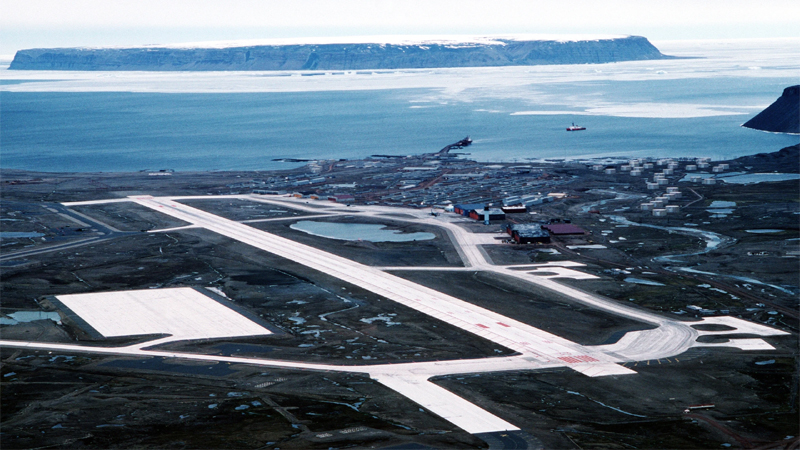
The cornerstone of US presence is Pituffik Space Base (formerly Thule Air Base), the northernmost US military installation in northwest Greenland. Operated under the 1951 US-Denmark defense agreement within the NATO framework, it hosts around 150 US personnel and features advanced capabilities:
- Ballistic Missile Early Warning System (BMEWS) radars for detecting ICBM launches.
- Space surveillance sensors providing data to NORAD, the US Space Force, and allies.
- A major airfield, the world’s northernmost deep-water port, and logistical support for Arctic operations.
Trump has repeatedly highlighted the base’s role in missile defense, including ties to the developing “Golden Dome” system, arguing that full US ownership is necessary to prevent Russia or China from gaining influence or control. Administration officials have accused Denmark of underinvesting in Greenland’s defense, leaving it vulnerable amid great-power competition in a warming Arctic—where melting ice opens new shipping routes (like the Northwest Passage), resource extraction opportunities (including rare earth minerals critical for defense technologies), and strategic maneuvering. Trump has claimed that without US control, “Russia or China will take Greenland,” framing acquisition as essential to block adversarial expansion, secure hemispheric dominance, and even strengthen NATO itself by placing the island firmly under American stewardship.
Greenlandic Prime Minister Jens-Frederik Nielsen stated firmly that “if Greenland had to choose, it would choose Denmark,” rejecting any idea of “American ownership” or governance from Washington. This marks a hard line against US ambitions, even as the US already enjoys significant military access via historic agreements.
Danish Prime Minister Mette Frederiksen called the American pressure “unacceptable,” emphasizing that Greenland remains an integral part of the Danish kingdom and benefits from NATO protection—a key argument in Copenhagen’s response. She and other European leaders have warned that any US military action against Greenland would trigger a profound crisis for NATO, potentially invoking Article 5 collective defense (though against the Alliance’s leading member) and even marking the “end of NATO” as a credible security pact. Experts describe this as an existential threat to the Alliance, with a US move fracturing transatlantic unity at a time of heightened global competition.
Prior to this new phase of tension, Denmark had already begun ramping up capabilities in the Arctic to address threats from Russia (which has modernized bases and nuclear assets nearby) and China (pursuing economic and scientific inroads). The current strengthening of military presence—framed as expanded NATO-aligned exercises—aims to assert sovereignty, deter unilateral external intervention, and position the issue within a multilateral framework rather than a bilateral US-Denmark dispute.
A meeting with the NATO Secretary General is planned to discuss Arctic security, signaling Copenhagen’s intent to multilateralize the response. European allies have expressed alarm that Trump’s approach risks undermining the transatlantic Alliance, with some proposing joint NATO deployments to Greenland as a compromise to address US concerns without sovereignty changes. The crisis underscores the Arctic’s transformation into a new theater of great-power rivalry, where climate change amplifies strategic stakes over resources, routes, and defense.