
They Didn't See It Coming: The Untold Story of the Kacha Air Base Attack That Stunned Russia
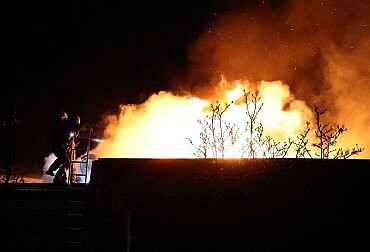
A significant blow has been dealt to Russian military logistics in occupied Crimea, with an An-26 military transport aircraft reportedly destroyed by a Ukrainian drone strike at the Kacha military air base. The incident has resulted in confirmed fatalities and injuries among personnel at the scene, underscoring the escalating vulnerability of Russian assets in the region.
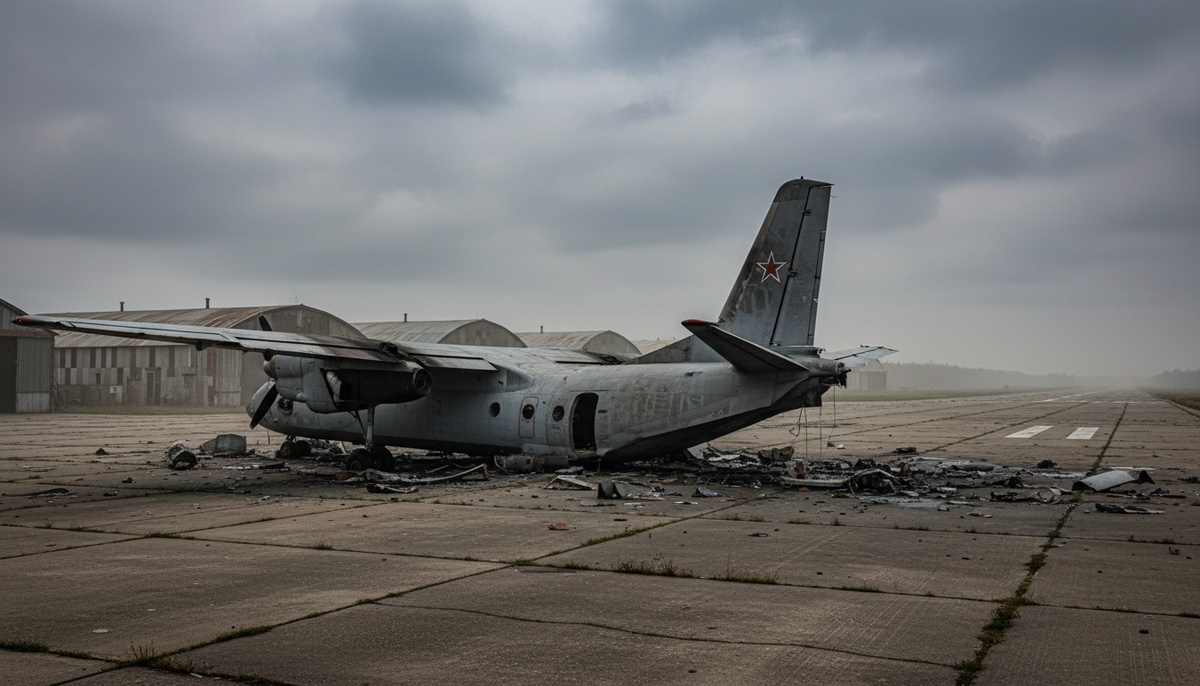
The attack, which occurred on [Date of event if specified, otherwise omit or use "recently"], was initially reported by the ‘Na Predele’ Telegram channel, a source often linked to Russian pilots. This channel stated that a Ukrainian drone successfully targeted the An-26 while it was stationed at the Kacha air base. The immediate aftermath saw reports of casualties, with indications that those killed and wounded are likely members of the aircraft’s crew or command personnel from the airfield. Such a direct strike on a military installation in occupied territory, with confirmed personnel losses, represents a stark reminder of the ongoing threat posed by Ukrainian forces.

Adding context to the incident, a Russian monitoring channel had reported an air-raid alert in the town of Kacha, situated near the Russian air base, earlier today at 14:52. This pre-strike warning suggests that Russian air defense systems were either alerted to an incoming threat but unable to intercept it, or the alert was issued too late to prevent the strike. The partisan movement Atesh has also claimed its agents provided intelligence or support for the operation at Kacha, implying a sophisticated, multi-faceted approach to targeting.
The An-26 is a cornerstone of military air transport, a Soviet-era workhorse developed by the Antonov Design Bureau. Derived from the An-24T, it first flew in 1969 and entered service in 1975. Its robust design led to continuous production until 1986, with over 1,400 units of various modifications manufactured. Known for its reliability and versatility, the aircraft is crucial for logistical operations, troop transport, and cargo delivery. It typically operates with a crew of 5–6 people and boasts a substantial payload capacity of up to 5.5 tons. With a maximum speed of approximately 540 km/h and a flight range of up to 2,500 km, the An-26 is vital for moving personnel and materiel across vast distances. A key distinguishing feature is its rear ramp, which allows for efficient loading of equipment and the air-dropping of cargo, making it invaluable for paratrooper operations and resupply missions. The loss of such an aircraft is not merely a material blow but also impacts the operational capabilities for troop and equipment movement.
Kacha military air base, located in the strategically important Crimean Peninsula, serves as a critical hub for Russian military aviation. Its proximity to Sevastopol, the home of Russia's Black Sea Fleet, underscores its importance in supporting military operations in the southern theater. The successful targeting of an aircraft at such a base highlights the extended reach and increasing sophistication of Ukrainian drone capabilities, which continue to challenge Russian air defenses within occupied territories.
This latest destruction adds to a growing tally of Russian military aircraft losses. According to the open-source intelligence tracker Oryx, Russia has already lost three An-26 aircraft – either destroyed or damaged – since the commencement of the full-scale invasion. This incident at Kacha further illustrates the ongoing attrition of Russian military assets and the persistent threat posed by Ukrainian forces, who continue to target high-value military objectives deep behind enemy lines. The attack serves as a clear indication that no location in occupied Crimea is entirely immune from potential strikes, maintaining pressure on Russian forces and their logistical networks.