
This Is How You Slow an Offensive: Ukraine Hits Staging Areas and Supply Lines
Overnight on February 13, Ukrainian forces carried out a coordinated series of precision strikes across temporarily occupied territories, hitting assets that underpin Russia’s ability to see, decide, and sustain combat operations. The strikes spanned the Zaporizhzhia and Donetsk regions and extended into Crimea, forming part of a broader campaign aimed at systematically degrading Moscow’s offensive capacity both along the front line and in rear support areas.
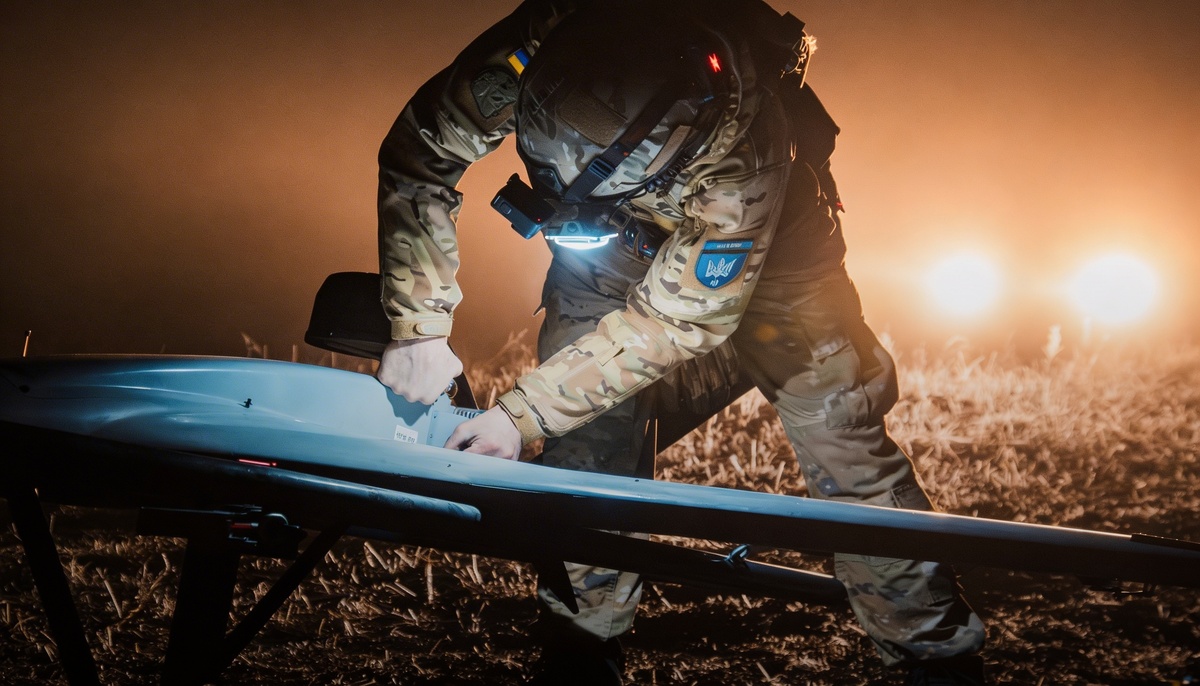
Rather than concentrating on a single battlefield point, the operation appeared designed to pressure several critical functions at once: manpower staging, drone operations, logistics, surveillance, and equipment concentration areas. Taken together, the targets suggest an intent to disrupt the mechanisms that make Russian attacks repeatable—reconnaissance to find targets, operators to guide strikes, warehouses to resupply units, and radar to coordinate air defense and airspace awareness.

Zaporizhzhia: personnel staging areas and UAV operator positions hit
In the temporarily occupied areas of Zaporizhzhia region, Ukrainian strikes reportedly hit concentrations of Russian personnel near the settlements of Solodkovodne and Liubymivka. These locations have been used as staging grounds for units operating on the southern axis, making them important nodes for sustaining pressure at the front. Striking manpower concentrations can slow rotations, complicate unit assembly, and force dispersal—each of which reduces tempo and makes subsequent movements more cautious.
Additional strikes were reported near Tokmak and Mykhailivka, where positions of Russian unmanned aerial vehicle (UAV) operators were targeted. The focus on drone operator hubs is tactically significant. Russian forces rely heavily on UAVs for reconnaissance, artillery adjustment, and loitering munition attacks. Disrupting these teams can degrade battlefield awareness and reduce the precision and responsiveness of fire support, especially in sectors where drones serve as the primary “spotters” for artillery.
Donetsk: logistics and equipment concentrations under pressure
In Donetsk region, a logistics warehouse in the area of Selydove was hit. Strikes on material and technical supply depots directly affect the ability to replenish ammunition, fuel, and equipment—core requirements for sustained offensive operations. Even when the frontline units remain intact, damaged logistics can create bottlenecks that ripple outward: fewer shells delivered, fewer vehicles repaired, and slower recovery from losses.
Further east, in the area of Komyshuvakha in Donetsk region, Ukrainian forces struck a concentration of Russian military equipment. Equipment staging areas are often tied to planned movements and operational preparation. Hitting them can impose immediate losses while also disrupting timetables—forcing units to re-route, delay, or reconstitute with reduced capability.
Crimea: reported hit on Nebo-U long-range radar near Yevpatoria
One of the most notable reported strikes occurred near Yevpatoria in temporarily occupied Crimea, where the 55Zh6U Nebo-U radar system was reportedly hit. The Nebo-U is a long-range surveillance radar designed to detect aerodynamic and ballistic targets, including aircraft and certain types of missiles. If damaged, such a system could create temporary gaps in Russian airspace monitoring and complicate the coordination of air defense assets in the region—especially in an environment where surveillance coverage and cueing are central to air defense effectiveness.
A pattern: hitting the “eyes,” “hands,” and “supply lines”
While the full extent of Russian losses and material damage is still being clarified, the target set points to a deliberate pattern. The strikes addressed:
- Surveillance and airspace awareness (Nebo-U radar near Yevpatoria)
- Drone capability (UAV operator positions near Tokmak and Mykhailivka)
- Sustainment (logistics warehouse near Selydove)
- Force generation and readiness (personnel concentrations near Solodkovodne and Liubymivka)
- Operational preparation and mobility (equipment concentration near Komyshuvakha)
This blend suggests an attritional approach focused less on symbolic targets and more on the structural foundations of Russia’s warfighting system in temporarily occupied territories. By repeatedly pressuring command-adjacent enablers—surveillance, drone operations, and logistics—Ukraine aims to reduce Russia’s ability to generate accurate fires, move resources efficiently, and maintain offensive momentum over time.