Ukraine’s €2 Billion Patriot Missile Request Shows Europe’s Air Defense Problem Is Bigger Than Money
Ukraine has asked the European Commission to allow €2 billion from a wider EU loan package to be used for the purchase of Patriot air defense missiles. On paper, the request looks straightforward: Kyiv needs more interceptors to defend cities, infrastructure, troops, and strategic facilities from Russian missile attacks. In practice, the question is far more complicated.
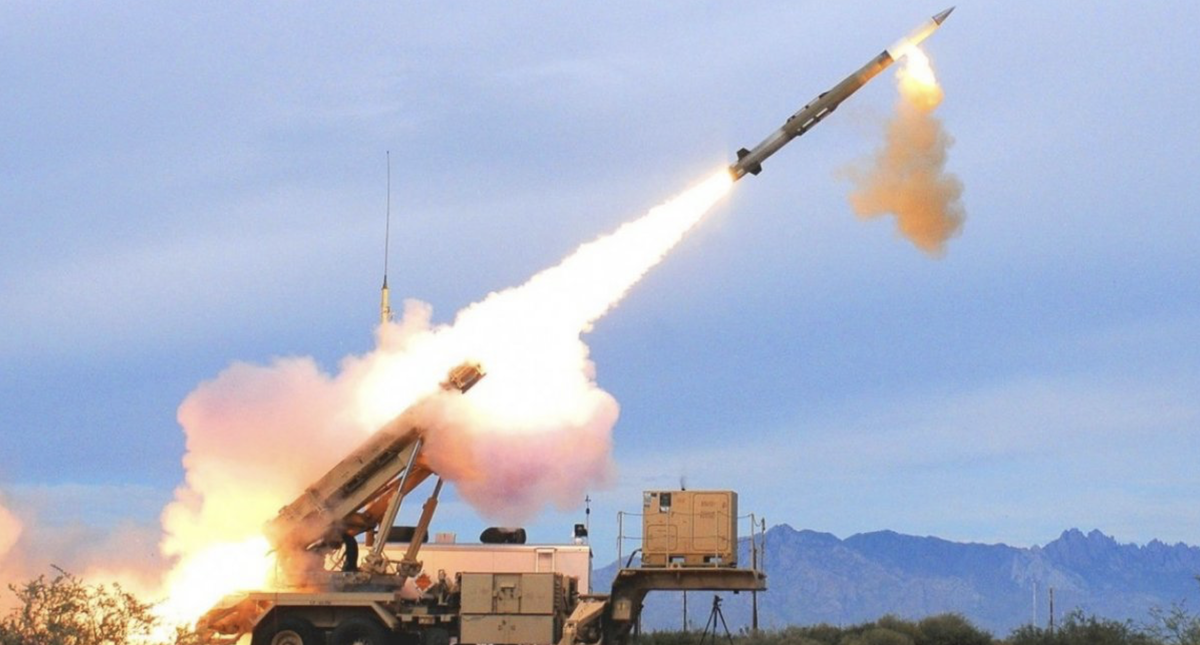
The issue is not only whether Europe can find the money. It is whether enough Patriot missiles exist, how quickly they can be delivered, and at what price Ukraine would be allowed to buy them.
According to Ukrainian media outlet Suspilne, Kyiv wants to use part of a €90 billion EU loan for weapons produced within the European Union and European Economic Area. Of that, Ukraine is seeking approval to spend €2 billion specifically on missiles for the Patriot air defense system. Another €4 billion from the same weapons-related portion of the loan would go toward European and Ukrainian-made arms.
For Ukraine, the Patriot system remains one of the most valuable layers of air defense. It is especially important because of its ability to intercept ballistic missiles — a threat that many other air defense systems cannot reliably defeat. Russia’s continued use of ballistic and cruise missiles, combined with large-scale drone attacks, has made interceptor supply one of Ukraine’s most urgent military needs.
But €2 billion does not translate into a fixed number of missiles. The final quantity depends heavily on the price Ukraine would receive under the procurement arrangement.
The PAC-3 MSE, one of the key missiles used by the Patriot system, is often cited at around $4 million to $5 million per missile for the U.S. military. A recent Pentagon order illustrates this level: in September 2025, the U.S. placed an order for 1,970 PAC-3 MSE missiles worth $9.8 billion, or roughly $4.97 million per missile.
If Ukraine were somehow able to access a similar price, €2 billion — approximately $2.32 billion — could theoretically buy around 460 to 580 interceptors.
However, export prices are usually higher. Germany’s late-2024 purchase provides a more relevant comparison for European procurement. Berlin ordered 120 PAC-3 MSE missiles for €763.5 million, which equals about €6.36 million per missile, or roughly $6.61 million at the exchange rate used at the time. At that price level, Ukraine’s €2 billion would buy approximately 315 missiles.
There is also an even more expensive benchmark. In February 2026, the U.S. government approved a possible sale to Saudi Arabia of 730 PAC-3 MSE missiles with a maximum estimated value of up to $9 billion. That would equal about $12.3 million per missile. This was not necessarily the final contract price, but it shows how high the ceiling can be in foreign military sales. At that level, Ukraine’s €2 billion would cover only about 190 interceptors.
That range — from roughly 190 to 580 missiles — shows why the price question matters. A favorable procurement structure could give Ukraine several times more air defense capacity for the same amount of money. A high export price would dramatically reduce the number of missiles Kyiv could receive.
Still, the larger problem may not be cost. It may be supply.
Even the middle estimate of around 315 missiles would represent a major share of global PAC-3 MSE production. Defense Express notes that this number would be approximately half of annual worldwide production. That means Ukraine’s request is not simply a financial transaction. It would require political prioritization, industrial capacity, and coordination with the United States and European partners.
This creates a difficult strategic dilemma for Ukraine’s allies. Patriot missiles are in demand across NATO and among U.S. partners globally. Countries that operate Patriot batteries need their own stockpiles for deterrence and national defense. At the same time, Ukraine is using air defense ammunition in an active war, where each interceptor can mean the difference between a destroyed incoming missile and a devastated city block, power station, airfield, or command facility.
For Europe, Kyiv’s request exposes a broader weakness: air defense production has not kept pace with the security environment. European countries are now trying to support Ukraine, rebuild their own stockpiles, and prepare for a long-term threat from Russia — all while relying on limited production lines for some of the most advanced interceptors.
The request also underlines Ukraine’s shift toward more structured, long-term procurement. Instead of relying only on emergency deliveries from existing allied inventories, Kyiv is trying to secure funded purchases through European mechanisms. That approach could make support more predictable. But it also forces allies to make hard decisions about procurement priorities, delivery timelines, and export approvals.
In the near term, the most important factor will be whether Ukraine can obtain the missiles at a price closer to U.S. or European procurement levels rather than the highest foreign-sale estimates. The difference is not marginal. It could decide whether Kyiv receives fewer than 200 interceptors or several hundred more.
For Ukraine, every Patriot missile is a scarce and strategic asset. The country does not need them for symbolic value. It needs them because Russia’s missile campaign continues to test the limits of Ukrainian air defense. A larger missile stockpile would strengthen Ukraine’s ability to protect critical infrastructure and reduce the pressure of choosing which targets can be defended during mass attacks.
The €2 billion request is therefore not just about buying missiles. It is a test of whether Europe and its partners can turn financial commitments into real defensive capacity quickly enough. Money matters, but in this case, production capacity, export terms, and political will may matter even more.
If approved and efficiently executed, the package could significantly reinforce Ukraine’s Patriot arsenal. But the wide price range shows the uncomfortable reality behind modern air defense: advanced interceptors are expensive, scarce, and increasingly central to the future of European security.