
Ukraine’s F-16 Fleet Emerges as a Major Shield Against Russian Air Attacks
Ukraine’s Western-supplied F-16 fighter jets have become one of the country’s most active tools in defending its skies, with Ukrainian pilots reportedly destroying more than 3,150 Russian aerial targets since the aircraft entered service.
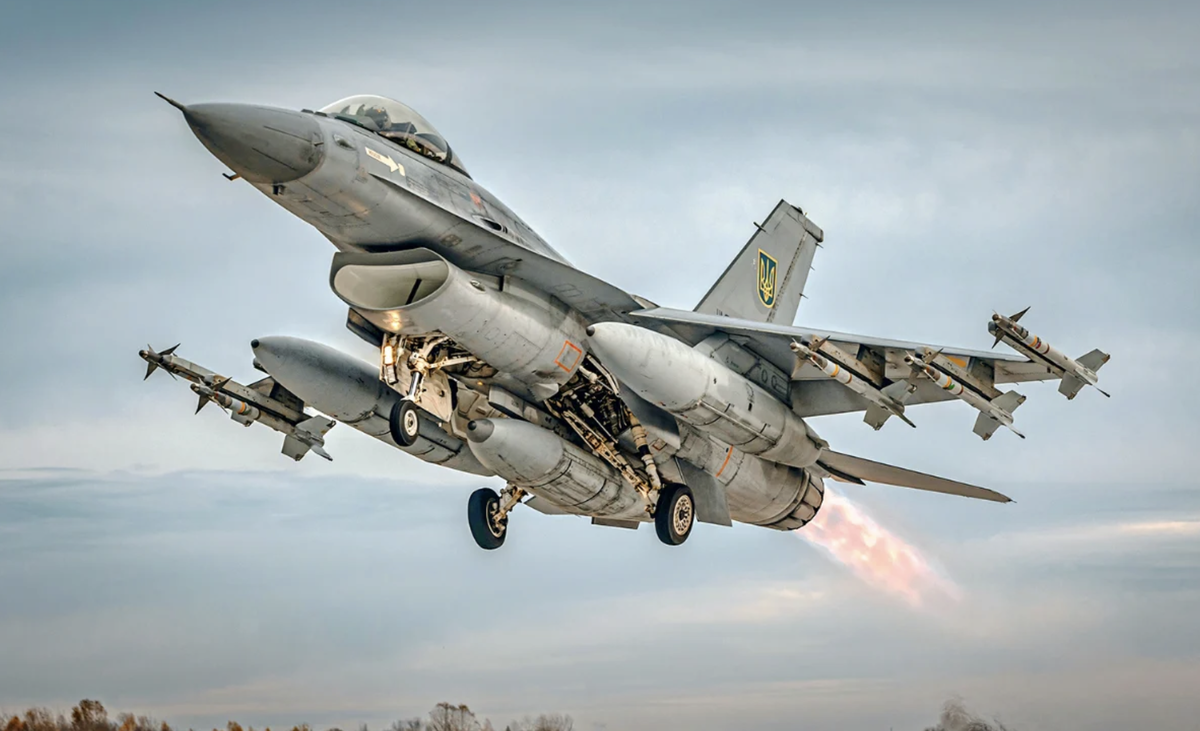
According to figures shared by Lt. Gen. Anatolii Kryvonozhko, commander of Ukraine’s Air Force, Ukrainian F-16 crews have shot down 666 cruise missiles and roughly 2,500 drones. The numbers were disclosed during a meeting between a Ukrainian Air Force delegation and representatives of Lockheed Martin, the American manufacturer behind the F-16 Fighting Falcon.
The report, first published by Defence Blog, also stated that Ukraine’s F-16s have carried out more than 650 strikes against Russian ground targets. Kryvonozhko said Ukrainian pilots are making intensive use of the aircraft despite limited weapons supplies, employing several types of munitions to keep the jets effective in both defensive and strike missions.
The figures underline how quickly the F-16 has become part of Ukraine’s layered air-defense network. Since the first aircraft arrived in the summer of 2024 from European donors including the Netherlands, Denmark, Norway and Belgium, the jets have been used mainly to intercept Russian cruise missiles and Shahed-type attack drones aimed at Ukrainian cities, infrastructure and energy facilities.
While the F-16 was long requested by Kyiv as a symbol of Western support, its battlefield value has been practical rather than symbolic. Ukrainian pilots have reportedly used the aircraft to engage incoming threats with a mix of short-range missiles and cannon fire, particularly against drones, helping conserve more expensive air-defense interceptors.
The aircraft have also added flexibility to Ukraine’s air campaign. In addition to air-defense missions, the reported 650-plus ground strikes suggest the F-16 is being used to hit Russian military positions and support operations beyond purely defensive roles.
During the meeting with Lockheed Martin, Conor McGuire, the company’s head of F-16 capability development, praised Ukrainian pilots and ground crews for how they have adapted to the aircraft under wartime conditions. Lockheed Martin representatives also discussed ways to improve the performance of Ukraine’s current F-16 fleet.
One possible path is a future transition to the F-16 Block 70/72, the latest production version of the aircraft. Built in Greenville, South Carolina, the Block 70/72 features the AN/APG-83 active electronically scanned array radar, upgraded cockpit systems and a longer structural service life. These improvements would give pilots better target detection, improved situational awareness and greater long-term reliability compared with older variants.
Ukraine currently operates second-hand F-16s donated by European countries. These aircraft were upgraded in the 2000s but were not newly built for Ukraine. Even so, Kyiv’s reported use of the jets shows that older Western platforms can still deliver significant results when integrated into a broader defense system.
The cost has not been negligible. Ukraine has lost several F-16s and pilots since the aircraft entered combat service, reflecting the intensity of the air war and the risks of operating advanced fighters under constant missile and drone pressure.
Kyiv is also looking beyond the F-16 as it plans the future of its combat aviation. In 2025, Ukraine signed letters of intent with Sweden for up to 150 Saab Gripen E fighters and with France for up to 100 Rafale jets. Those agreements have not yet resulted in deliveries, but they point to Ukraine’s ambition to build a more diverse and modern fighter fleet over time.
For now, the F-16 remains Ukraine’s most important Western fighter in active service. If the reported numbers are accurate, the aircraft has already played a substantial role in blunting Russia’s long-range air attacks and strengthening Ukraine’s ability to defend its population and critical infrastructure.
The next challenge will be sustainment. Ukraine will need steady supplies of missiles, spare parts, trained pilots and maintenance crews to keep the fleet combat-effective. Modernization discussions with Lockheed Martin suggest Kyiv is not only focused on keeping the jets flying, but also on expanding what they can do.
In a war increasingly shaped by drones, missiles and air-defense endurance, Ukraine’s F-16s have become more than a prestige asset. They are now part of the daily contest for control of the skies.