
Ukraine’s Missile Program Just Leveled Up: FP-7 Launch Video Released
Ukraine’s defense manufacturer Fire Point has conducted test launches of its new FP-7 ballistic missile, publicly revealing the flight-testing phase for the first time. Footage of the launches was published on February 27 by company co-founder Denys Shtilerman, who captioned the post with a brief message: “We welcome FP7.”
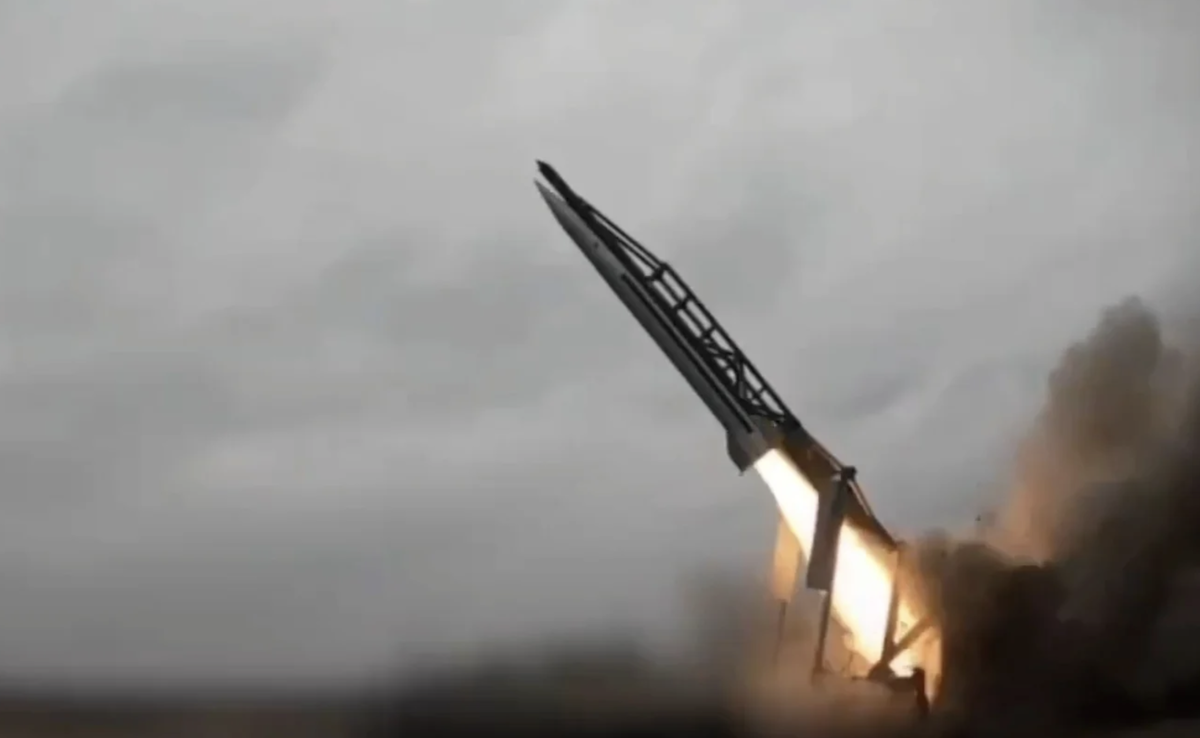
The video shows the missile lifting off from a ground-based platform, marking the first public demonstration of the system in flight. Just as notably, the missile appears to launch from a mobile ground launcher—an indicator that the program is being shaped around land-based deployment concepts designed for operational flexibility rather than fixed-site use.

What Fire Point says the FP-7 is built to do
According to released materials and accompanying statements, the FP-7 is intended for operational strikes against targets at medium distances—an increasingly important niche as Ukrainian developers expand domestically produced strike capabilities to meet battlefield requirements.
Fire Point previously stated that the FP-7’s strike range is up to 200 kilometers. The system’s published performance figures list a maximum speed of 1,500 meters per second, a circular error probable (CEP) of 14 meters, a warhead mass up to 150 kilograms, and a maximum flight duration of 250 seconds. Taken together, those specifications point to a weapon designed for fast, precise engagement—arriving quickly enough to matter in time-sensitive missions while carrying a payload intended for meaningful operational effects.
A modular missile with room to evolve
Fire Point describes the FP-7 as a modular missile design, suggesting the architecture is meant to be adaptable beyond its initial strike role. The company has indicated that this modular approach could support future applications, including potential integration into prospective air defense systems.
In its own framing, Fire Point also notes that the FP-7 shares structural and operational similarities with interceptor missiles associated with Russia’s S-300 and S-400 systems—though configured for Ukrainian requirements. Whether or not future variants emerge, the stated design direction implies a platform mindset: build a core missile architecture that can be refined, repurposed, and scaled as needs change.
Why medium-range ballistic systems matter operationally
Medium-range ballistic systems offer armed forces a rapid-response strike option capable of reaching targets within minutes. High flight speeds reduce warning time and can complicate interception efforts, which is why these systems are often viewed as particularly valuable for targets that are fleeting, time-sensitive, or heavily defended.
In the context of sustained demand for precision strike capabilities, Ukrainian defense manufacturers have increasingly emphasized scalable domestic production. Programs like FP-7 fit that pattern: they aim to deliver repeatable, locally supported capability rather than one-off solutions.
Why releasing the video is a signal, not just a clip
The publication of test footage is a rare public window into Ukrainian missile development, much of which remains undisclosed for operational security reasons. Choosing to release launch video can serve multiple purposes at once: confirming that a program has reached live testing stages, demonstrating industrial momentum, and signaling transition from prototype development toward validation and refinement.
Fire Point has already drawn international attention for its FP-1 long-range strike drones and its development of the large FP-5 Flamingo cruise missile. With the FP-7 now shown in flight, the company is effectively adding a new category to its publicly visible portfolio—one centered on ground-launched, medium-range ballistic strike.