
UK’s F-35 Fleet: From 138 Ambition to 75 by 2033 – A Retrospective on Delays, Dependencies, and Nuclear Recommitment
The UK’s F-35 Lightning II acquisition program, part of the multinational Joint Strike Fighter (JSF) initiative led by the United States, has been a cornerstone of British air power modernization since the early 2000s. As the only Tier 1 partner in the program—alongside contributing significantly to development and production—the United Kingdom has invested heavily in the Lockheed Martin-built fifth-generation stealth fighter, benefiting from deep industrial involvement, technology transfer, and influence over upgrades.
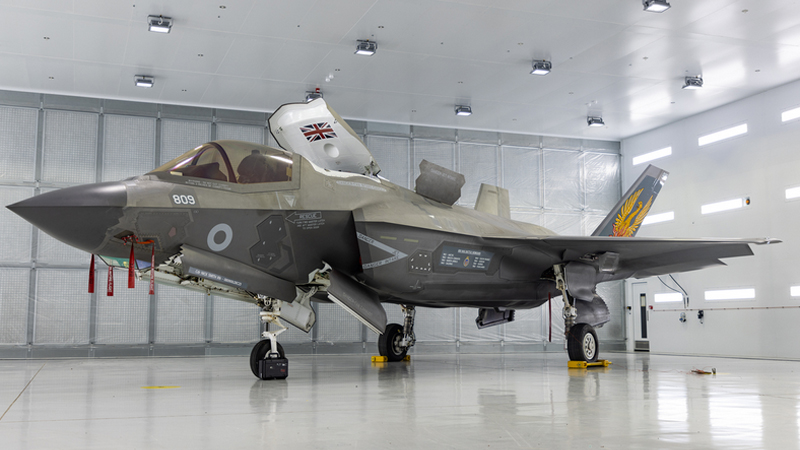
Originally, the UK planned to acquire 138 F-35s in the F-35B short take-off and vertical landing (STOVL) variant: approximately 74 for the Royal Air Force (RAF) and the remainder supporting the Royal Navy’s carrier operations with the Queen Elizabeth-class carriers. This ambition aligned with post-Cold War aspirations to maintain a robust, expeditionary air capability, including carrier strike groups deployable globally.
However, financial pressures, strategic reviews, and operational realities have led to repeated downward revisions. The 2010 Strategic Defence and Security Review (SDSR) halved initial plans amid austerity measures. Subsequent decisions, including the 2021 Integrated Review, removed the firm commitment to 138 aircraft, opting instead for a phased approach focused on affordability and capability sustainment.
Recent updates confirm the UK remains committed to a baseline of at least 74 F-35s, with options for more. In January 2026, the Ministry of Defence (MoD) stated it expects delivery of the 75th aircraft by the end of 2033. This fleet will comprise roughly 63 F-35Bs (for carrier and land-based operations) and 12 F-35As (conventional take-off and landing variant), the latter announced in June 2025. The F-35A purchase supports rejoining NATO’s nuclear mission as dual-capable aircraft (DCA), enabling carriage of U.S. B61-12 gravity bombs alongside conventional weapons—a role the RAF last fulfilled with retired Tornado aircraft.
As of late 2025 (with data from November 12, 2025), the UK had received 41 F-35Bs out of the initial tranche of 48 (originally targeted for completion by end-2025 but delayed to April 2026 due to financial and global program factors). Deliveries continue, with the program sustaining thousands of high-value UK jobs and contributing billions in economic value through domestic industry participation (e.g., BAE Systems, Rolls-Royce).
Retrospectively, the F-35 program for the RAF and broader UK forces has been a mixed story of technological triumph and persistent challenges. Early involvement as a Tier 1 partner provided strategic advantages, including sovereign maintenance capabilities and input into upgrades like Block 4 and Tech Refresh 3 (TR-3), which enhance sensors, computing power, and weapon integration. The F-35B has enabled historic milestones: first landings on HMS Queen Elizabeth in 2018, full carrier deployments, and participation in major exercises like Steadfast Defender.
Yet, the program has faced criticism for cost overruns, delays, and dependency on the U.S.-led Joint Program Office. Whole-life costs for the planned fleet (to an extended out-of-service date of 2069) now approach £57 billion (excluding personnel, fuel, and infrastructure), far exceeding early estimates. Short-term cost-saving decisions—such as delaying infrastructure for squadrons or sovereign stealth assurance facilities—have increased long-term expenses and created capability gaps.
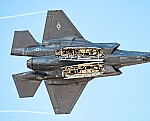
Operational hurdles remain significant. Reports from the National Audit Office (NAO) and Public Accounts Committee (PAC) in 2025 highlighted "unacceptable" shortages of skilled personnel (engineers, cyber specialists, pilots, and instructors), spare parts constraints, and low fleet availability. In 2024, the fleet achieved only about one-third of targeted mission-capable rates. Software and upgrade dependencies limit UK autonomy, while the absence of a mature standoff air-to-ground weapon (beyond basic GBU-series bombs) hampers full combat potential. The shift toward F-35As promises savings—up to 25% per aircraft versus F-35Bs due to simpler design and no lift fan—but introduces integration complexities for training, basing, and logistics.
Looking ahead, the F-35 fleet will bridge to the Global Combat Air Programme (GCAP)—a sixth-generation fighter collaboration with Italy and Japan—ensuring the UK retains cutting-edge air dominance amid rising threats from peer adversaries. Negotiations for additional batches (beyond the initial 48 plus 27) continue, balancing fiscal constraints with NATO commitments and carrier strike ambitions. While the reduced fleet size raises valid questions about air power depth, the program underscores the UK’s enduring commitment to advanced, interoperable capabilities in an uncertain security environment.