
What Russia’s Second Oreshnik Strike Was Really Testing. Oreshnik Strike Made No Military Sense - Until You Look at NATO
When Russia fired its Oreshnik intermediate-range ballistic missile (IRBM) toward the outskirts of Lviv on December 8, the strike looked dramatic on paper: long range, strategic-class weapon, and a clear signal aimed at Europe. But the details tell a different story. This launch had little practical combat value for Russia inside Ukraine—and a lot of potential intelligence value against NATO.
A “kinetic warhead” that can’t do the job
According to the described characteristics, the Oreshnik strike used mass-dimensional mockups rather than a real explosive payload. In Russian terminology, this is often framed as a “kinetic warhead,” but the effect in this configuration is closer to dropping heavy inert objects at extreme speed.
Conditionally, it’s like throwing 150 kg “blanks” from space. The problem is simple: if accuracy is limited and the payload is inert, the weapon’s “hit area” is basically the diameter of the object. That makes it a poor tool for destroying real targets—especially anything hardened, dispersed, or time-sensitive.
So if it couldn’t reliably hit something meaningful, why do it again?
The first strike was theater. The second was redundant—unless it had another purpose.
The first known Oreshnik strike, on Dnipro on November 21, 2024, served a clear political-military purpose: a public demonstration, a rehearsal-like signal of nuclear delivery potential, and an intimidation attempt aimed at Ukraine and Europe.
But the second strike didn’t add much to that message. It wasn’t a new capability reveal, and it didn’t meaningfully change the psychological effect—because the world had already seen the “Oreshnik headline” once.
Yes, the missile flew farther: roughly 1,600 km to Lviv, compared to about 800 km from Kapustin Yar to Dnipro. But that’s not a breakthrough. Oreshnik’s declared range is about 5,500 km, which implies the ability to reach essentially all of Europe from the same launch area—and even farther in certain basing scenarios. In other words, the distance increase is not the story.
Even more telling: this time the warhead reportedly lacked additional decoys designed to complicate missile defense. That means the execution was simpler, not more advanced—odd behavior if the goal was to impress or to practice penetrating defenses.
Russia “spent” a scarce asset
If Ukrainian intelligence estimates are correct, Oreshnik is not being produced in large numbers in the near term—reportedly only six units planned in 2026, with one missile available as of October 2025. If that’s even roughly true, then launching one is not something Russia does casually.
That makes the Lviv strike feel less like “wasting a missile for propaganda” and more like using a rare round for a specific strategic payoff.
The more plausible target: Europe’s missile-defense tracking
A stronger explanation is that Russia was not primarily testing Oreshnik at all. It was testing how Oreshnik is tracked—and by whom—across Europe.
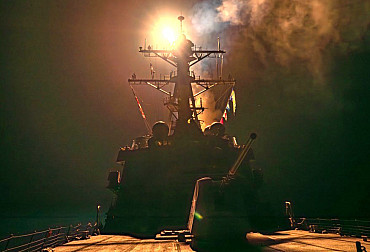
Right now, three major upper-tier missile-defense systems operate in Europe that are relevant to exoatmospheric tracking and interception:
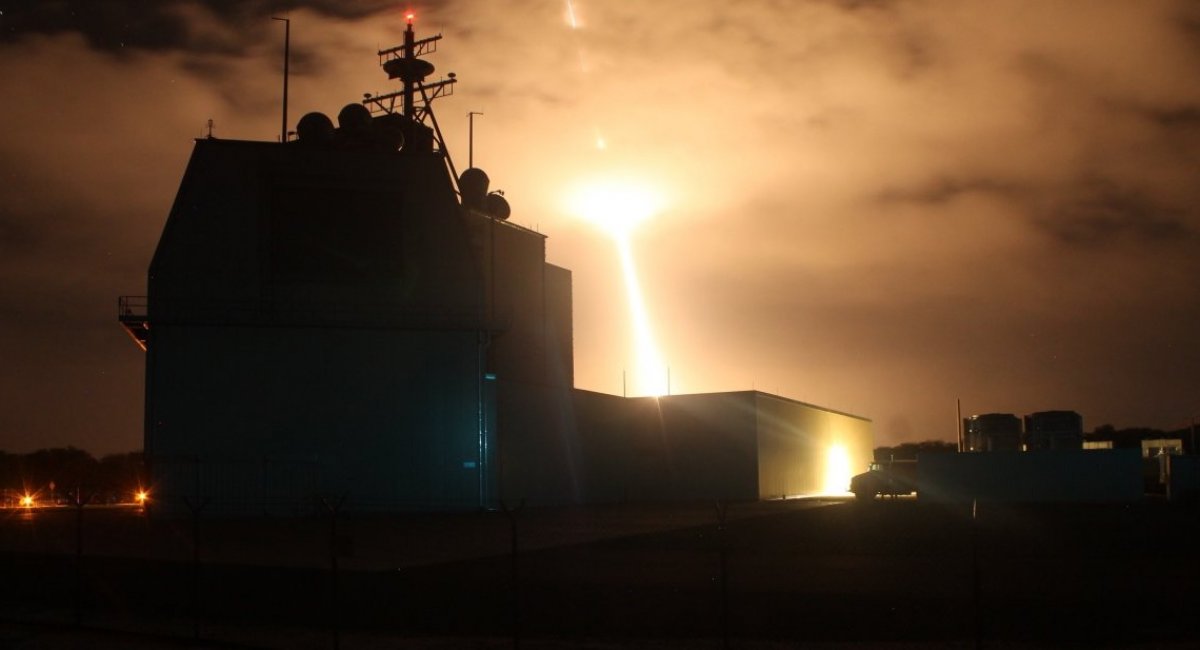
- Aegis Ashore (Poland, Redzikowo) — AN/SPY-1 radar with SM-3 interceptors designed to engage targets outside the atmosphere.
- Aegis Ashore (Romania, Deveselu) — same core architecture and mission set.
- Arrow 3 (Germany, Holzdorf/Feuerwehr Holzdorf area near Annaburg) — recently operational, purchased from Israel, designed for exoatmospheric intercepts.
Arrow 3 is especially important here because it is new in-theater, and its radar piece matters:
- Arrow 3’s stated exoatmospheric intercept reach is about 2,400 km.
- Its EL/M-2080 Green Pine Block-B radar is described as having detection up to roughly 900 km.
- Lviv is about 800 km from the German Arrow 3 site—close enough that the system could plausibly observe the final flight trajectory segment over western Ukraine.
That means the December 8 launch may have been a convenient “real-world stimulus” for Arrow 3’s sensors and the broader NATO-linked tracking picture.
A launch that forces NATO to watch—and reveals how it watches
Strategic missile launches are typically detected quickly, and the U.S. (and therefore NATO) would likely have strong awareness of such events. If Russia provided any form of warning (as is often the case with strategic launches to reduce escalation risk), then NATO systems would have been primed to track it.
From Russia’s perspective, that creates an opportunity:
- NATO radars and command networks track the missile.
- Their emissions, patterns, and coordination can be observed.
- Russian radio-technical reconnaissance assets can attempt to collect signatures and operational behavior—especially from newer deployments like Germany’s Arrow 3.
In other words, the “strike” becomes a live calibration target: a controlled event that forces the opponent’s sensors to turn on, track, classify, and share data.
But it cuts both ways
Even if Russia gained useful insights into NATO tracking behavior, the exchange is not one-sided.
Every Oreshnik flight also gives NATO something valuable:
- trajectory and staging observations
- maneuver behavior across flight phases
- speed and altitude profile
- consistency (or inconsistency) in guidance and accuracy
- evidence about payload configuration (mockups vs decoys vs real warhead packages)
That kind of data is exactly what missile-defense planners and intercept algorithms thrive on. So while Russia may be “testing NATO’s eyes,” NATO is also learning the missile’s habits—especially if Russia repeats launches with similar profiles.