Why Kurdish Forces Just Postponed Their Invasion to Iran
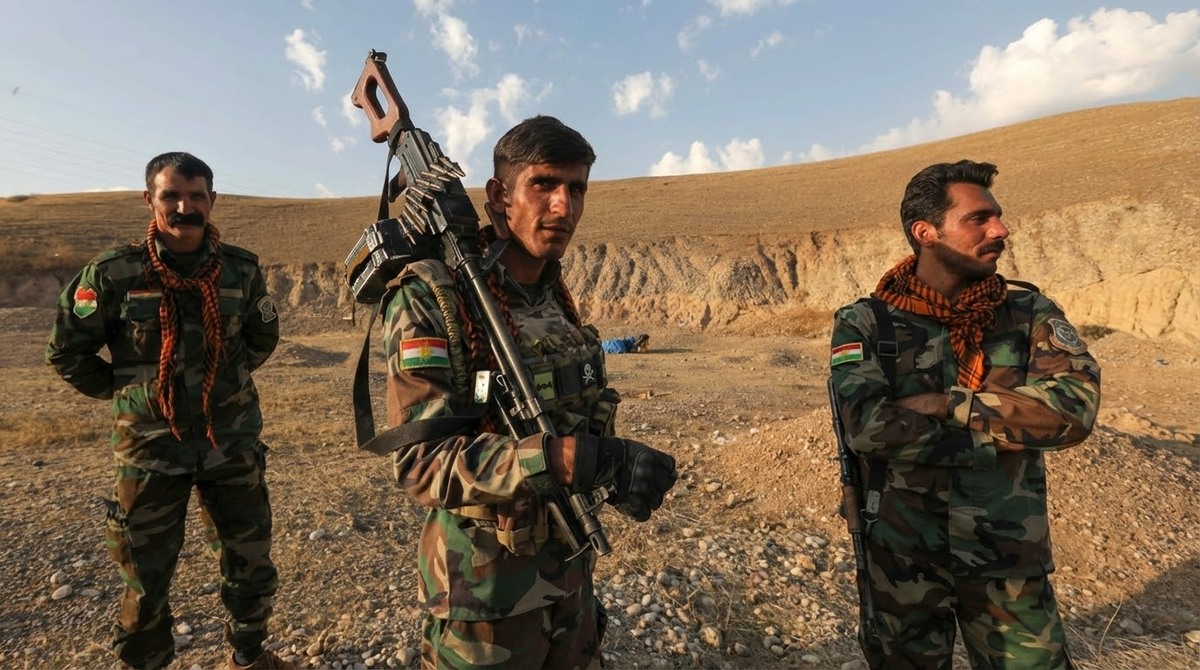
A sudden shift in tone from Washington is rippling through Iran’s opposition landscape. Kurdish opposition forces in Iran have postponed plans to enter the country after U.S. President Donald Trump voiced support for a “peaceful” scenario for removing the Ayatollah regime—remarks that also suggest a cooling of the pressure the U.S. had been signaling in recent days.
From action to pause: why the Kurdish opposition is holding back
In an interview with CBS News, the leader of the Democratic Party of Iranian Kurdistan said the group is delaying its plans in response to Trump’s public statements. The message coming from the White House, they suggest, now points more toward de-escalation than imminent confrontation—changing the strategic calculus for opposition groups watching closely for international backing.

Trump recently claimed that, according to “reliable sources,” killings in Iran are “stopping,” and that authorities allegedly do not plan new executions following the brutal suppression of two weeks of mass protests. In his view, the situation shows signs of easing.
A noticeable pivot in U.S. rhetoric
Those comments appear to mark a departure from Washington’s earlier, harsher posture. Previously, Trump repeatedly warned of possible intervention to protect protesters. As recently as Tuesday, he threatened “very harsh measures” if executions of protesters were carried out in Iran.
Now, the emphasis on a calming situation—and on a “peaceful” pathway—lands as a signal to opposition actors that the U.S. may be stepping back from the edge, at least publicly.
“It won’t happen without real international support”
Sairan Gharoli, described as a commander of the Iranian Kurds, said the protest wave has given the opposition renewed hope that the repressive system established after the 1979 Islamic Revolution could be toppled. But he framed that hope with a condition: success would require tangible international support for those taking to the streets.
Without it, the momentum of demonstrations—no matter how widespread—may not translate into political change.
Hijri’s caution: decades of crackdowns, few breakthroughs
Mustafa Hijri, the Kurdish opposition leader who has lived in exile for more than four decades, underscored why he is reluctant to make confident predictions. Over that period, he noted, Iranian authorities have repeatedly crushed large-scale popular protests. With the current unrest appearing to follow a similar pattern, he avoided forecasting a decisive outcome.
At the same time, Hijri made his preference clear: he hopes for U.S. intervention—specifically targeted strikes against the infrastructure of repression, including forces firing on protesters and the “judicial” institutions he says serve the regime’s interests.
The stated end goal: democratic rules and minority rights
Hijri said the Kurdish opposition’s strategic objective is to create conditions in which Kurds—about 10% of Iran’s population—along with other ethnic minorities, can live under democratic laws.
That vision includes concrete demands such as:
- the right for children to be educated in their native language, and
- official state recognition of those rights.
What this moment suggests
The postponement of Kurdish plans highlights how closely Iran’s opposition groups track signals from the United States—and how quickly strategy can change when those signals shift. If international pressure truly eases and protesters remain without “real support,” opposition leaders fear a familiar outcome: the regime weathers the storm, the streets quiet down, and the security apparatus remains intact.
But if outside support materializes—politically, economically, or militarily—the current protest wave could become one of the most serious challenges the regime has faced in years.