
A French Naval Base in the Gulf Just Got Targeted - Here’s Why It Matters
Several Iranian Shahed drones struck the French naval base Camp de la Paix in Abu Dhabi, according to available information, marking a notable escalation around one of the Gulf’s most strategically positioned foreign military installations.
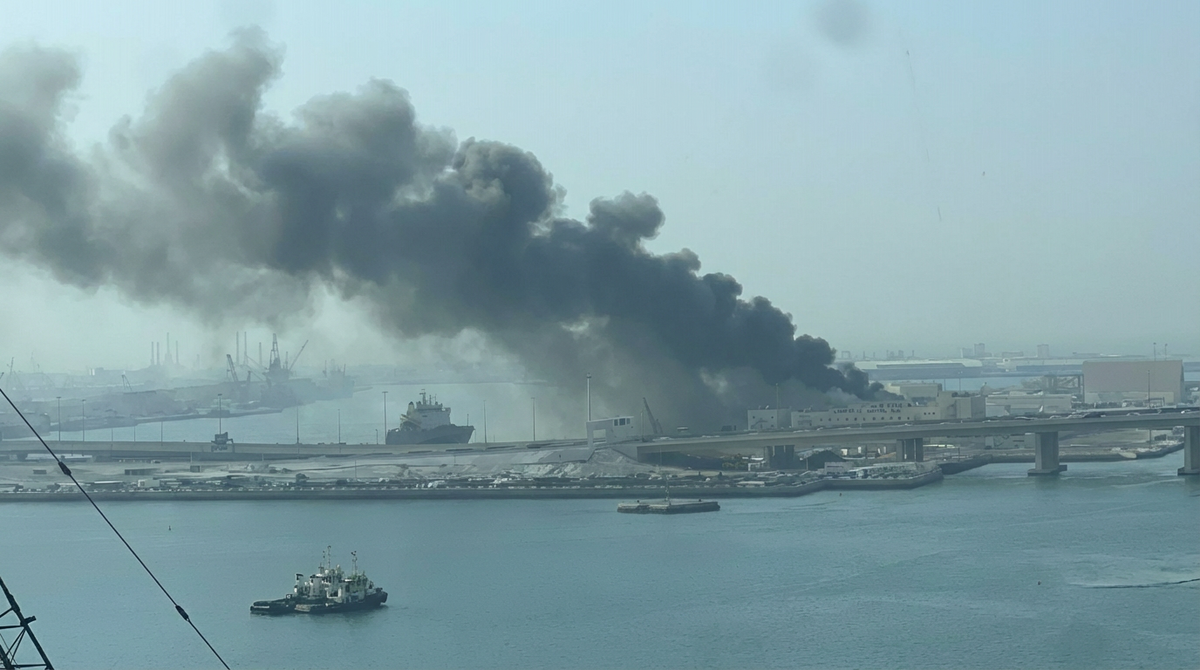
The incident was reported by the COUPSURE observer on X. Beyond confirmation of the location through open-source geolocation data, there is no official information on the consequences of the reported strike. Neither French nor Emirati authorities have commented publicly, and it remains unclear whether base personnel, infrastructure, or French naval assets sustained damage.

The reported attack comes amid heightened regional tensions and wider military activity. Earlier on the day of the strikes on Iran, French President Emmanuel Macron urged all parties to de-escalate and pursue a diplomatic resolution. He said Iran’s leadership must recognize there is no alternative to engaging in good-faith negotiations aimed at curbing its nuclear and ballistic missile programs, as well as activities that destabilize the region. France, he added, did not take part in the U.S.-Israeli operation.
In a separate development, Tehran launched two missiles toward British military bases in Cyprus. British officials said they were “almost certain” the missiles were not directly aimed at U.K. Armed Forces facilities.
Why Camp de la Paix Matters
Camp de la Paix is not a symbolic outpost; it is a long-standing pillar of France’s military posture in the Gulf. The French naval air base has operated in Abu Dhabi since 2009, reflecting a deepening defense relationship between France and the United Arab Emirates.
France and the UAE signed a mutual defense agreement in 1995. During President Nicolas Sarkozy’s visit in January 2008, both sides agreed to establish a permanent French military presence in the Emirati capital. The base was officially inaugurated on May 26, 2009. At the time, it was the first French military base established abroad in 50 years and the first outside Africa—an unmistakable signal of France’s intent to remain a security actor in the region.
Its geography amplifies its significance. The base sits near the Strait of Hormuz, a strategic maritime corridor through which about 40% of global seaborne oil shipments transit. That proximity makes Camp de la Paix relevant not only to French and Emirati defense planning, but also to the broader question of maritime security and energy flows through the Gulf.
A Three-Part Footprint: Naval, Air, and Ground
Camp de la Paix is often described as a French naval air base, but in practice it is a combined presence with distinct components:
-
Naval component (Port Zayed):
Located inside the commercial harbor at Port Zayed, the naval infrastructure includes a dock measuring 300 meters long and 200 meters wide, capable of accommodating vessels with a draft of up to 10 meters. The facility can service nearly all ships of the French Navy—except the Charles de Gaulle aircraft carrier. -
Air component (Al Dhafra Air Base):
The air element operates from Al Dhafra Air Base. French fighter jets have been stationed there since October 1, 2008, and the area allocated to the French Air and Space Force can host up to six aircraft. -
Ground component and air cover:
The ground component includes three Mirage 2000-5 fighter jets, which provide air cover and support regional operations.
What’s Known—and What Isn’t
At this stage, the public picture is incomplete. The reported strike is tied to Shahed drones and a specific location, but there is no official accounting of impacts, no confirmed damage assessment, and no confirmation of casualties or operational disruption. The absence of comment from French and Emirati authorities leaves key questions open, including whether the strike affected the naval facilities at Port Zayed, the air element at Al Dhafra, or any deployed assets tied to the base’s mission set.
Still, even a limited strike on a foreign base in Abu Dhabi—if borne out—would be politically and strategically consequential. Camp de la Paix represents a formal, long-term French presence built on bilateral defense commitments, positioned beside one of the world’s most sensitive maritime choke points. In periods of crisis, locations like this are not just infrastructure; they are signals of alignment, deterrence, and intent.