

A Mysterious Polish Drone Crashed in Iran. U.S. Link Raises New Questions
Iran has released photographs of a downed drone that its Islamic Revolutionary Guard Corps says was shot out of the sky over southern Iran, turning a little-known Polish unmanned aircraft into the center of a much larger wartime narrative.
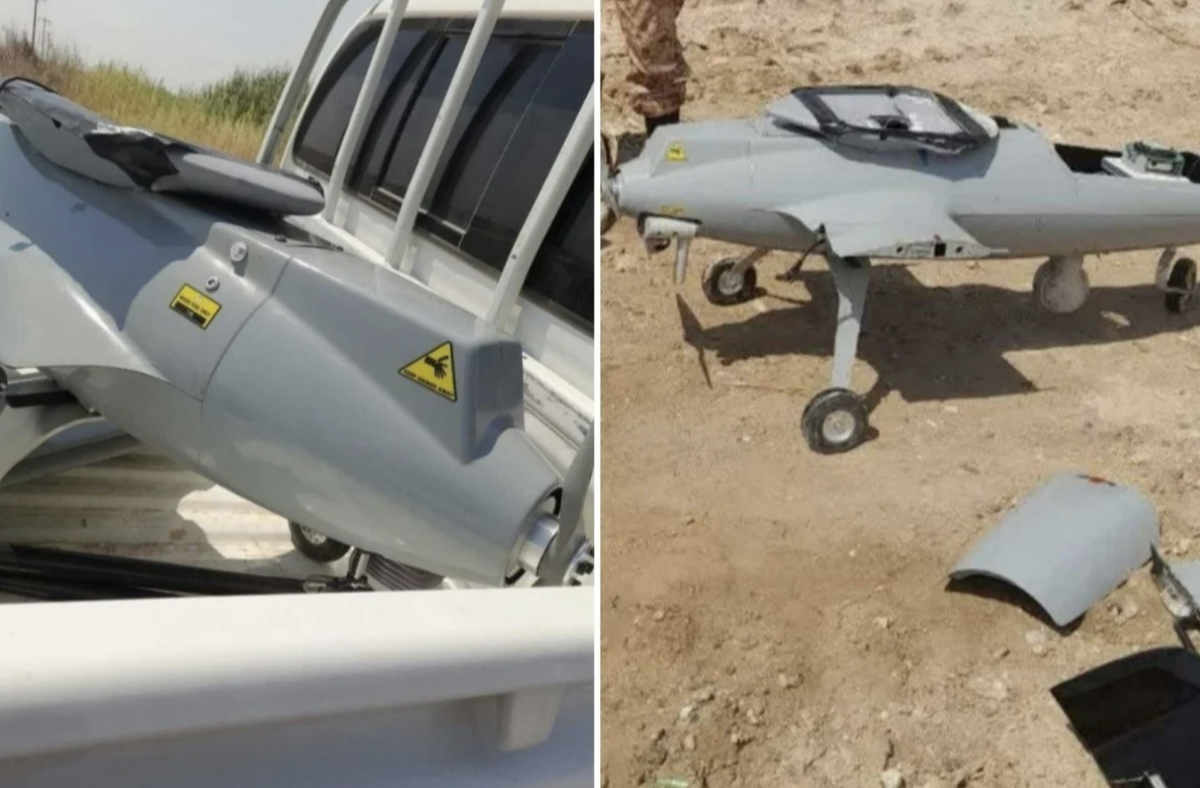
The IRGC’s Ground Forces identified the aircraft as a Tiguar-M, a light tactical unmanned aerial vehicle built by Polish manufacturer uAvionics. Analyst Babak Taghvaee, writing under The Crisis Watch account, said Iranian forces alleged the drone had been operated by the U.S. Army before being brought down by the IRGC’s 48th Fath Brigade in Kohgiluyeh and Boyer-Ahmad Province. The claim was later carried by the Polish defense outlet Defence24.
That allegation is significant, but it remains unverified. The United States has not confirmed losing such an aircraft, and no independent Western confirmation has emerged. In the context of an active war, the episode should be understood first as an Iranian government claim with potential military and political value, not as a settled account of what happened.
The broader conflict helps explain why this incident matters beyond the drone itself. The United States resumed military strikes against Iran on July 8, and by July 17 U.S. Central Command said it had completed a seventh straight night of operations. Those strikes targeted surveillance sites, military logistics infrastructure, underground weapons storage, and maritime capabilities, while U.S. forces also continued enforcing a naval blockade against Iranian ports. Iran, for its part, has publicized several claimed drone shootdowns during the same period, including an MQ-9 Reaper that the IRGC Aerospace Force said it destroyed over Ahvaz using what it described as an advanced new air defense system. Both sides have increasingly highlighted tactical successes as the fighting has moved deeper into its second week.
What gives this latest claim unusual weight is the identity of the aircraft. The Tiguar-M is not a drone long associated with American military operations. In fact, it only recently surfaced in open-source defense discussions after U.S. Army Green Berets from the 1st Special Forces Group flew the platform during Exercise Balikatan 2026 in Laoag, Philippines. The training focused on testing the drone’s long-range communications in an environment with limited infrastructure, making the exercise one of the first widely visible instances of American forces using the Polish-built system.
That earlier appearance now looks more relevant because of what can be seen in the images released from Iran. The aircraft in the photographs appears to carry a Starlink- or Starshield-style satellite terminal mounted in an improvised way on the fuselage. Such a modification would allow operators to maintain control well beyond direct line of sight, matching the same communications challenge Green Berets were testing during Balikatan. Standard production versions of the Tiguar-M have been shown with more conventional satellite communications equipment, so the terminal visible in the Iranian images may point to a field-modified configuration rather than an off-the-shelf setup.
Even so, the visual match only goes so far. Identifying a drone model is not the same as proving who was flying that specific airframe when it was shot down. A Tiguar-M seen in Iranian hands could suggest U.S. involvement, coalition involvement, transfer through another channel, or a more complicated operational history entirely. Without official confirmation, wreckage analysis from a neutral party, or supporting documentation, the chain of custody remains unclear.
That uncertainty is especially important because Iran has a well-established record of using captured or downed Western drones as propaganda tools during moments of heightened confrontation with Washington. One of the clearest precedents came in 2019, when the IRGC shot down a U.S. RQ-4 Global Hawk over the Strait of Hormuz and framed the incident as a deliberate strategic message. Publicizing drone wreckage serves several purposes at once: it reinforces domestic narratives of military competence, projects deterrence abroad, and raises the political cost of continued enemy operations.
In that sense, the Tiguar-M story is about more than whether one drone was lost. It sits at the intersection of battlefield messaging, rapid military adaptation, and the expanding use of commercial-style communications technology in contested airspace. If the aircraft really was linked to a U.S. Special Forces mission, it would suggest that relatively low-profile platforms and improvised satellite-enabled configurations are playing a larger role in modern operations than many observers realized. If the claim proves exaggerated or misleading, it would still show how quickly even a niche drone can become a powerful symbol in information warfare.
For now, the most important conclusion is also the most restrained one: the drone in the photos appears consistent with a Polish-made Tiguar-M, but the identity of its operator remains unconfirmed. Until that gap is closed, the incident stands as a revealing wartime claim — plausible enough to attract serious attention, but still too uncertain to treat as confirmed fact.