
Iran Didn’t Just Hit a Base – It Exposed a Flaw in US War Planning
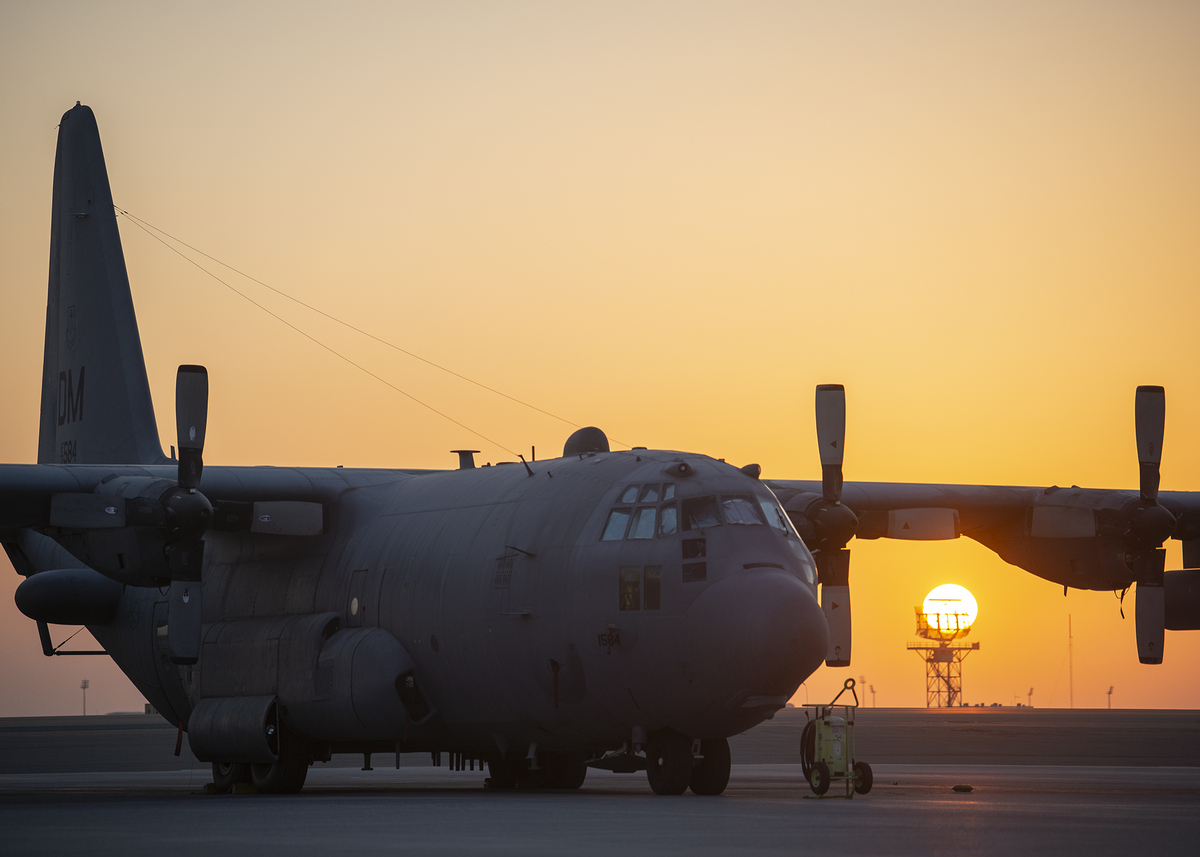
When US Defense Secretary Pete Hegseth said the Pentagon had “maxed out” its defensive posture before the Iran conflict escalated, the message was meant to signal readiness. Fortifications had been improved, assets had been dispersed, and layered defenses were in place. Yet despite those precautions, Iranian missiles and drones still managed to strike Prince Sultan Air Base in Saudi Arabia, reportedly destroying a US E-3 Sentry radar aircraft, damaging several KC-135 refuelers, and injuring American troops.
That attack is now raising a bigger question: if the US Air Force’s evolving strategy for protecting aircraft was built with China in mind, can it really hold up against a capable regional adversary like Iran?
At the heart of that strategy is Agile Combat Employment, or ACE, a concept the Air Force formalized in 2022 as a response to a world where large, centralized air bases had become increasingly vulnerable. The idea is simple in theory but demanding in practice: instead of clustering valuable aircraft at a few predictable locations, forces should be spread across smaller sites and moved frequently to complicate enemy targeting.
The concept was largely shaped by concerns about a future Indo-Pacific conflict, where China’s surveillance networks and long-range precision strike systems would put fixed bases at constant risk. But the Iranian strike suggests the same logic now applies much closer to home — and that even a more limited threat can still inflict serious damage.
In many ways, the principle behind ACE remains sound. If aircraft are not parked wingtip to wingtip on a single ramp, fewer of them can be destroyed in one attack. Analysts argue that regular movement and dispersion should still reduce losses, especially against an adversary like Iran, whose daily missile and drone salvos are far smaller than what the Air Force expects from China in a major Pacific war. But the events at Prince Sultan underline the limits of dispersal when it is not backed by a much broader protection strategy.
That broader strategy has to include both passive and active defense. Passive defense means more than moving aircraft around. It includes camouflage, concealment, deception, early warning, hardened facilities, and the logistics needed to sustain operations under attack. Active defense means layered air and missile defense systems, defensive combat air patrols, electronic warfare, and other tools designed to intercept or defeat incoming threats before they hit the ground.

The reality is that ACE was never meant to work alone. It was designed as part of a larger survival model. What the strike in Saudi Arabia appears to show is that movement without concealment, dispersal without deception, and basing without enough protective layers leaves dangerous gaps — especially when adversaries can increasingly track activity in near real time.
That may be one of the most important changes in the modern threat environment. The original appeal of dispersal relied partly on uncertainty. If forces moved often enough and unpredictably enough, the enemy would struggle to know what was where. But that advantage is shrinking. Persistent satellite imagery, paired with AI-enabled target identification, means aircraft sitting on open tarmacs can be found faster than ever. In that environment, there is less room to hide and much greater pressure to defend every exposed asset.
That is particularly troubling for aircraft like the E-3 Sentry. Losing one is not comparable to losing a fighter. The E-3 is a high-value airborne command-and-control platform with a powerful radar that can detect low-flying threats such as cruise missiles and help direct operations across the battlespace. The Air Force had only 16 E-3s in inventory before the strike, and the aging fleet already suffers from poor availability. Replacing that capability is not simple. The planned successor, the Boeing E-7 Wedgetail, remains in flux as the Pentagon rethinks how much sensing should shift into space-based systems.
The reported damage to multiple KC-135 tankers adds another layer of concern. Aerial refueling is one of the foundations of US airpower, especially in a region where aircraft often operate from distant bases. If tankers are lost or grounded, everything from fighter patrols to bomber missions becomes harder to sustain. That matters even more in a conflict where the US is reportedly operating from as many as 15 to 20 bases across the region, stretching logistics and maintenance across a wide geographic footprint.
And that points to another challenge for ACE: not every aircraft can disperse equally. Fighters can use a broader range of airfields, but large support aircraft cannot. Tankers need access to bulk fuel storage and long runways. Surveillance planes and mobility aircraft often require specialized infrastructure. In other words, the very aircraft the Air Force can least afford to lose are often the hardest to move and the easiest to target.
That mismatch is where strategy collides with geography and logistics. It is one thing to write doctrine around rapid movement and distributed operations. It is another to execute it with a fleet that includes large, scarce, infrastructure-dependent aircraft in a region where suitable bases are limited. Even if commanders avoid predictable patterns, they still have to work within physical constraints the enemy can study.
There is also the uncomfortable possibility that Iran’s targeting ability is improving faster than expected. If Tehran can now exploit satellite imagery more effectively — whether through indigenous capability or outside support — then the targeting cycle against US aircraft on the ground may be tightening. Hegseth himself suggested foreign actors are helping provide information and intelligence to Iran. If so, the challenge is no longer just surviving missile and drone salvos. It is surviving them when the enemy may know where the most valuable aircraft are before the attack even begins.
The debate over hardened shelters fits into this same dilemma. Some officials support expanding passive defenses and adding more protective infrastructure. Others remain skeptical, arguing that precision-guided weapons have made hardened aircraft shelters less decisive than they once were. That skepticism is understandable. A shelter is not invulnerable. But neither is an aircraft left in the open. In the current environment, the choice may not be between perfect protection and useless infrastructure, but between layered imperfection and obvious exposure.
That is likely the lesson the Pentagon is absorbing now. Dispersal still matters. It can still reduce losses and complicate targeting. But against an enemy armed with drones, missiles, and increasingly sophisticated intelligence support, it is not enough by itself. Protecting airpower in the modern era requires a full ecosystem of defense: movement, deception, warning, active interception, infrastructure, and constant adaptation.
Iran’s strike did not invalidate the Air Force’s strategy. But it did reveal that a concept designed to survive China’s threat environment can still fall short when tested in a different theater with different constraints. The danger for Washington is not that Agile Combat Employment is wrong. It is that commanders may discover, too late, that agility without protection is only half a strategy.