
Adir’s Proven Might: Why Israel is Doubling Its F-35 Fleet Amid Regional Threats
In a decisive move that underscores Israel’s commitment to maintaining unchallenged aerial dominance in an increasingly volatile Middle East, the Israeli government has approved the acquisition of a fourth squadron of F-35I Adir stealth fighters, bringing the total fleet to approximately 100 aircraft. This latest procurement, announced on May 3, 2026, pairs the additional 25 F-35Is with a second squadron of 25 F-15IA jets, forming a cornerstone of the broader “Magen Israel” or “Shield of Israel” defense enhancement plan. Valued at tens of billions of shekels as part of a larger 350 billion shekel ($119 billion) decade-long buildup, the decision reflects both longstanding strategic planning and hard-earned operational insights from recent high-intensity conflicts, particularly the campaign against Iran.
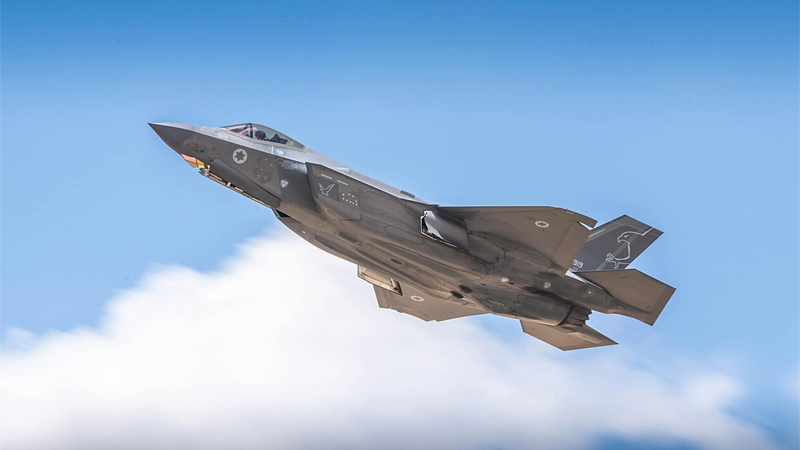
Defense Minister Israel Katz provided a clear and verified articulation of the rationale in official statements following the Ministerial Committee on Procurement’s approval. “The lessons of that campaign require us to keep pressing forward on force buildup, to ensure air superiority for decades to come,” Katz declared, directly referencing the recent operations against Iran. “The F-35 and F-15IA acquisitions are central to the ‘Shield of Israel’ plan, which is designed to give the IDF a lasting qualitative edge.” He further emphasized that “Operation Roaring Lion once again demonstrated the Israeli Air Force’s power and its decisive role in protecting Israel,” highlighting how the conflict validated the need for accelerated investment in advanced platforms. Katz added that the new aircraft would facilitate “a major technological leap – integrating autonomous flight capabilities, next-generation defense systems, and establishing Israeli military dominance, both defensive and offensive, in space.”
The history of the Adir project traces back more than two decades, rooted in Israel’s determination to secure next-generation capabilities while preserving its unique operational sovereignty. Israel joined the F-35 System Development and Demonstration phase in 2003 as a security cooperation participant, investing early to influence the platform’s evolution. Formal procurement advanced in 2010 when Defense Minister Ehud Barak pushed for an initial order of 20 aircraft, culminating in a 2012 agreement for the first batch at roughly $2.7-3 billion, with options for up to 75 more. The F-35I variant, dubbed “Adir” meaning “Mighty One” in Hebrew, distinguishes itself through extensive Israeli customizations. Unlike standard F-35As, it incorporates indigenous electronic warfare suites from Elbit Systems, plug-and-play mission computer integrations, Israeli-produced weapons compatibility for internal bays, and locally manufactured components such as outer wings and helmet-mounted displays via Israel Aerospace Industries. These modifications allow Israel to maintain independent software updates and electronic countermeasures tailored to regional threats, a concession granted by the United States that underscores the depth of the bilateral defense partnership.
Deliveries began in 2016, with the Israeli Air Force receiving its first Adir jets at Nevatim Airbase in the Negev. The fleet achieved initial operational capability by December 2017, making Israel the first non-U.S. operator to field the aircraft. Just months later, in May 2018, the IAF made history when then-commander Maj. Gen. Amikam Norkin confirmed that F-35Is had conducted operational strikes in the Middle East – believed to target Iranian-linked sites in Syria – positioning Israel as the first nation worldwide to employ the F-35 in combat. This early baptism by fire validated the platform’s stealth, sensor fusion, and network-centric warfare advantages in contested environments. Subsequent milestones included the establishment of additional squadrons (140, 116, and 117 at Nevatim), the delivery of a unique testbed aircraft in 2020, and the first confirmed air-to-air kills against Iranian drones in 2021. By the mid-2020s, the Adir had accumulated extensive combat hours across multiple theaters, including operations over Gaza and against Iranian proxies, boasting high mission-capable rates that often surpassed those of other operators.
A pivotal expansion occurred in 2023-2024 with the order of a third squadron of 25 F-35Is, raising the on-order total to 75, of which around 48-50 were in service by early 2026. The current decision pushes the fleet toward 100 aircraft, aligning Israel with top global operators like the United States, United Kingdom, Italy, and Japan. This growth is not merely quantitative but qualitative, enabling sustained high-tempo operations, deeper penetration into defended airspace, and enhanced multi-domain integration with other IAF assets. The Adir’s ability to operate in “beast mode” with external stores when stealth is less critical, combined with its sensor suite for intelligence gathering and electronic attack, has proven transformative. Israeli officials have noted that a single Adir sortie can gather intelligence that would otherwise require weeks from legacy platforms.
The reasons for purchasing another 25 aircraft are multifaceted, encompassing deterrence, operational sustainability, and technological edge. Israel faces a demanding security decade characterized by multi-arena threats from Iran and its proxies, including advanced air defenses, ballistic missiles, and drone swarms. The F-35I’s low-observable profile and superior situational awareness make it ideal for suppressing enemy air defenses (SEAD), conducting deep strikes, and providing persistent intelligence, surveillance, and reconnaissance (ISR) without risking high-value assets unnecessarily. Expanding to four squadrons ensures redundancy for simultaneous operations across fronts – Lebanon, Gaza, Yemen, and potentially Iran – while allowing for training, maintenance rotations, and attrition reserves. Economically, the deal leverages U.S. Foreign Military Sales with significant offsets for Israeli industry, bolstering domestic aerospace capabilities. Strategically, it signals resolve to adversaries and reinforces the qualitative military edge (QME) that has long defined Israeli deterrence.
Expectations for these new aircraft are high. Deliveries for the additional squadron are anticipated to ramp up in the coming years, integrating seamlessly with existing infrastructure at Nevatim. The IAF envisions the expanded Adir fleet leading technological leaps, including greater autonomy, AI-enhanced decision-making, and seamless connectivity with space-based assets and unmanned systems. In concert with the F-15IAs – which offer superior payload, range, and electronic warfare for standoff roles – the F-35Is will provide complementary stealthy penetration capabilities. Together, they promise overwhelming air superiority, enabling Israel to project power far beyond its borders, neutralize emerging threats preemptively, and minimize risks to pilots. Long-term sustainment packages, spare parts, and logistics support will ensure availability rates remain exceptional, even under surge conditions. Prime Minister Benjamin Netanyahu echoed this vision, stating that Israeli pilots “can reach any point in the skies of Iran” and that the acquisitions reinforce proven superiority from recent operations.
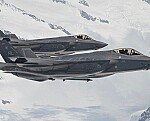
A central question is whether the current campaign against Iran directly influenced this decision. The answer, drawn from Katz’s explicit statements and contextual reporting, is unequivocally yes. The operations – referred to as Operation Roaring Lion or similar designations – involved coordinated strikes deep into Iranian territory, where F-35Is played critical roles in opening corridors through layered air defenses, identifying targets, and suppressing S-300 and other Russian-supplied systems. The conflict demonstrated the F-35I’s real-world effectiveness against sophisticated integrated air defense networks, drone threats, and long-range strike requirements, while highlighting the need for larger fleets to sustain prolonged campaigns without fatigue or vulnerability. “Operational lessons learned from the campaign against Iran require us to accelerate our force buildup,” Katz affirmed, linking the procurement directly to these experiences.
The broader implications extend beyond immediate hardware. This expansion reinforces the U.S.-Israel strategic alliance, with American approval and industrial participation ensuring interoperability within NATO-standard frameworks while preserving Israeli autonomy. It also deters escalation by signaling that Israel’s airpower will only grow more formidable. Challenges remain, including integration timelines, pilot training pipelines, and the high costs balanced against other defense needs. Yet, the consensus within the defense establishment is that the Adir’s track record – from its pioneering combat debut in 2018 to its pivotal contributions against Iran – justifies the investment.