
Britain Confirms a Repair Network Inside Ukraine as a Fifth Center Nears Launch
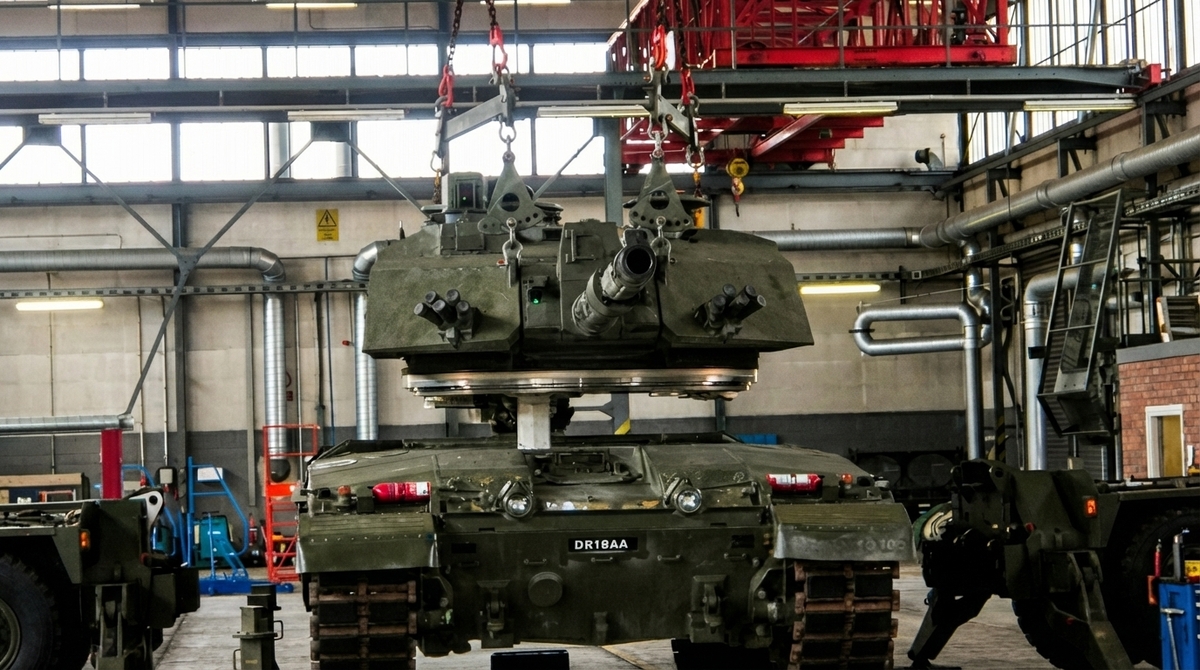
Britain has officially confirmed – publicly and for the first time – that it is operating a network of its own military equipment repair and servicing centers directly inside Ukraine, a move designed to shorten repair cycles and get damaged systems back into action faster. The UK Ministry of Defence said four facilities are already working in-country, with a fifth expected to begin operating soon. The sites are run by British companies under contracts with the UK Ministry of Defence and staffed by a mix of British and Ukrainian specialists.
Why the location matters: Fewer miles, faster returns
In modern warfare, maintenance is strategy. A vehicle or artillery system that must be transported across borders for repair can disappear from the fight for weeks – sometimes longer – due to logistics, scheduling, and the sheer friction of moving heavy equipment. By placing repair capability inside Ukraine, the UK-backed network reduces the need for lengthy transportation abroad and accelerates the return of repaired platforms to the front.
That practical advantage – speed – can be as decisive as any single delivery of new equipment. The faster a damaged system re-enters service, the more combat power Ukraine preserves without waiting for replacements.

What’s being repaired: From British armor to artillery – and beyond
Engineers at these centers service and repair a range of equipment used by Ukrainian forces, including:
- CVR(T) armored vehicles
- Husky armored vehicles
- L119 light howitzers
- AS-90 artillery systems
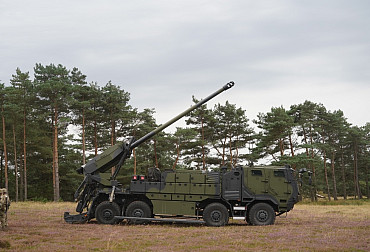
The network also extends into multinational cooperation. Through a partnership with Sweden, specialists additionally service Archer installations.
Notably, the work is not limited to Western platforms. Repair technicians also handle older Soviet-era equipment, reflecting the reality of Ukraine’s mixed inventory and the need for maintenance capacity that can adapt to what arrives at the workshop gate.
A ministerial visit underscores the political and industrial message
During a visit to Ukraine, Luke Pollard, Minister of State for Defence Readiness and Industry, met staff at one of the facilities. He framed the repair centers not only as a wartime necessity, but as a foundation for longer-term industrial cooperation between the UK and Ukraine.
“The UK supports Ukraine everywhere – from factory floors to the front lines. Our advanced facilities help the resilient Armed Forces of Ukraine continue to fight against Putin’s brutal attacks,” Pollard said.

The emphasis is telling: these centers are presented as both operational support and a bridge to deeper defense-industrial partnership – skills, processes, and relationships that can outlast the immediate repair queue.
A record trade mission and new agreements on electronic warfare integration
Pollard’s trip was accompanied by what was described as a record-breaking trade mission, involving more than 80 delegates and 55 companies, with 35 of those representing the British defense industry.
In parallel, the UK-Ukraine industrial track advanced through an ADS Group initiative. The parties signed an agreement under Programme Lyra to integrate British electronic warfare technologies into Ukrainian military platforms – a step that signals cooperation beyond mechanical repair into the electronics and survivability layer that increasingly defines battlefield advantage.
Investment infrastructure: a British Business Centre in Kyiv
London is also preparing to open a British Business Centre in Kyiv, aimed at strengthening investment cooperation. While the repair centers solve an immediate wartime problem – keeping equipment operational – the business center points to a longer horizon: building channels for sustained commercial and industrial engagement.
The scale of UK support
Since the start of the full-scale invasion, the UK has allocated more than £21.8 billion to support Ukraine, positioning it as one of Kyiv’s largest bilateral donors. The repair network fits into that broader commitment: not just supplying equipment, but helping ensure it can be maintained, restored, and kept in rotation.
What this signals going forward
Taken together, the repair facilities, the incoming fifth site, the electronic warfare integration agreement, and the investment-focused initiatives suggest a shift from emergency support to a more structured, embedded partnership. For Ukraine, the value is immediate – shorter downtime and more consistent readiness. For the UK, it demonstrates a model of support that blends operational impact with industrial collaboration, using contracted companies and mixed-nationality teams to deliver results where they matter most: close to the fight.