
China’s 2026 Defense Surge: 7% Budget Hike Fuels World’s Largest Military Modernization Drive
China’s defense budget continues its steady upward trajectory, with Beijing announcing a 7% increase for 2026. This brings the official military spending to approximately 1.91 trillion yuan (around €248 billion or roughly $277 billion at current exchange rates), up from about 1.78 trillion yuan the previous year. This modest slowdown from the 7.2% rise in 2025 still exceeds China’s projected economic growth target of 4.5% to 5%, underscoring the priority given to military development amid regional tensions and global strategic competition.
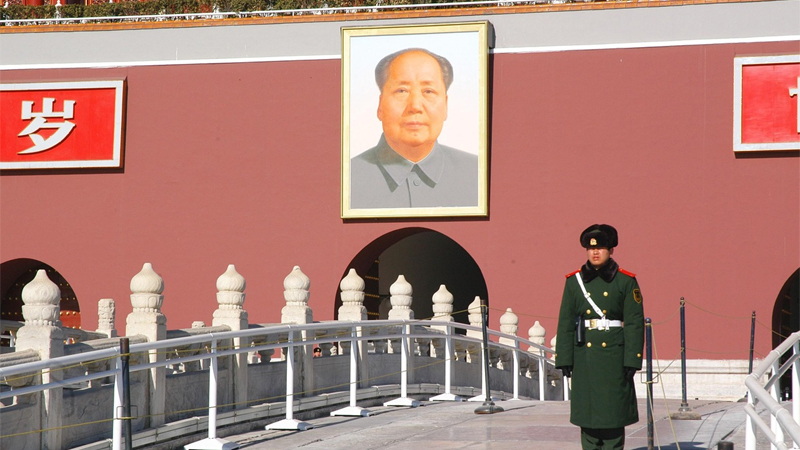
The People’s Liberation Army (PLA) remains the world’s largest standing military force, with roughly 2 million active-duty personnel (approximately 2,035,000 as per recent estimates from sources like the International Institute for Strategic Studies). This includes about 960,000 in the Ground Force, with the Navy, Air Force, and Rocket Force seeing proportional expansions in specialized roles. Reserves add around 510,000, while paramilitary forces like the People’s Armed Police contribute further depth, bringing total personnel under arms to over 3 million when including support elements.
This massive manpower base supports an ambitious modernization program aimed at achieving a “fully modernized” military by 2035 and a “world-class” force by 2049, with key milestones tied to the PLA’s centennial in 2027. After double-digit budget growth in the early 2000s, annual increases have stabilized around 7% in recent years, enabling sustained investment across domains.
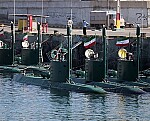
In the naval domain, the PLA Navy (PLAN) has become the world’s largest by hull count, exceeding 370 battle force ships (including submarines, destroyers, and auxiliaries), with projections to reach 395 by 2025 and 435 by 2030. Recent advancements include the commissioning of the advanced Type 003 aircraft carrier Fujian (with electromagnetic catapults) and progress on next-generation platforms like the Type 076 amphibious assault ship, designed as a drone carrier. The fleet now features more multi-mission vessels with advanced missiles and electronic warfare systems, enhancing blue-water capabilities far beyond the First Island Chain, as demonstrated by extended operations in the western Pacific and around Australia.
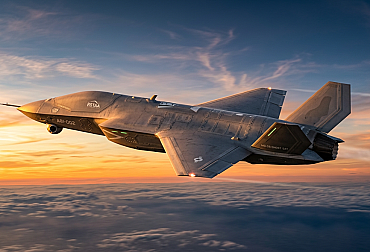
The air domain sees rapid progress in the PLA Air Force (PLAAF), which operates over 3,200 combat aircraft, including a growing fleet of fifth-generation J-20 stealth fighters (hundreds operational). Upgrades focus on stealth bombers like the H-20 (in development for nuclear and conventional roles), new medium- and long-range stealth platforms, and advanced tankers such as the Y-20U. Integration of unmanned systems and AI-enhanced operations bolsters power projection.
In missile and rocket forces, the PLA Rocket Force (PLARF) has expanded dramatically, with a nuclear stockpile surpassing 600 warheads (projected to reach 1,500 by 2035). Conventional capabilities include thousands of ballistic and cruise missiles, hypersonic weapons, and improved ICBMs like new Dongfeng variants. Accuracy and range have improved significantly, posing threats to regional and distant targets.
Space and cyber domains are prioritized through dedicated forces (reorganized in 2024 under the Central Military Commission). China fields thousands of military satellites for surveillance and targeting, with surging launches and advancements in counterspace systems. Cyber capabilities support offensive operations, as seen in espionage campaigns targeting critical infrastructure.

These efforts reflect Beijing’s focus on protecting sovereignty, particularly regarding Taiwan and the South China Sea, where naval exercises have intensified and territorial claims are asserted firmly. Premier Li Qiang has emphasized strengthening strategic capacities against “separatist forces” and external interference.
China now accounts for about 44% of Asia’s total military spending, up from 37% in the 2010s. However, the official budget likely understates actual expenditures—analysts estimate real figures could range from $330–$540 billion or higher when including off-budget items like research, space programs, and paramilitary costs, due to limited transparency.
This sustained buildup, watched closely by the United States and neighbors, continues to reshape the Indo-Pacific balance of power, with implications for regional stability and global security dynamics.