
Crimea Is Being Cut Off: Ukraine Targets Fuel, Ports, and Rail Links in One Coordinated Blow
Ukraine has intensified its long-range campaign against russian military logistics, fuel infrastructure, and command nodes, delivering a coordinated series of strikes that underline a clear operational goal: weaken the occupiers’ ability to sustain combat operations and further isolate Crimea.
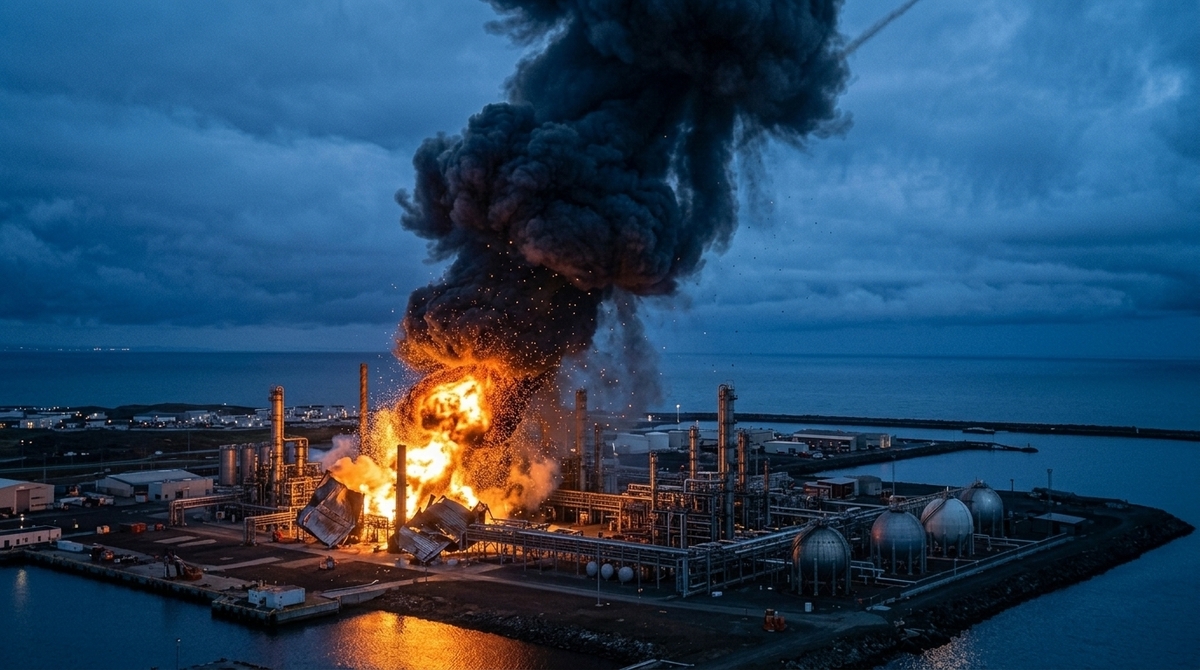
The General Staff of the Armed Forces of Ukraine confirmed that the Defense Forces carried out a large-scale wave of attacks on strategic military and fuel-related targets both deep inside the russian federation and across temporarily occupied territories. The pattern of the strikes points to a deliberate effort to paralyze the supply chains that keep russian forces fueled, connected, and mobile.
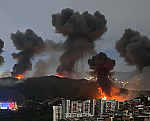
One of the most notable attacks took place on June 20, when Ukrainian forces successfully struck the Tyumen Oil Refinery, also known as “Antipinsky,” in russia’s Tyumen region. The facility lies more than 2,000 kilometers from Ukraine’s state border, making the strike remarkable not only for its target but also for the range involved. The refinery is one of the largest oil processing enterprises in Western Siberia, with an annual capacity estimated at roughly 7.5 to 9 million tons of oil. It produces diesel fuel, gasoline, and other petroleum products that were used, among other purposes, to support the needs of the russian army. The full results of the strike are still being clarified, but the message is already unmistakable: distance alone no longer guarantees safety for military-relevant infrastructure inside russia.
The following night, the focus shifted south, closer to occupied Crimea. Ukrainian strikes hit the oil terminal “TES-Terminal-1” in Kerch, triggering a major fire. This terminal serves as one of Crimea’s key sites for the transshipment and storage of fuel and lubricants and was directly involved in supporting the occupation grouping. By targeting such a facility, Ukraine is not merely destroying infrastructure; it is going after the lifeblood of mechanized warfare — fuel.
At the same time, another strike hit the port “Kavkaz” in russia’s Krasnodar Territory. A fire was confirmed on the facility’s grounds. The importance of the port lies in its role as a vital maritime logistics hub linking Krasnodar Territory with the temporarily occupied Crimean peninsula. It has been actively used to sustain russian troop deployments and transport essential supplies. Disrupting activity there directly affects one of the most important support corridors available to russian forces operating in and through Crimea.
The operation did not stop at fuel depots and ports. Ukrainian forces also targeted the transport arteries that enable the occupiers to move reinforcements, equipment, and logistics support across the occupied south. Three railway bridges were struck: one across the North Crimean Canal in the Rozdolny area, one in the Petershagen area of Zaporizhia region, and one across the Syvash in the Chongar area. Each of these routes had practical military value, helping russian forces transfer personnel, military vehicles, and other supplies. Hitting bridges is a classic but highly effective way to slow an army down, complicate resupply, and force traffic onto fewer, more vulnerable routes.

In parallel with the attacks on infrastructure, Ukraine also targeted command and control elements. The General Staff confirmed a successful strike on an enemy command post near Pochayiv in russia’s Belgorod region. Additional strikes hit UAV command posts near Mirny and Novoivanivka in Zaporizhia region, Komar in Donetsk region, and Gorki in russia’s Bryansk region. These targets matter because drone operations have become one of the central tools of this war. Disrupting UAV coordination can reduce the enemy’s ability to conduct reconnaissance, guide strikes, and maintain battlefield awareness.
Taken together, the strikes reveal a consistent Ukrainian strategy: attack the system, not just the front line. Oil refineries, terminals, ports, rail bridges, and command posts form the backbone of an army’s staying power. When these nodes are damaged or destroyed, the effects ripple outward — fuel deliveries slow, transport routes narrow, coordination weakens, and occupied territories become harder to hold.
Crimea remains at the center of that logic. By hitting both the physical supply routes into the peninsula and the fuel infrastructure inside it, Ukraine is continuing a campaign aimed at making the occupation more expensive, more fragile, and more difficult to sustain. The latest attacks suggest that isolation of Crimea is not just a political phrase or symbolic objective. It is being pursued through systematic military pressure on every major logistics channel available to russian forces.
This operation also reinforces another trend: Ukraine’s growing ability to conduct precise long-range strikes against targets once considered beyond practical reach. From deep-rear energy infrastructure in Western Siberia to transport and fuel nodes around Crimea, the battlefield is no longer defined only by the front. Increasingly, it includes the networks that feed the war machine from hundreds or even thousands of kilometers away.
In that sense, these strikes were about more than destruction. They were about shaping the battlefield in advance — degrading the enemy’s endurance, limiting its freedom of movement, and steadily tightening the pressure on occupied Crimea and the wider russian military logistics architecture.