CSG Strengthens Global Defense Role Through Hanwha Partnership for U.S. Army Artillery Program
CSG is taking another important step onto the global defense stage. According to Bloomberg, Hanwha Defense USA is teaming up with CSG for the truck chassis of a new wheeled artillery cannon being developed for the U.S. Army — a partnership that places Czech engineering at the heart of a future American artillery capability.
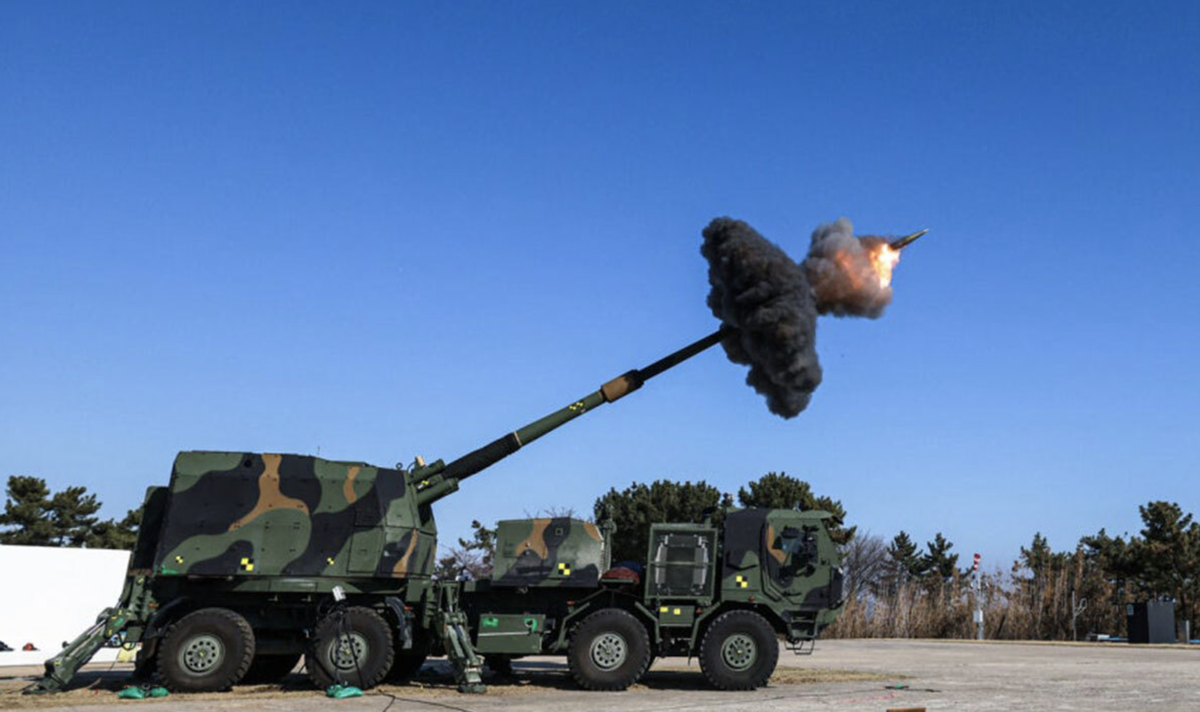
Under the cooperation, CSG will provide the proven Tatra Force chassis, a platform known for its mobility, durability and adaptability in demanding military environments. The chassis will serve as a key mobility component for Hanwha Defense USA’s artillery solution, connecting advanced firepower with a rugged vehicle platform designed for real operational conditions.
For CSG, the cooperation highlights the growing international recognition of its defense-industrial capabilities. The group, described by Bloomberg as the largest Czech defense supplier, has steadily expanded its position from a regional industrial player into a trusted partner for allied defense programs. Its Tatra chassis variants are already supplied to more than a dozen countries, demonstrating the platform’s relevance across different armed forces, climates and mission profiles.
Czech engineering for allied defense needs
Modern artillery is no longer measured by firepower alone. Speed, survivability, deployment flexibility and logistical reliability are now just as important. Wheeled artillery systems must be able to move quickly, operate across varied terrain and integrate into complex military supply chains.
This is where the Tatra Force chassis brings clear value. Built on a long tradition of Czech heavy-vehicle engineering, the platform is designed for demanding military use and can support a wide range of specialized configurations. Its inclusion in Hanwha Defense USA’s program reflects the importance of proven mobility solutions in the next generation of artillery systems.
The cooperation also shows how defense production is becoming increasingly allied, industrially connected and strategically distributed. Rather than relying on single-country supply chains, modern programs increasingly combine the strengths of trusted partners from different NATO-aligned and allied nations.
A potential new industrial footprint in the United States
Bloomberg also reported that CSG is evaluating several mature options for U.S. manufacturing sites. While the group does not currently manufacture in the United States, such a move would represent a significant step in its international growth strategy.
A U.S. industrial footprint could bring CSG closer to one of the world’s most important defense markets, support local production requirements and strengthen its role in transatlantic defense supply chains. It would also align with a broader trend in which European defense companies are expanding their presence in the United States to support American and allied modernization programs.
For CSG, this potential expansion is not only about geography. It is about credibility, proximity and long-term commitment. Establishing manufacturing capacity in the U.S. would allow the group to support customers more directly, contribute to local industrial capacity and deepen its partnership with major defense contractors.
A milestone after going public
The reported partnership comes in a significant year for CSG, which sold shares to the public in 2026. For investors, customers and partners, the Hanwha cooperation reinforces the group’s positioning as a defense company with international relevance and scalable industrial know-how.
It also demonstrates that CSG’s value is not limited to individual products. The group brings together engineering heritage, manufacturing capacity and defense-sector specialization at a time when allied countries are accelerating investment in land systems, artillery, ammunition and military mobility.
Mobility as a strategic advantage
The war in Ukraine and rising global security pressures have underlined the importance of artillery and rapid battlefield mobility. Armed forces are looking for systems that can fire, relocate and survive in increasingly contested environments. Wheeled artillery fits that requirement by combining heavy firepower with operational flexibility.
By contributing the Tatra Force chassis to Hanwha Defense USA’s system, CSG is helping answer one of the central requirements of modern land warfare: how to move powerful systems faster, farther and more reliably.
This makes the partnership more than a commercial milestone. It is a sign that Czech defense engineering has a role to play in shaping the next generation of allied military capabilities.
CSG’s growing role in the allied defense ecosystem
The cooperation with Hanwha Defense USA confirms CSG’s expanding position in the international defense market. From supplying Tatra chassis variants to more than a dozen countries to exploring manufacturing opportunities in the United States, the group is becoming a more visible participant in the allied defense-industrial ecosystem.
As defense programs become more complex and international, companies that can deliver proven, adaptable and mission-ready platforms will be increasingly valuable. CSG’s involvement in the U.S. Army artillery program shows that the group is not only keeping pace with this shift — it is becoming part of it.
For CSG, the message is clear: Czech engineering can support some of the most demanding defense modernization efforts in the world. And through partnerships like the one with Hanwha Defense USA, the group is building a stronger bridge between European industrial expertise and American defense requirements.