
End of an Era? Paris and Berlin Scale Back MGCS to Digital Combat Cloud, Echoing FCAS Collapse
On July 17, 2026, French President Emmanuel Macron and German Chancellor Friedrich Merz convened for the latest Franco-German Defense and Security Council. The agenda carried the weight of recent disappointments. Just weeks earlier, the two leaders had effectively buried the Future Combat Air System (FCAS), their flagship sixth-generation fighter program, after years of industrial deadlock between Dassault Aviation and Airbus. Now, attention turned to its land counterpart, the Main Ground Combat System (MGCS). What emerged from the meeting was not a bold reaffirmation of European defense autonomy but a stark acknowledgment of scaled ambitions.
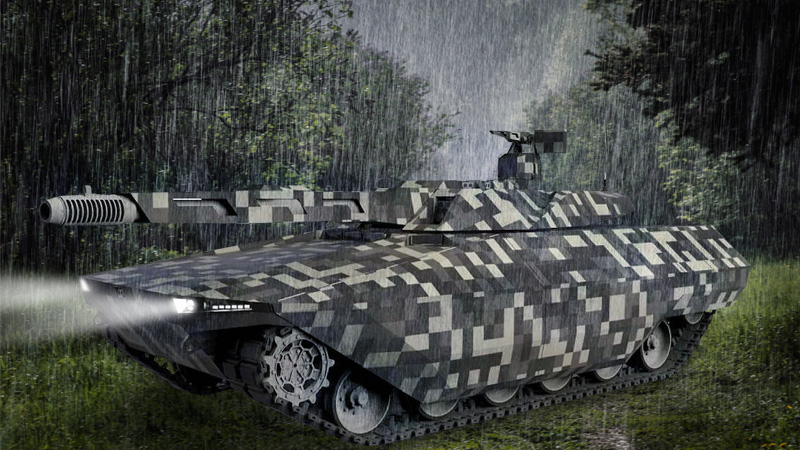
Launched in 2017 with great fanfare, MGCS was envisioned as a revolutionary “system of systems” to replace the German Leopard 2 and French Leclerc main battle tanks. The concept went far beyond a single new tank. It called for a family of armored vehicles sharing a common chassis, integrated with unmanned platforms, advanced sensors, hybrid propulsion, and a networked “combat cloud” for collaborative operations. Manned and unmanned assets would fight as one, drawing lessons from modern conflicts where traditional armor faces drones, precision munitions, and electronic warfare. KNDS, the Franco-German joint venture formed from Nexter and Krauss-Maffei Wegmann, was initially positioned as the lead, promising balanced industrial benefits on both sides of the Rhine.
Reality proved far more complicated. Industrial rivalries soon surfaced. Germany’s insistence on bringing Rheinmetall into the fold disrupted the original balance, sparking disputes over workshare, turret designs, and armament – Rheinmetall pushing its 130mm gun against KNDS’s ASCALON 140mm system. Delays mounted. By early 2025, the partners had established the MGCS Project Company GmbH in Cologne, with equal stakes for KNDS Deutschland, KNDS France, Rheinmetall, and Thales. A powertrain contract went to Rolls-Royce Power Systems in March 2026 for a pioneering hybrid drive. Yet these steps felt incremental against a backdrop of soaring costs and shifting timelines. Original entry-into-service targets around 2035 slipped first to 2040 and then potentially 2045 or later.
The July 2026 council conclusions delivered the clearest signal yet of retrenchment. Explicit references to a shared tank platform or common chassis vanished. Instead, France and Germany committed only to studying “an approach for collaborative combat” within a research program, advancing it to a feasibility demonstration. This would focus on adaptable technologies for crewed and uncrewed tracked vehicles, incorporating autonomous operation, sensor fusion, and contributions to joint combat services. The emphasis now lies on a “system of systems” suited for multi-domain operations, but without the binding hardware integration once central to the vision. In essence, MGCS has been pared down to its digital nervous system – the combat cloud – mirroring the FCAS reduction to interoperability standards and networked effectors.
This pivot reflects hard lessons from the Ukraine war and pragmatic national priorities. Both armies face capability gaps. France’s Leclerc fleet cannot reliably extend beyond 2037–38, prompting the unveiling of the CAPINT “intermediate capability” tank at Eurosatory 2026 – a hybrid of German chassis and French turret designed to bridge the gap while incorporating future technologies. Germany has advanced its own Leopard 2AX (or Leopard 3) efforts in parallel with Rheinmetall and KNDS Deutschland. These national stopgaps underscore a loss of faith in the joint timeline. As one defense observer noted, an interim solution risks becoming permanent if MGCS continues to drift.
Budget pressures compound the challenges. Rheinmetall CEO Armin Papperger publicly warned in June 2026 that France was contemplating cuts to less than half the previously planned funding, with only about €25 million disbursed to partners after nearly a decade. A French government source insisted the project remained important, yet the pattern of hesitation is unmistakable. Political reviews ordered in late 2025 yielded no decisive breakthrough. The MGCS Project Company exists, but its mandate has narrowed to technology exploration rather than full-scale development of a unified platform.
The parallels with FCAS are striking and sobering. Both programs were launched as twin pillars of renewed Franco-German defense cooperation, with implicit leadership trade-offs: France heading the air program, Germany the land one. Industrial mistrust, differing operational doctrines, and external influences – particularly strong U.S. and Israeli options in the market – eroded consensus. Critics argue that “toxic collaborations” like MGCS, FCAS, and others have wasted years and billions in potential, diverting focus from urgent national modernization. Supporters counter that even limited progress on shared standards and digital architecture preserves some interoperability essential for NATO and European operations.
For KNDS, the outlook mixes caution and opportunity. The group secured political backing to remain capable of user-focused programs and exports, though its planned dual Frankfurt-Paris IPO has faced delays. Executives like KNDS CEO Jean-Paul Alary have described a full MGCS collapse as “very bad news” for Europe, yet the company is hedging through its interim offerings.
As European security demands grow amid heightened threats, the MGCS story illustrates the persistent difficulties of multinational armament programs. Ambitious visions clash with sovereign interests, budget realities, and rapid technological change. What began as a bold bid for strategic autonomy has contracted into a more modest research effort on collaborative combat. Whether this streamlined focus yields deployable breakthroughs by the 2040s – or simply fades into quiet irrelevance – will depend on future political will and industrial compromise. For now, Paris and Berlin appear content to keep the collaborative flame alive digitally while pursuing more immediate, national paths for their armored forces. The dream of a common European main battle tank, once so vivid, has dimmed considerably.