Germany Accelerates IRIS-T Deliveries to Ukraine: Nine Systems Operational, More on the Way
Germany once again underscored the pivotal role of the IRIS-T air defense system in its ongoing military assistance to Ukraine. With Russian aerial assaults on civilian and military infrastructure showing no signs of abating, Berlin confirmed that additional deliveries of IRIS-T missiles—and potentially complete systems—will occur in the near term.
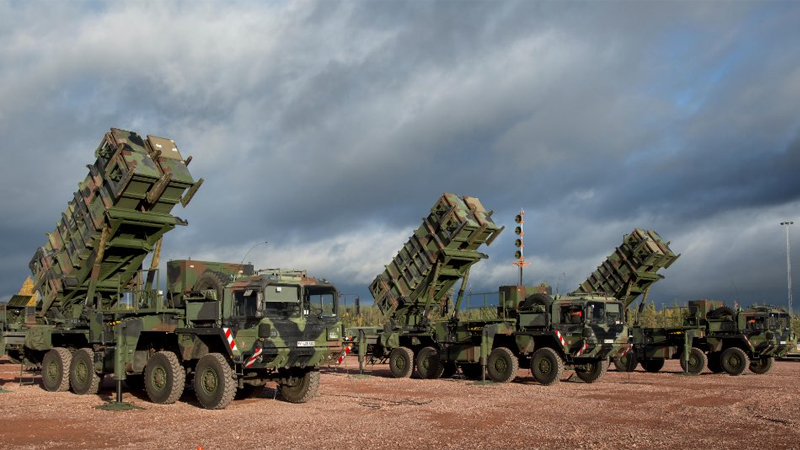
Since intensifying its support, Germany has positioned the IRIS-T as a cornerstone of its aid package to Ukraine. Berlin has already transferred nine complete IRIS-T firing units (batteries) to Ukrainian forces. This deliberate, incremental approach seeks to build sustainable, long-term air defense capabilities rather than short-lived surges. The strategy emphasizes systems that can be rapidly integrated, maintained with existing logistics, and proven effective in high-threat environments.
In a recent interview, German Ambassador to Kyiv Heiko Thoms emphasized this commitment, stating that “more IRIS-T systems are expected to be delivered soon.” This pledge arrives amid Berlin’s acknowledgment of its own industrial bottlenecks and Bundeswehr replenishment needs. Despite these constraints, Germany continues prioritizing IRIS-T transfers, viewing the system as especially potent against the cruise missiles, loitering munitions, and drone swarms that dominate Russian tactics.
Quantitatively, the scale of commitment is clear: nine IRIS-T systems have been delivered to date, representing half of the 18 systems Ukraine has reportedly ordered from Diehl Defence, the German manufacturer. This positions Ukraine as one of the largest operators of IRIS-T ground-based variants worldwide, providing layered depth to its air defenses and enabling protection of key population centers, energy facilities, and supply corridors.
German Defense Minister Boris Pistorius has candidly addressed limitations, noting in reference to Patriot systems that “there is nothing more we can do at the moment, as we ourselves are waiting for replacements.” In this constrained environment, the IRIS-T emerges as a pragmatic, producible interim solution aligned with Germany’s industrial capacity and Ukraine’s immediate requirements for countering low- to medium-altitude threats.
The IRIS-T System
The IRIS-T family originated as a highly maneuverable air-to-air missile (IRIS-T / AIM-2000) developed by Diehl Defence in collaboration with partners including Saab. For ground-based use in Ukraine, the relevant variants are the IRIS-T SLS (Surface-Launched Short-range) and primarily the IRIS-T SLM (Surface-Launched Medium-range), which form the backbone of delivered systems.
The IRIS-T SLM missile measures approximately 3.45 meters in length, with a diameter of 152 mm and a launch weight around 130 kg (boosted configuration). It achieves speeds exceeding Mach 3 (over 1,000 m/s), enabling rapid intercepts. The maximum engagement range is up to 40 km under optimal conditions, with an altitude ceiling of 20 km. This provides coverage for an area roughly equivalent to protecting a mid-sized city or critical infrastructure hub from standoff threats.
Guidance relies on a sophisticated imaging infrared (IIR) seeker for terminal homing, offering excellent resistance to flares and countermeasures through advanced imaging and thrust-vector control for extreme agility. Mid-course updates come via inertial navigation supplemented by radio-frequency datalink from the system’s TRML-4D AESA radar, which delivers 360° surveillance, tracks up to 1,500 targets, and supports simultaneous engagements. The warhead is a dual-layer high-explosive fragmentation type weighing about 11.4 kg, optimized for lethal effects against maneuvering aerial targets, including near-misses.
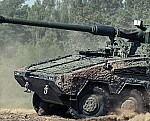
The launcher vehicle, typically mounted on an 8x8 truck chassis (e.g., MAN-based), carries multiple canisters and offers high mobility, quick setup, and compatibility with networked operations. A typical battery includes launchers, radar, command post, and reloads, allowing flexible deployment in dispersed or urban environments.
Operational Performance in Ukraine
In combat, the IRIS-T SLM has demonstrated high effectiveness, particularly against the Russian mix of cruise missiles (e.g., Kh-101, Kalibr), Shahed-type drones, and other UAVs. Ukrainian operators have reported near-100% success rates in numerous engagements, including instances where a single unit downed multiple cruise missiles in quick succession—such as seven in one battle or eight claimed in under 30 seconds during mass strikes. The system’s agility excels against low-flying, evasive threats that challenge longer-range systems like Patriot.
Deployed around Kyiv, major cities, energy infrastructure, and frontline logistics, IRIS-T units reduce the burden on scarcer Western assets (e.g., Patriot PAC-2/3 or SAMP/T). They form a critical medium-layer in Ukraine’s evolving integrated air defense network, complementing short-range systems (e.g., Gepard, MANPADS), NASAMS, and longer-range Patriots. Reports indicate successful intercepts even against some ballistic threats, though the system is optimized for aerodynamic targets rather than high-speed ballistic missiles.
This performance has boosted confidence: Ukrainian officials praise the 100% customer satisfaction rate cited by Diehl, reflecting reliability in sustained high-intensity operations. The IRIS-T’s cost-effectiveness against expensive cruise missiles remains debated in mass-drone scenarios, but its precision and rapid reaction time make it indispensable for point and area defense.
Strategically, IRIS-T deliveries embody Germany’s defensive posture—bolstering Ukraine without escalation rhetoric. Berlin frames this as part of collective security, preserving industrial balance while ramping production (Diehl aims for significantly higher output of units and missiles in coming years to meet demand). By 2026, with nine units operational and more en route, the IRIS-T has become synonymous with Germany’s reliable, high-impact support amid the ongoing war.
Furthermore, the IRIS-T integrates into a broader multi-layered Western-supplied shield. Germany delivered two additional Patriot systems by late 2025 but confirmed limits on further transfers due to Bundeswehr needs. In this reality, IRIS-T provides tangible, scalable aid—protecting lives, infrastructure, and operational freedom while allowing Ukraine to allocate other resources more efficiently.