European Security in Transition: Between Military Superiority, Hybrid Threats, and Strategic Autonomy
European security is undergoing its most profound transformation since the end of the Cold War. The war in Ukraine, systematic hybrid pressure from Russia, and growing uncertainty in the global security environment are forcing Europe to rethink its existing assumptions. Security is once again becoming a central political issue—not as a short-term response to a crisis, but as a long-term strategic task.
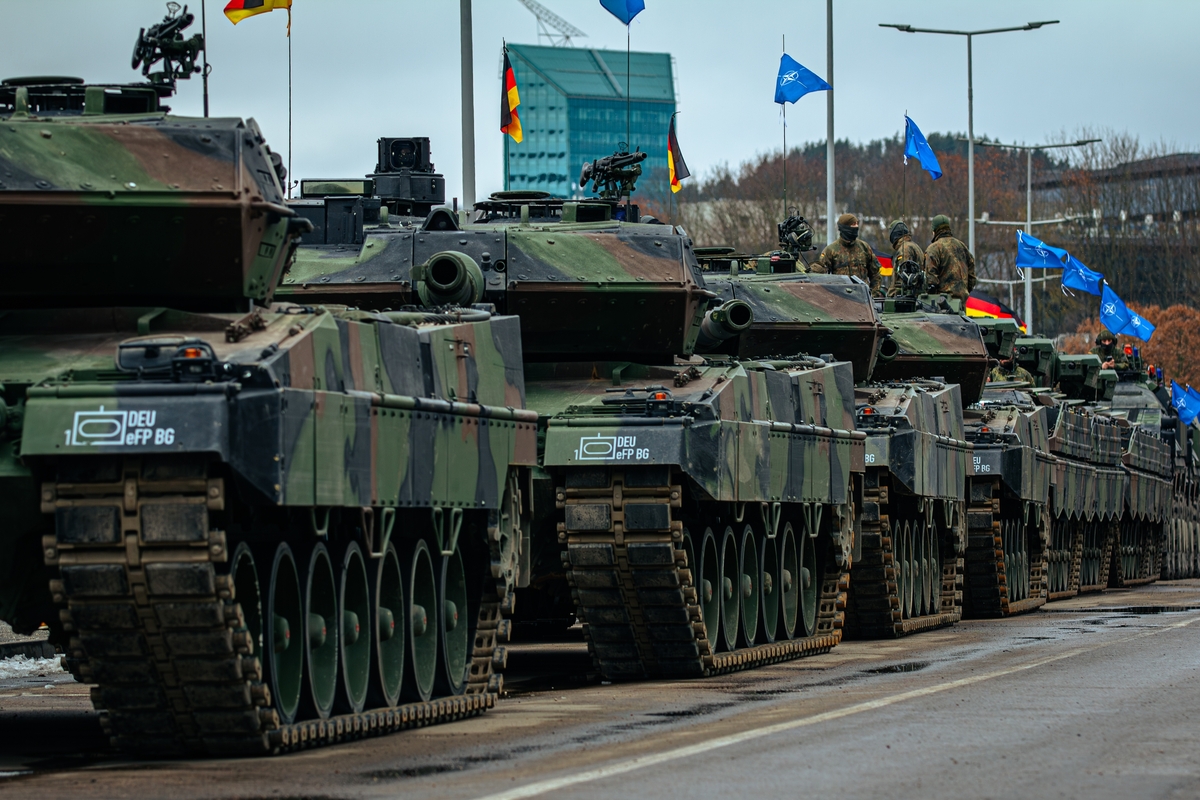
After more than three decades of relative calm, Europe finds itself in an environment characterized by ongoing geopolitical confrontation, high levels of uncertainty, and a growing risk of escalation. Russia's aggression against Ukraine in 2022 was not only a violation of international law, but also a fundamental turning point in European security thinking. It showed that the idea of a stable and predictable neighborhood was illusory and that Europe was not sufficiently prepared for high-intensity conflict.
Security can no longer be understood as an automatic consequence of NATO membership or economic interdependence with the outside world. It is becoming an actively pursued policy that requires strategic vision, long-term investment, and the ability to respond to a complex spectrum of threats—from conventional military conflict to hybrid actions below the threshold of war.

The European Commission and member states are gradually moving towards strengthening qualitative military superiority. This is not just a matter of increasing defense spending, but of a deeper transformation of the European defense industry, rapid mobilization capabilities, and long-term planning. Support for Ukraine is seen as an integral part of European security in this context. It is not just about helping a country under attack, but about investing in the stability of the entire continent.
At the same time, there are ongoing debates about the post-war reconstruction of Ukraine and its rapprochement with the European Union. The security dimension of these discussions is crucial: a stable, economically functional, and institutionally anchored Ukraine reduces the risk of future conflicts and strengthens the resilience of Europe's eastern flank.
One of the visible manifestations of the current tension is Russia's repeated violations of the airspace of European states. These incidents are usually carefully calibrated to test NATO's response capabilities, create psychological pressure, and cause economic losses without directly provoking a military response. Nevertheless, there is a real risk of planning failure or unintended escalation, for example in the case of an incident involving a civilian aircraft, which could have serious political consequences.
From Moscow's perspective, the conflict in Ukraine is part of a broader geopolitical clash with the West. This is reflected in the long-term hybrid pressure on European states, especially in regions considered more vulnerable, such as the Baltic states, Poland, and Central Europe. Hybrid activities include cyber attacks, disinformation, sabotage of critical infrastructure, and efforts to disrupt social cohesion.

In addition to immediate threats, Europe is trying to define its own security identity. The aim is not to weaken the transatlantic link, but to complement it with a greater European capacity to act independently. Part of this effort is a plan to create a single European defense market that would reduce fragmentation, accelerate innovation, and simplify public procurement. Strengthening the mandate of Europol and other security institutions is also intended to respond to new, cross-border forms of threats.
European security is undergoing a period of fundamental transformation. It is shifting from reactive and short-term measures to the systematic building of military capabilities, institutional resilience, and strategic autonomy. This process will be long-term and politically challenging, but it is a necessary response to the changed security environment.
Success will depend on the ability of member states to maintain unity, invest in defense, and at the same time engage in open debate with society. Security is not just a matter of armies and technology, but also of trust, cohesion, and the ability to withstand pressure that often comes subtly and over the long term. This is one of the key challenges facing Europe today.