
France Pushes for a 100% French Future Main Battle System Amid MGCS Delays
The Franco-German Main Ground Combat System (MGCS) program, once hailed as a cornerstone of European defense cooperation, appears to be losing momentum. Launched in 2017 with the ambitious goal of replacing France’s Leclerc and Germany’s Leopard 2 main battle tanks by the mid-2030s, the initiative envisioned a revolutionary “system of systems.” This would not be a single heavy tank but a networked platform connected via a combat cloud to drones, ground robots, escort vehicles, and various effectors. Yet, as of April 2026, progress has stalled dramatically, prompting senior French military leaders to openly discuss a national fallback option.
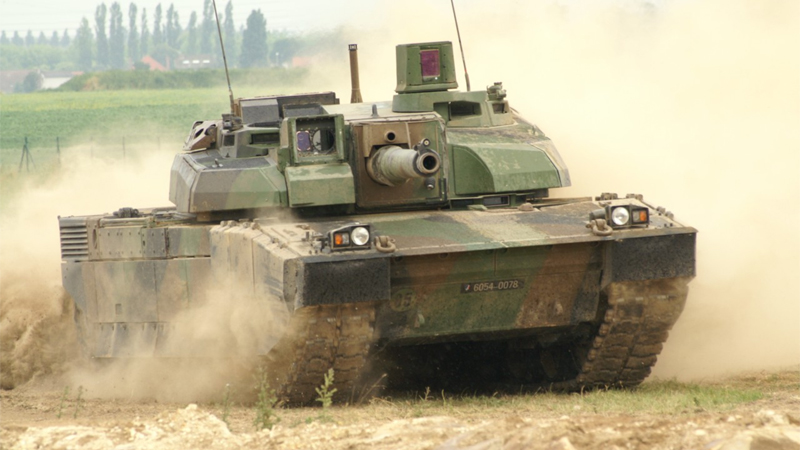
During a parliamentary hearing on April 9, 2026, General Pierre Schill, Chief of Staff of the French Army, spoke of the MGCS project in the past tense, signaling deep skepticism about its future. He described it as both a capability need and a proposed solution that had not materialized as hoped. The general highlighted that the French Leclerc tank, even after its ongoing XLR upgrade, cannot realistically remain in service beyond 2037. A successor is essential, but it must go far beyond a traditional main battle tank. In modern high-intensity conflicts, influenced by lessons from Ukraine, a lone 70- to 80-ton vehicle would struggle under the weight of required systems: advanced cannons or missiles, directed-energy weapons, anti-drone defenses, electronic warfare suites, and active or passive protection layers. Distributing these capabilities across a connected ecosystem of manned and unmanned platforms offers a more viable and lighter approach.
The delays in MGCS stem largely from diverging national priorities. Germany has chosen to pursue its own Leopard 3 (or Leopard 2AX) development program in parallel, involving KNDS Deutschland and Rheinmetall. This decision has slowed the joint effort, despite a nominal relaunch in 2024 and the signing of a shareholder agreement for a project company involving KNDS France, KNDS Deutschland, Thales, and Rheinmetall. No major contracts have been awarded, and the timeline for a potential MGCS entry into service has slipped toward the early 2040s or even later. France’s updated Military Programming Law for 2024-2030 explicitly opens the door to a “national pathway” if bilateral convergence fails to occur.
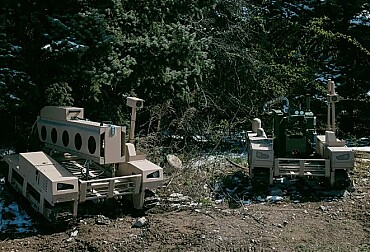
General Schill emphasized the urgency of preparatory work to avoid any capability gap. Rather than rushing into an interim tank purchase, France is focusing on building technological “bricks” that will form the foundation of a future armored system. This includes accelerating robotization through the PENDRAGON project, which aims to integrate unmanned combat units (Unités de Combat Robotisées or UCR) equipped with autonomous ground robots and drones. These systems, supported by artificial intelligence under the Artemis IA initiative, will enable human-supervised operations where robots handle risky tasks while keeping lethal decisions under human control. The broader TITAN program, designed to structure the French Army from 2030 to 2040 much like the current SCORPION modernization does today, places heavy emphasis on connectivity and collaborative combat across ground, air, and deep-strike assets.
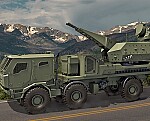
A transitional solution involving a French-designed turret – potentially based on the ASCALON concept developed by KNDS France – has also been mentioned by Defense Minister Catherine Vautrin. This would bridge the gap without committing to a full off-the-shelf foreign platform. The goal remains clear: develop a sovereign French system that preserves industrial expertise, maintains jobs, and ensures operational independence. Schill warned against allowing European manufacturers to simply repackage existing catalog items and impose them as standards, advocating instead for genuine innovation tailored to French and broader European needs.
This shift toward a 100% French solution carries both opportunities and risks. On the positive side, it would safeguard France’s defense sovereignty at a time when high-intensity warfare demands rapid adaptation to drone swarms, electronic jamming, and networked operations. By leveraging domestic strengths in systems integration, artificial intelligence, and robotics, France could field a more agile family of vehicles – possibly in the 40- to 45-ton medium category – better suited to distributed, robot-augmented combat. The approach aligns with lessons from recent conflicts, where mass and protection alone no longer guarantee survival without connectivity and effector diversity.
Challenges, however, are significant. Developing a new tracked platform from scratch requires substantial investment in areas where France has limited recent experience, such as heavy suspensions and powertrains. Production runs for a modern main battle system are typically modest – around 200 to 300 units – making unit costs high. Industrial cooperation with Germany has historically helped share expenses, and its absence could strain budgets, even with additional funding allocated in the 2026-2030 defense plans. Politically, pursuing a purely national route might strain relations with Berlin, already tense over other joint programs like the Future Combat Air System (FCAS). Yet, repeated delays have eroded confidence on the French side, with some observers noting Germany’s preference for sustaining its own Leopard lineage.
The debate also touches on broader European defense dynamics. While MGCS was meant to foster integration, differing operational doctrines and industrial interests have repeatedly surfaced. France has long prioritized exportable, versatile systems, whereas Germany has focused on heavy, high-end platforms with a strong domestic production base. A successful French national program could still leave room for future European partnerships, perhaps on more balanced terms, or even attract other partners seeking alternatives to purely German or American solutions.
As the French Army prepares for the TITAN era, the core message from General Schill is pragmatic: the need for a next-generation land combat capability remains non-negotiable, but the path to achieving it must adapt to realities. Whether the MGCS project ultimately survives in some form or gives way to a predominantly French endeavor, the emphasis on connectivity, robotization, and distributed lethality will define armored warfare in the 2030s and beyond. The coming months will prove critical as studies advance and decisions on funding and industrial roadmaps take shape. For France, asserting strategic autonomy in ground systems is not merely an industrial choice – it is a military necessity in an increasingly uncertain security environment.