From Aging CF-18 Hornets to Future Tempest: Why Canada Is Exploring GCAP Amid Fighter Fleet Uncertainties
Canada’s reported pursuit of observer status in the Global Combat Air Programme, or GCAP, represents a significant development in the country’s defence posture as it seeks to modernize its fighter fleet amid evolving global threats. Recent discussions between Canadian and Japanese officials, followed by anticipated announcements at a June or July 2026 meeting of defence ministers from the United Kingdom, Italy, and Japan, suggest that Canada could gain access to selected classified information about this sixth-generation fighter initiative without immediate financial commitments to development.
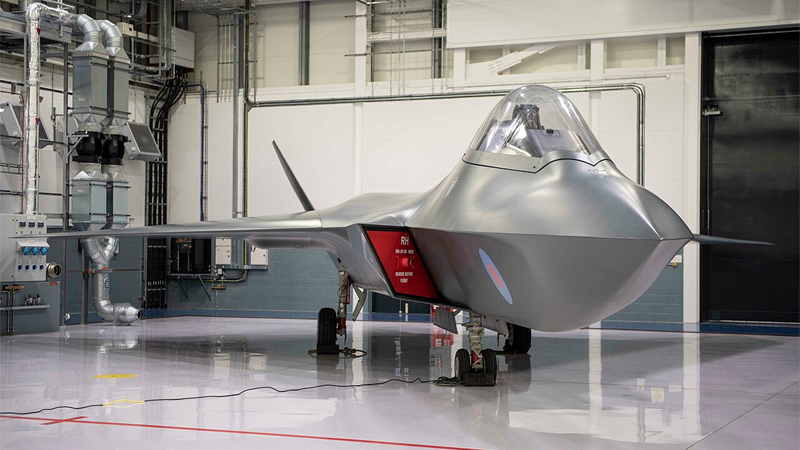
This observer role would serve as a low-risk entry point, allowing Canada to evaluate deeper involvement, including potential future procurement or industrial participation, while its primary F-35 acquisition remains under review. Such a move comes at a critical time when the Royal Canadian Air Force faces the challenge of replacing an aging fleet while addressing Arctic sovereignty, NORAD responsibilities, and broader NATO interoperability in an era of great-power competition.
The current fighter armament of the Canadian air force revolves primarily around the CF-18 Hornet, known in Canadian service as the CF-188. Originally acquired in the early 1980s, this fourth-generation multirole fighter has formed the backbone of the RCAF for decades, with the fleet supplemented by additional used aircraft from Australia to maintain operational numbers. These jets, some of which are approaching or exceeding 40 years of service, feature a 20-millimeter M61A1 Vulcan rotary cannon and can carry a variety of munitions across nine weapon stations, supporting up to approximately 13,700 pounds of payload including air-to-air missiles such as the AIM-9 Sidewinder and the more advanced AIM-120 AMRAAM variants. Recent upgrades have integrated the latest AIM-120D-3 missiles, enhancing long-range engagement capabilities for NORAD and NATO missions, along with improvements to radar, avionics, and short-range options like the AIM-9X Block II Sidewinder.
Despite these enhancements and structural life-extension programs, the CF-18s lack stealth features and the advanced sensor fusion required for highly contested environments, leading to rising maintenance costs and reduced availability as the fleet strains to bridge the gap until newer platforms arrive. The aircraft continue to perform essential roles in air defence, ground attack, and Arctic patrols, but their limitations in modern peer-level scenarios have made replacement urgent.
Canada has committed to acquiring the F-35A Lightning II as its fifth-generation successor, with an initial order of 16 aircraft already under contract and deliveries expected to begin with training units in the United States in late 2026, followed by operational arrivals in Canada around 2028. The original plan called for a total of 88 jets to create a single-type fleet, yet the remaining portion stays subject to ongoing review amid political considerations, budgetary pressures, and strategic debates about reliance on United States technology. Advance payments for long-lead components on additional aircraft have been initiated to preserve production slots, signaling a hedging approach rather than full commitment. This situation leaves the RCAF in a transitional phase, relying on upgraded CF-18s well into the early 2030s while gradually introducing stealth capabilities through the F-35.
Canada’s participation in GCAP
Participation in GCAP holds substantial strategic importance for Canada on several fronts. Sixth-generation fighters like those envisioned in the programme emphasize a system-of-systems approach, integrating a manned stealth platform with unmanned loyal wingman drones, artificial intelligence for decision support, advanced sensor fusion, potential directed-energy weapons, and seamless combat cloud networking. With a targeted initial operational capability around 2035, GCAP aligns well with the projected retirement timeline of the CF-18 fleet and offers capabilities that extend far beyond current fifth-generation platforms. For a country with vast territories and extensive northern frontiers, features such as extended range and increased internal payload capacity could prove particularly valuable for sovereignty patrols and rapid response in challenging environments.
Observer status provides Canada with insights into these technologies at minimal upfront cost, enabling informed decisions about future acquisitions without disrupting existing plans. Furthermore, involvement diversifies defence partnerships beyond traditional United States-centric frameworks, fostering collaboration with the United Kingdom, Japan, and Italy. This could open opportunities for Canadian aerospace industries to contribute to design, manufacturing, or sustainment, generating high-skilled jobs and technology transfers while reducing over-dependence on any single supplier. In a shifting geopolitical landscape marked by tensions and the need for resilient alliances, such engagement strengthens Canada’s position as a capable contributor to collective security without immediate large-scale investment.
Other options
Canada retains several other options for rearmament that could complement or serve as alternatives to deeper GCAP involvement. Proceeding fully with the planned F-35 fleet would deliver proven stealth, sensor superiority, and seamless interoperability with NORAD and NATO partners, leveraging existing industrial offsets and training infrastructure already in development. Another path involves the Saab JAS 39 Gripen E/F, a 4.5-generation fighter noted for its lower operating costs, excellent short-field performance suited to dispersed Arctic bases, and modern avionics that could handle routine patrols efficiently. A mixed fleet combining a core of F-35s for high-threat missions with Gripens for day-to-day operations might offer cost savings and risk diversification, though it would introduce complexities in logistics, maintenance, and pilot training.
Historical interest in platforms like the Eurofighter Typhoon or Dassault Rafale has surfaced periodically, yet these have not gained significant traction recently. In the longer term, greater domestic industrial participation through international partnerships could enhance self-reliance, although developing an entirely indigenous fighter remains impractical given timelines and resource constraints. A balanced strategy might see initial F-35 deliveries providing immediate fifth-generation capabilities while observer or eventual partner status in GCAP positions Canada for sixth-generation advancements as a hedge against uncertainties.
GCAP vs FCAS
When comparing GCAP with the other major European sixth-generation effort, the Future Combat Air System or FCAS led by France, Germany, and Spain, clear distinctions emerge in approach, timeline, and philosophy. GCAP, involving the United Kingdom, Japan, and Italy with prime contractors such as BAE Systems, Mitsubishi Heavy Industries, and Leonardo, aims for an earlier service entry around 2035 and prioritizes flexibility, pragmatic international collaboration, and rapid progress. It incorporates Japanese expertise in stealth, British systems integration experience, and a focus on exportability alongside core features like advanced stealth, AI-driven operations, loyal wingmen, and enhanced payload and range suited to expansive operational areas. In contrast, FCAS targets a later operational capability near 2040 and adopts a broader system-of-systems concept centered on a next-generation fighter complemented by remote carriers and an air combat cloud, with strong emphasis on European strategic autonomy and sovereign technologies.
However, FCAS has encountered notable delays stemming from industrial workshare disputes and the complexities of multinational consensus, slowing demonstrator development compared to GCAP’s more agile momentum. Both programmes share foundational sixth-generation elements such as networked warfare and manned-unmanned teaming, yet GCAP appears better positioned for quicker deployment and broader partnerships, while FCAS stresses deeper integration within a continental European industrial base. For Canada, with its geographic demands for long-range operations and preference for diversified yet interoperable alliances, GCAP offers a more practical fit in terms of timeline and partnership style, avoiding some of the heavier political dynamics observed in the Franco-German-led initiative.
Canada’s potential observer role in GCAP signals a thoughtful evolution in its air power strategy at a moment when the RCAF must bridge legacy systems with future requirements. By exploring sixth-generation technologies alongside its F-35 commitments, Canada can enhance its ability to defend vast territories, contribute meaningfully to alliances, and stimulate domestic industry without abrupt shifts. The coming months, including the anticipated ministerial meeting, will clarify the depth of this engagement, but the underlying imperative remains clear: timely adaptation to emerging air combat paradigms will determine whether Canada maintains a credible deterrent in an increasingly complex security environment. Success hinges on careful balancing of immediate readiness through CF-18 sustainment and early F-35 integration with visionary investments in collaborative next-generation programmes.